

A new strengths checklist aims to help parents, carers and clinicians more easily identify a child’s skills, talents and positive qualities.
Articles on Assessment
Displaying 21 - 40 of 92 articles
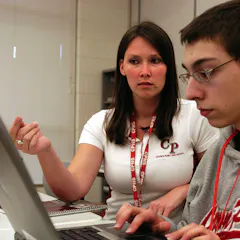
If educators want to make valid inferences about what students know and can do, assessments like drafts, works-in-progress and repeated observations of student learning are needed.

We found those who accepted their emotions, without judgement, felt more positive during the wait. This strategy also worked after students got their results, regardless or what they were.

What’s missing in most donor evaluations is a participatory approach to measurement and evaluation that asks local communities what matters to them and then adapts evaluation frameworks accordingly.

Experts share three must-do’s for delivering feedback at work.

A recent study shows generative AI is not the academic powerhouse it is often made out to be.
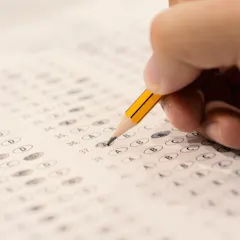
Our two recent studies suggest the way students respond to test questions on computers may not be the same as on paper.
As part of a new study, Year 7 students got $20 vouchers if they reached personalised goals in their NAPLAN tests.

Next week, Australian schools will begin NAPLAN tests for students in years 3, 5, 7 and 9.

Assessment is involved in many of the challenges facing higher education.

Major examinations have been a part of education for centuries. New research looks at arguments for and against end-of-semester exams in universities.
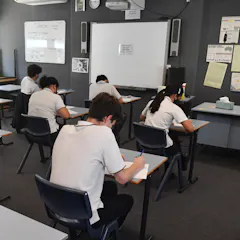
The latest Programme for International Student Assessment (PISA) show Australian 15-year-olds have recorded similar results to 2015 and 2018 in maths, science and reading.

Ghanaians measure the quality of education by examination scores.

Parents need to directly hear from teachers and administrators via open houses or parent advisory councils to lift the fog of confusion and concern surrounding this change.

Our study shows when children first present for neurodevelopmental assessment they are also likely to have mental health concerns.

Oral exams have a history dating back more than 2,000 years – and could once again be a solution for universities to test their students’ knowledge.

Compulsory tests, essays, regular grades and timed exams are considered a given in university life. But the Universities Accord should change this.

Some services require a formal diagnosis of autism or ADHD – but there is much parents and carers can do to support their child and their own wellbeing.

A scholar explains how artificial intelligence systems can revolutionize the way students learn.

Some fear ChatGPT will increase student cheating. But education academics say it can also save time preparing lessons and create new opportunities for learning.
Top contributors
-

Associate Dean, School of Graduate Studies & Professor, Faculty of Education, Queen's University, Ontario
-
Distinguished Professor, Faculty of Education, Brock University
-
Professor and Co-Director, Centre for Research in Assessment and Digital Learning, Deakin University
-
Deputy Vice-Chancellor, Education, Murdoch University; Professor of Measurement, Assessment and Evaluation, Murdoch University
-
Senior Research Fellow in Child Neurodevelopment, Brain and Mind Centre, University of Sydney
-
Senior Lecturer in Educational Assessment, Macquarie University
-
Professor and Clinical Psychologist, Michael Crouch Chair in Child and Youth Mental Health, University of Sydney
-
Neurodevelopmental Paediatrician and Associate Professor, University of Sydney
-
Professor of Educational Technologies, University of Sydney
-
Associate Professor in Language, Literacy and TESL, University of Canberra
-
Research Fellow, Centre for Research in Assessment and Digital Learning, Deakin University
-
Consultant, Australian Council for Educational Research
-
Professor of Educational Psychology, University of Wollongong
-
Professor, Faculty of Education and Arts, Australian Catholic University
-
Head of Department and Senior Lecturer in Education and Social Justice, Lancaster University