

Canadians are turning to AI mental health chatbots for support. But what if the bot agrees with the beliefs that are keeping you unwell?
Articles on Artificial intelligence (AI) bias
Displaying 1 - 20 of 60 articles

Yes, strong laws already exist to protect job-seekers from discrimination. But AI has made things more complicated.
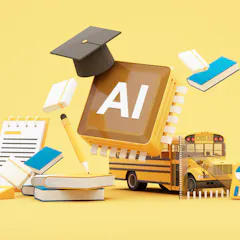
As schools consider AI guidelines, educators are also thinking about how they can adjust their assignments to accurately measure what students are actually learning.
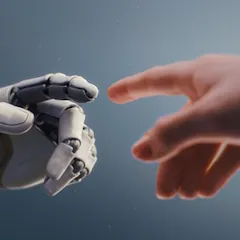
Involving families, educators, engineers, designers and policymakers in AI development can help ensure the technology does more good than harm.

Biases contained within historical datasets makes addressing what underpins automated decisions difficult – defining what is ‘fair’ is key.

West Midlands and other English police forces have been criticised for over-reliance on AI tools.

A relatively simple experiment involving asking a generative AI to compare two objects of very different sizes allows us to reflect on the limitations of these technologies.
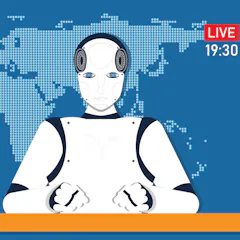
Even when information is factually accurate, how it’s presented can introduce subtle biases. As large language models increasingly bring people the news, this bias is a looming problem.

Generative AI is known to mirror sexist and racist stereotypes, but it also carries a colonial bias that is reinforcing outdated ideas about the past.

Policy-makers must grapple with an uncomfortable truth: without deliberate action, AI will magnify global divides.

What do Australians and Australia look like according to generative AI? The results are alarming.

If you have decades of work experience, your skills may be exactly what’s needed to harness AI’s power, without falling into its traps.
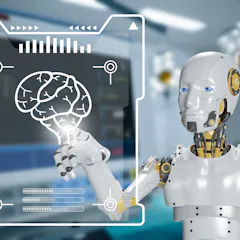
Privacy and bias concerns and integration challenges are brakes on the pace of health care systems adopting the technology.

As AI algorithms quietly take over life’s most important decisions, the right to opt out is fading – and with it, our autonomy.

Speaking with an AI bot can be amusing and even helpful – if it understands you. How well AIs do that is a matter of whose speech they’ve been trained on.

Students learn skills to help them distinguish fact from fiction in the world of AI.
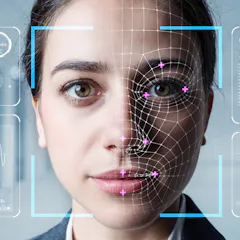
While AI promises to transform criminal justice by increasing operational efficiency and improving public safety, it also comes with risks around privacy, accountability, fairness and human rights.
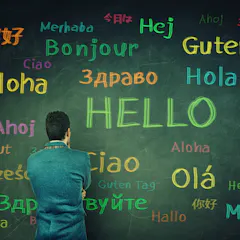
AI-powered technology means it has never been easier to translate between two languages. But that doesn’t mean we should give up on learning another tongue. The benefits still outweigh the effort.

Recruiters are now routinely using AI to automate the screening of CVs and interview videos. But human bias already exists in the AI data – and it can even be heightened by the algorithm.

Media outlets like The Australian and The Daily Telegraph will now share their content with the makers of ChatGPT. It raises many questions about the future of journalism and how people access news.
Top contributors
-

Professor of Cyber Security Practice, Edith Cowan University
-
Professor of AI, Research Group Leader, UNSW
-
Lecturer in Business Analytics, University of Sydney
-
Associate Professor of Visual Communication & Digital Media, RMIT University
-
Postdoctoral Fellow in Research on Teaching and Learning, McMaster University
-
Research Specialist: Digital Strategies and Engagement, Human Sciences Research Council
-
Clinical Psychologist and Associate Professor, School of Medicine and Psychology, Australian National University
-
Professor of User Experience Design, University of Hertfordshire
-
Senior lecturer, University of Aberdeen
-
Senior Research Scientist at the Australian E-Health Research Centre, CSIRO
-
Director, Enterprise AI and Data Analytics Hub, RMIT University
-
Lecturer, RMIT University
-
Principal Research Consultant in Strategic Foresight, CSIRO
-
Associate professor, Dalla Lana School of Public Health, University of Toronto
-
Professor of Computer Science and of Communication, University of Southern California