
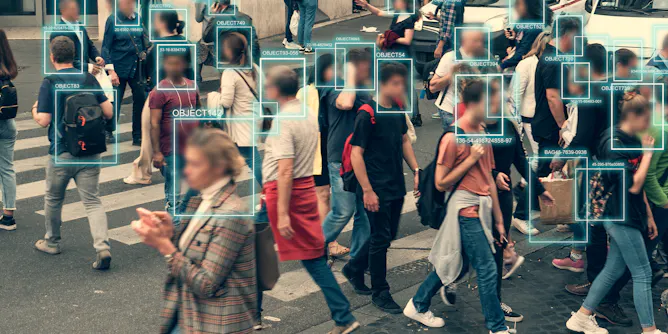
Without more transparency about AI use, it will be difficult for people to challenge biased decisions against them.
Articles on Artificial intelligence (AI) bias
Displaying 41 - 60 of 61 articles

Generative AIs may make up information they serve you, meaning they may potentially spread science misinformation. Here’s how to check the accuracy of what you read in an AI-enhanced media landscape.
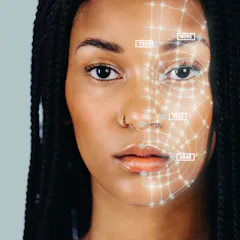
One researcher’s experience from a quarter-century ago shows why bias in AI remains a problem – and why the solution isn’t a simple technical fix.

Transparency and accountability must be a priority to prevent discrimination.

There’s a lot of overlap in AI-related concepts. Understanding how they are different from each other, and how they relate, is important.

AI tools are now generating content that’s difficult to distinguish from reality.
The new tools are expected to free up space for workers by helping out with tedious and repetitive task. Here’s how it will work.

The latest release in the GPT series shows marked improvement over predecessors.

New technologies are often surrounded by hopeful messages that they will alleviate poverty and bring about positive social change. History shows these assumptions are often misplaced.

AI models are increasingly being used to make important decision about people’s lives – just take Robodebt. Yet the complexity of these systems means we hardly understand them.

To understand the potential for machine learning to transform medicine, we must go back to the controversial origins of data use in healthcare
The newest OpenAI text-generator is a marked improvement over its predecessor – but it still has its pitfalls.
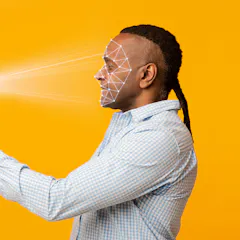
Many AI algorithms, like facial recognition software, have been shown to be discriminatory to people of color, especially those who are Black.
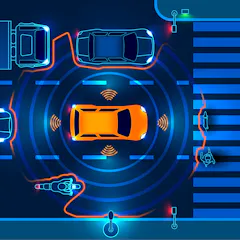
Between driverless cars, autonomous weapons and AI-powered medical diagnostic tools, it seems there will be no shortage of ethically-complex situations involving AI in the future.

Individuals who experience suicidal thoughts can show signs of this in the language they use. We analysed more than 100 suicide notes to find these language patterns.

Through the act of suggesting some words and not others, the predictive text features in our devices change the way we think — and therefore shape our culture.

The strong new laws will ban AI applications believed to violate EU citizens’ fundamental rights.

Data underlies the kinds of applications that are proposed for use in the country’s education system.

If the historical data used to train an AI system disadvantages certain minority groups, the system can be swayed to follow these patterns in its own decision-making process.

AI-powered tools have proven helpful for some couples trying to separate. But human relationships exist along a complicated spectrum, and even this advanced tech can’t grasp it all.
Top contributors
-

Professor of Cyber Security Practice, Edith Cowan University
-
Professor of AI, Research Group Leader, UNSW
-
Lecturer in Business Analytics, University of Sydney
-
Associate Professor of Visual Communication & Digital Media, RMIT University
-
Postdoctoral Fellow in Research on Teaching and Learning, McMaster University
-
Research Specialist: Digital Strategies and Engagement, Human Sciences Research Council
-
Clinical Psychologist and Associate Professor, School of Medicine and Psychology, Australian National University
-
Professor of User Experience Design, University of Hertfordshire
-
Senior lecturer, University of Aberdeen
-
Senior Research Scientist at the Australian E-Health Research Centre, CSIRO
-
Director, Enterprise AI and Data Analytics Hub, RMIT University
-
Lecturer, RMIT University
-
Principal Research Consultant in Strategic Foresight, CSIRO
-
Associate professor, Dalla Lana School of Public Health, University of Toronto
-
Professor of Computer Science and of Communication, University of Southern California