
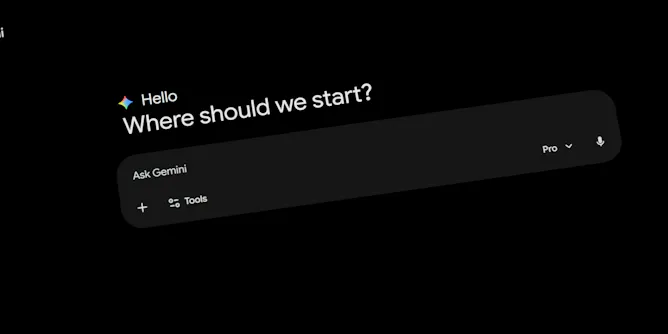
AI companies are turning to advertising to fund expensive systems. But commercial incentives could influence how answers are generated.
Articles on AI ethics
Displaying 1 - 20 of 70 articles

Pope Leo is one of many popes to respond to technological change by drawing on a Catholic principle called ‘subsidiarity.’
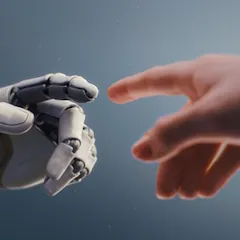
Involving families, educators, engineers, designers and policymakers in AI development can help ensure the technology does more good than harm.
AI is making its way into the courtroom, but it can never replicate the moral legitimacy of a human jury.

Everyone likes being told they’re clever, even if it’s coming from an AI chatbot. But their sycophancy has serious consequences for truth and trust.
A new book for scholars, students, and curious readers invites readers to think critically about the promises and perils of language tech and examines AI’s impact on poetic practice.

Australia’s military AI policy draws on those of its closest allies. But it reads more like a statement of intent.

How can business schools best navigate the AI era? Does GenAI in higher education constitute a level playing field where educational inequality and diverse learning needs are concerned?
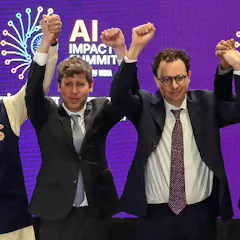
Questions about ethical AI may go out the window when democratic norms are collapsing.

Automating knowledge production and teaching weakens the ecosystem of students and scholars that sustains universities, raising existential questions about their mission.

Digital tools need better ethics, otherwise they will further entrench inequality.

The current landscape of AI use in K-12 schools is highly varied because there’s little specific policy guidance from the state and federal levels.

Policy-makers must grapple with an uncomfortable truth: without deliberate action, AI will magnify global divides.

Measuring the actual effects of using AI systems is no easy task.
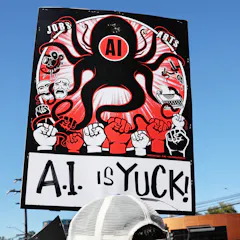
Vegans have multiple reasons for spurning animal products: ethical, environmental and health concerns. The same issues are keeping some people from using AI.

More autonomous AI systems that can use tools and work in teams are becoming increasingly common.

Using AI well is not as simple as typing questions into a chat function. There are widely recognised ethical issues, including bias, privacy and misinformation.

Even if you suspect a fake, here’s what to consider before accusing someone of using AI to create art, music or writing.

AI has the potential to help prevent and detect abuse, but only if it avoids bias and is sensitive toward traumatized people’s needs.
Humans are inescapably moral animals. Yet it is rare for most of us to reflect on how well our moral compasses are working.
Top contributors
-

Professor of Philosophy and Director of Applied Ethics Center, UMass Boston
-
Professor of AI, Research Group Leader, UNSW
-
Adjunct professor, Carleton University
-
Senior Lecturer, School of Engineering, Australian National University
-
Senior Lecturer in Digital Ethics; Deputy Director, Centre for AI and Digital Ethics, The University of Melbourne
-
Professor of Information Sciences & Director, Social Change Enabling Impact Platform, RMIT University
-
Professor of Creative Pedagogies, Edinburgh Napier University
-
Senior research fellow, RMIT University
-
Associate Professor, Faculty of Law & Justice; Lead, UNSW Public Interest Law & Tech Initiative, UNSW
-
Distinguished Professor of Media and Communications; Director, ARC Centre of Excellence for Automated Decision-Making and Society, RMIT University
-
Associate Professor of Sociology, Princeton University
-
Senior Lecturer in Law and Emerging Technologies, Western Sydney University
-
Professor Emerita of Linguistics, American University
-
Senior Lecturer, Management, University of Tasmania
-
Research Fellow, Centre for Urban Research, RMIT University