
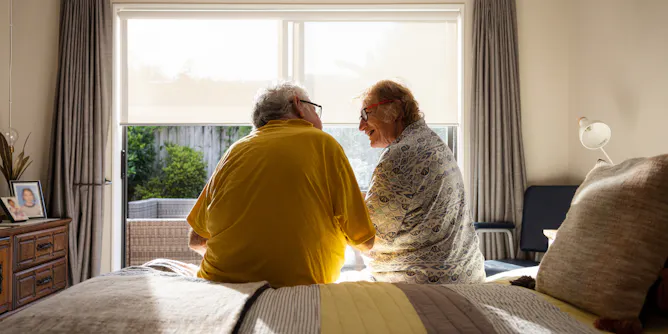
New dementia-friendly design guidance shows how simple changes can make homes safer and easier to navigate for people living with the condition.
Articles on Accessibility
Displaying 1 - 20 of 79 articles

Most older New Zealanders live in private homes. As the population ages, making streets, transport and public spaces work for them will become crucial.

A sedentary lifestyle lurks in every neighbourhood. So what motivates people to walk?

Listening to stories can remove the ‘decoding’ process that dyslexia sufferers struggle with.

AusAlert is a significant improvement to Australia’s emergency warnings, but the question isn’t just about whether it works.

Cancer survivors often experience cognitive, visual or physical challenges that hinder software use. Better designs can help.

As the baby boomer generation ages, cities must rethink the accessibility of public spaces. Comfort, legibility and geometric clarity are the essential elements of an inclusive city.
Structural barriers such as inaccessible infrastructure and lack of transport options affect South Africa’s reputation as a disability-friendly country.
Stronger public investment is needed so families are not forced to pay privately for basic education.

AI-powered technologies are increasingly being integrated into assistive technologies like hearing aids and prosthetics. This is changing how the people who use them experience urban space.

The powerful documentary on Apple TV+ is shining a light on a decades-long revolution that’s still unfolding, and now threatened under Trump.
For AI to be beneficial in accessibility tech, the people who use it must be involved in its development.
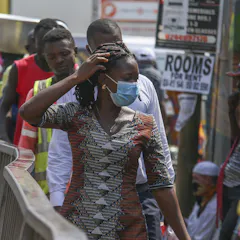
Ghana’s cities pay little attention to the needs of walkers.

From HIV treatments to school desegregation, research into topics now considered DEIA have benefited Americans throughout history.

Figuring out how to make spacecraft more accessible to astronauts with physical disabilities can also make them safer for long-duration missions.
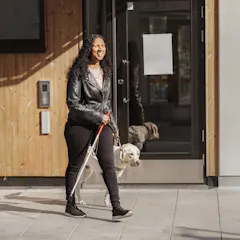
For one thing, the presence of employees with disabilities improves the culture of the entire organization, making it more collaborative and responsive.

A lack of accessibility can have a serious impact on a person’s quality of life. Universities should teach students to develop creative solutions that make urban environments more inclusive.

We’re still waiting for Australian cities to ensure public venues are fully accessible – and when that happens it won’t just be people with disabilities who’ll be better off.

If sport is for everyone, sport must be (re)imagined in ways that make it more accessible for all bodies. We have an ethical responsibility to change sport to make it meaningfully inclusive for all.

A pioneering effort that allowed a teenager with a neck injury to play pinball sheds light on today’s vibrant community of esports players with disabilities.
Top contributors
-

Professor, Geography and Planning, University of Toronto
-
Assistant Professor, Environmental and Urban Change, York University, Canada
-
Professor of Social Inclusion - UTS Business School - Co-Lead UTS Disability Research Network - Australian Centre for Olympic and Sport Studies - Centre for Sport, Business and Society, University of Technology Sydney
-
Lecturer in Social Policy, Queen's University Belfast
-
Professor of Management/Organizational Behavior, Oregon State University
-
C. Michael Armstrong Professor of Applied Game Design, Miami University
-
Associate professor, Centre for Educational Research and Institute for Culture and Society, Western Sydney University
-
Associate Professor, Faculty of Business, Government and Law, University of Canberra
-
Professor of Industrial-Organizational Psychology, Portland State University
-
York Research Chair in Stigmatization & Social Identity, Associate Professor of Organization Studies, York University, Canada
-
PhD Candidate at Griffith University School of Human Services and Social Work, Griffith University
-
Postdoctoral Fellow, Rotman School of Management, University of Toronto
-
Associate Dean (Teaching and Learning), School of Science, Edith Cowan University
-
Professor of Health Services and Policy Research, University of British Columbia
-
Scholarly Communications Librarian, McGill University