

Many Autistic people struggle through air travel or avoid it altogether. But travellers told us small measures and supports can make a big difference.
Articles on Universal design
Displaying all articles
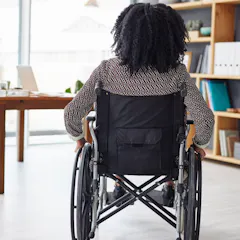
If universities want to be truly inclusive, that must extend to people with disabilities, whether they are students or staff.

Incorporating nature via biophilic design has interested architects and landscape architects for a long time, but its benefits for neurodiversity are not very well-known.
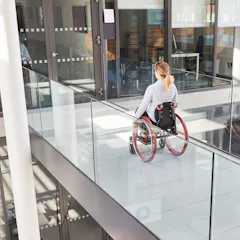
The disability royal commission and the NDIS review have called for consistent accessibility standards. That could improve inclusion, health and wellbeing for people with disability.
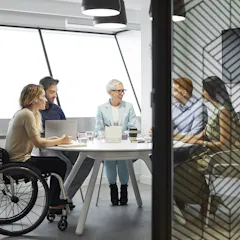
Avoiding the office commute is just one reason why working from home suits many workers with disability better. Employers need to take a nuanced approach to workplace flexibility.
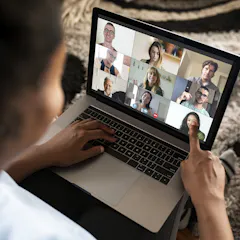
All instructors, regardless of the field, can promote mental health both by sharing specific resources and by designing accessible and flexible courses.
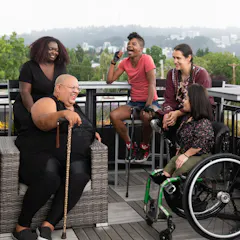
There could be lots of reasons why people with disability decline or don’t want offers of help. Research at the Dignity Project at Griffith University shows there is no ‘one-size fits all’ approach.

The war on straws is an example of ‘eco-ableism’ – when environmental measures create an extra burden on people with disability.

Pairing disability counsellors with post-secondary instructors to help them design classes is one way colleges and universities can improve their efforts to support students with disabilities.

Technologies are now ubiquitous in everyday modern life, but ageism means that older adults are excluded from the design of the technologies that they use.
A survey of disabled students found that some university accommodations they value became more widespread in the pandemic, like flexible course deadlines.
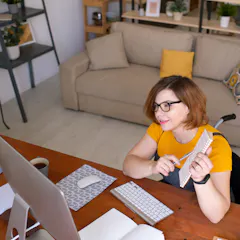
Online learning can create problems for students, particularly those with disabilities, unless platforms and content are designed with accessibility and inclusion in mind.

Every school in Australia must be built with the varying needs of students with disabilities in mind. This is a worthy goal but achieving it is complicated. Looking at some examples can help.

Each device is complex in its own right, and trying to use them together in many different settings makes things even more complicated.

There are several reasons people might find smart devices equipped with an always-on microphone both attractive and unsettling.
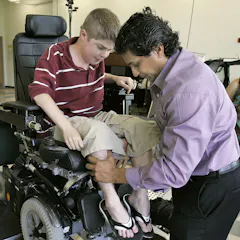
The Americans with Disabilities Act turns 27 this year. But true equality is still out of reach for many – and it’s everyone’s responsibility to fulfill the promise of the law.
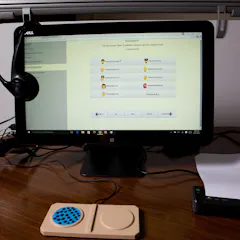
In 2012, nearly one-third of voters with a disability had trouble voting. A 2002 law was supposed to fix this problem. New technology may have the answer at last.
Top contributors
-

Assistant Professor of Rhetoric and Technology, Kansas State University
-
Professor of Special Education, University of Florida
-
Lecturer, Educational Psychology & Inclusive Education, Monash University
-
MSc Course Director, Learning Environments, UCL
-
Scientist, Women's Age Lab, Women's College Hospital - Assistant Professor, Dalla Lana School of Public Health, University of Toronto
-
Associate Professor, Human Resource Management, UNSW Canberra, UNSW
-
Vice Chancellor's Principal Research Fellow, RMIT University
-
SUNY Distinguished Professor of Architecture, University at Buffalo
-
Researcher, Griffith University
-
Professor of Social Epidemiology and Director of the Centre of Research Excellence in Healthy Housing at the Melbourne School of Population and Global Health, The University of Melbourne
-
Adjunct Associate Professor of Psychiatry, Queen's University, Ontario
-
Professor of Anthropology & Assistant Dean (Equity, Diversity, Inclusion & Decolonization), Faculty of Social Science, Western University
-
Professor and Academic Head, Special Education and Educational Psychology, Monash University
-
Associate Professor in the Department of Health, Aging and Society, McMaster University
-
Andrew Banks Family Preeminence Endowed Chair, Associate Chair of Research Computer & Information Science & Engineering Department, University of Florida