

There is little evidence organisations consider digital accessibility by default. It usually happens if they have a senior accessibility champion in their ranks, or when they get sued.
Articles on Accessibility
Displaying 61 - 79 of 79 articles

Aphasia is loss of language following brain damage. Conversation partners can help them say what they want to say.
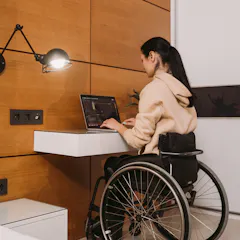
COVID-19 planning needs to take disability justice seriously. Universities must design courses to be accessible to all learners, and offer ongoing remote learning.

Physical activity barriers are still prevalent for people with disabilities, despite the increase in participation in the Paralympic Games.
The government has touted its new disability strategy as groundbreaking, but many of the vows it makes are old news.

Developers with disabilities are in the best position to build accessible technology, but they face a Catch-22 – most technology design tools themselves are not particularly accessible.

Online learning can create problems for students, particularly those with disabilities, unless platforms and content are designed with accessibility and inclusion in mind.

After nearly 30 years of advocacy, audio description services have finally arrived on the ABC and SBS.

The benefits of online learning include accessibility and a personalised approach.
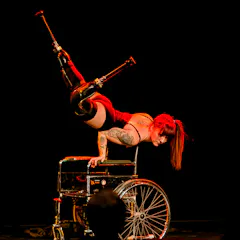
Rustle your program without getting a glare at a relaxed performance — an art form in synch with the growing field of disability arts.

New multisensory approaches to presenting visual art propose solutions to barriers that limit access for marginalized audiences.

As more data are collected, it’s important for the public to understand how their health information is being used. But user agreements are often complex, lengthy and written in inaccessible language.

How many opportunities you can reach depends on where you live and how you travel. A new report maps accessibility for our eight capital cities by car, public transport, cycling and walking.

An observational audit found almost all of the parks in Sydney’s inner west were substandard. But perhaps even more important was the issue of access.
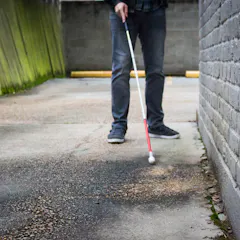
Instead of being cheaper and safer, getting an online taxi can actually be dangerous for people with disabilities where a so-called “red zone” is in force.

There are significant challenges in making old cities like Rio more accessible, and there are missed opportunities around the Paralympics, but it’s not all bad news.

In 2012, nearly one-third of voters with a disability had trouble voting. A 2002 law was supposed to fix this problem. New technology may have the answer at last.

If game producers get better at targeting older gamers, many effects of aging - social, cognitive and physical - could be reduced.
The European Union has played a key role in making buildings more accessible, homes more liveable and travel easier. But what would happen if the UK left?
Top contributors
-

Professor, Geography and Planning, University of Toronto
-
Assistant Professor, Environmental and Urban Change, York University, Canada
-
Professor of Social Inclusion - UTS Business School - Co-Lead UTS Disability Research Network - Australian Centre for Olympic and Sport Studies - Centre for Sport, Business and Society, University of Technology Sydney
-
Lecturer in Social Policy, Queen's University Belfast
-
Professor of Management/Organizational Behavior, Oregon State University
-
C. Michael Armstrong Professor of Applied Game Design, Miami University
-
Associate professor, Centre for Educational Research and Institute for Culture and Society, Western Sydney University
-
Associate Professor, Faculty of Business, Government and Law, University of Canberra
-
Professor of Industrial-Organizational Psychology, Portland State University
-
York Research Chair in Stigmatization & Social Identity, Associate Professor of Organization Studies, York University, Canada
-
PhD Candidate at Griffith University School of Human Services and Social Work, Griffith University
-
Postdoctoral Fellow, Rotman School of Management, University of Toronto
-
Associate Dean (Teaching and Learning), School of Science, Edith Cowan University
-
Professor of Health Services and Policy Research, University of British Columbia
-
Scholarly Communications Librarian, McGill University