
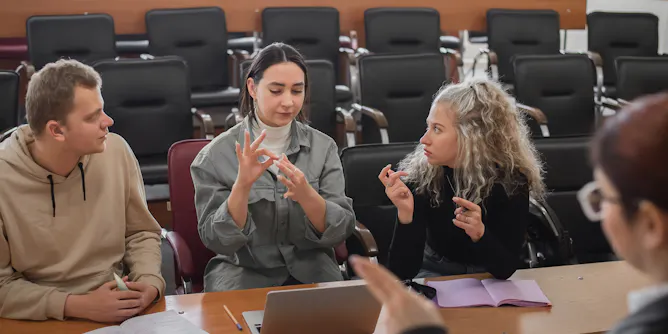
To create a more accessible society, we need to increase awareness about diverse perspectives and lived experiences communicating, and learn about what types of barriers exist.
Articles on Accessibility
Displaying 21 - 40 of 79 articles
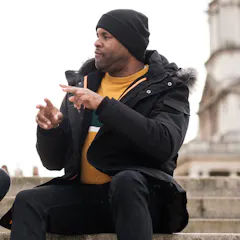
Some students with hearing difficulties feel lonely and excluded from daily campus life.

A research project led entirely by autistic people aims to change the way autism research is conducted.

Understanding and supporting employees with dyslexia is crucial not only for the individual success of employees, but for workplaces to be more effective.

Truly fostering accessible educational opportunities for deaf students can only happen with ongoing political and financial support.
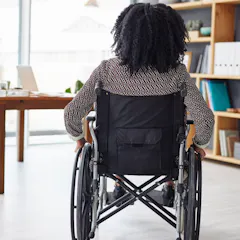
If universities want to be truly inclusive, that must extend to people with disabilities, whether they are students or staff.

Incorporating nature via biophilic design has interested architects and landscape architects for a long time, but its benefits for neurodiversity are not very well-known.

New Zealand has no legislation, nor a national strategy, explicitly addressing or policing accessibility to digital health tools.

A class action lawsuit filed against Uber and Lyft in British Columbia draws attention to the experiences of wheelchair users.

Eclipses are rare, fantastic celestial events. Here’s how educators can help visually impaired students enjoy eclipses alongside their sighted peers.
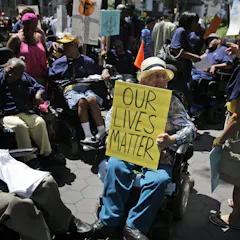
People with disabilities contend with daily challenges and ableism. Here are some dos and don'ts to help you be more mindful of those living with a disability.

This initiative could give more disabled and young people the confidence to explore more of Britain’s wild spaces and build a stronger nature connection
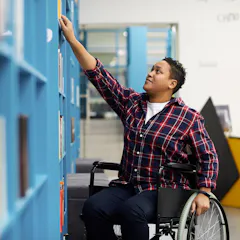
Issues included poor wheelchair access in living spaces, inaccessible lecture theatres and broken lifts.
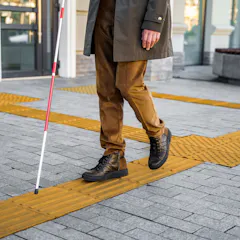
Decades of activism have resulted in legislation and infrastructure to make cities more accessible, but the lived experiences of disabled residents shows there’s still a long way to go.
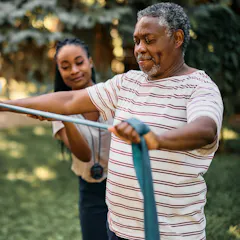
People with disability gain many benefits from being physically active, from greater movement to improved mental health. But options for community-based physical activity are limited.

Assistive technology like screen readers for the blind help people with disabilities use computers and smartphones, but they can be tripped up if webpages or documents are improperly formatted.
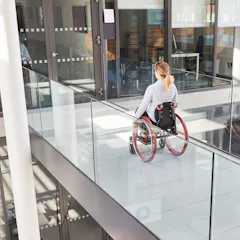
The disability royal commission and the NDIS review have called for consistent accessibility standards. That could improve inclusion, health and wellbeing for people with disability.

The Xbox Adaptive Controller is designed to make gaming more inclusive, but Microsoft’s ban on third-party devices means some disabled gamers are still excluded.

There aren’t enough remote jobs to go around.

The idea of the 15-minute city has become popular globally. But this approach relies on ableist assumptions and doesn’t reflect inclusive urban design.
Top contributors
-

Professor, Geography and Planning, University of Toronto
-
Assistant Professor, Environmental and Urban Change, York University, Canada
-
Professor of Social Inclusion - UTS Business School - Co-Lead UTS Disability Research Network - Australian Centre for Olympic and Sport Studies - Centre for Sport, Business and Society, University of Technology Sydney
-
Lecturer in Social Policy, Queen's University Belfast
-
Professor of Management/Organizational Behavior, Oregon State University
-
C. Michael Armstrong Professor of Applied Game Design, Miami University
-
Associate professor, Centre for Educational Research and Institute for Culture and Society, Western Sydney University
-
Associate Professor, Faculty of Business, Government and Law, University of Canberra
-
Professor of Industrial-Organizational Psychology, Portland State University
-
York Research Chair in Stigmatization & Social Identity, Associate Professor of Organization Studies, York University, Canada
-
PhD Candidate at Griffith University School of Human Services and Social Work, Griffith University
-
Postdoctoral Fellow, Rotman School of Management, University of Toronto
-
Associate Dean (Teaching and Learning), School of Science, Edith Cowan University
-
Professor of Health Services and Policy Research, University of British Columbia
-
Scholarly Communications Librarian, McGill University