

The brain’s acute response to the trauma of sexual assault can block a person’s ability to accurately assess what they experienced.
Articles on Memory
Displaying 1 - 20 of 419 articles

Modern AI owes its existence to both cognitive and computer science. What you envision as its origin story can influence how you understand what large language models can do.
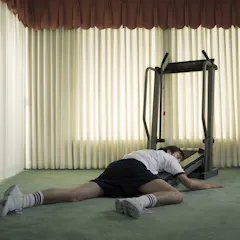
‘Use it or lose it’ isn’t quite true when it comes to the health benefits of exercise. Cells across the body retain a memory of training that lasts longer than once thought.

Rather than telling a single story, street names preserve several layers of public memory.

How prepared are you for an emergency?

Rather than simply forgetting a memory, your brain has likely misplaced it. Aging can make memory confusion worse.

Memories are dynamic, not fixed. Even if what you’re remembering about your own experience isn’t quite how it all happened, those memories serve important roles.

Filling every spare moment with a podcast, message or social-media scroll may deny the brain a useful window for consolidating new memories.
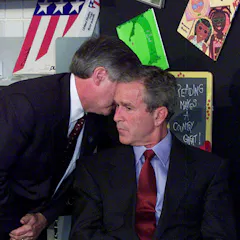
Having a vivid, detailed memory of a remarkable event like 9/11 can seem like a demonstration of patriotism and a connection with other Americans.

Bacteria use strategies similar to artificial neural networks to use the past to adapt to the future.

There is a strange nostalgia in realizing that something once so immediate now belongs increasingly to people who know it only as the past.

Memory makes AI agents more useful, but it can also allow malicious instructions to remain hidden and influence decisions long after an attack.

When a person’s story about a traumatic event seems fuzzy, they may be experiencing the nuances of how their brain processes trauma.

A little boredom can be good for you.

What if today’s ‘total recall’ technology is creating a memory system we do not need or benefit from?

The Black Death killed up to two thirds of Europe’s population, yet medieval records rarely mention it.

A major new analysis of nearly 40,000 people finds memories of childhood abuse and neglect stay remarkably stable over time.

Mild cognitive decline doesn’t necessarily mean you’ll develop dementia. But it’s a common fear.

The ‘doorway effect’ suggests that when information is removed from working memory, it immediately seems to leave consciousness.

Do you knit or solve puzzles for fun? Research suggests hobbies such as these could help keep your brain healthy, particularly in older age.
Top contributors
-

Senior Lecturer (Adjunct), Nutritional neuroscientist, Adelaide University
-
Head of Developmental Psychobiology Lab, Deakin University
-
Professor of Educational Psychology, University of Wollongong
-
Associate Professor in Cognitive Science, Western Sydney University
-
Professor of Psychology, Lafayette College
-
Associate professor, University of Sydney
-
Professor of Music Psychology, Durham University
-
Pro Vice-Chancellor (Research Performance and Development) and Professor of Cognitive Science, Macquarie University
-
Professor of Clinical Neuropsychology, University of Cambridge
-
Professor of Anatomy, University of Bristol
-
Reader in Psychology, Aston University
-
Senior Lecturer, The University of Melbourne
-
Professor of Cognitive Psychology, City St George's, University of London
-
Senior Lecturer in Psychology, City St George's, University of London
-
Professor, Neuropsychology, University of Westminster