

Rather than simply forgetting a memory, your brain has likely misplaced it. Aging can make memory confusion worse.
Articles on Hippocampus
Displaying 1 - 20 of 45 articles

Working with and living in spatially complex environments may help delay cognitive decline, though more research is needed.

Habit helps take the mental load off figuring out how to get somewhere. But relying on the familiar can make it harder to adapt to changes to your route and to find better ones.

Your brain doesn’t run out of space – it runs out of attention. The science of why two people can live the same moment and remember it very differently.

Depression affects an estimated 40% of adults with chronic pain.

Researchers have found dreams are most likely to occur during the stage of sleep known as rapid eye movement, or REM.

Understanding how new neurons affect brain function throughout adulthood can offer new approaches to treating epilepsy and dementia.

Neuroscientists found that music cannot only influence your emotions in the present − it can also alter how you remember your memories.

We can’t avoid stress altogether. But there are healthy ways to deal with it and move on.
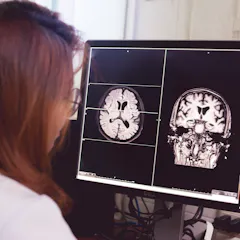
This study shows at least two different mechanisms lead to cognitive decline – both in healthy people and people with Alzheimer’s.

Without supportive parents, children already under stress may experience a shrinkage in brain volume in an area of the brain that is important for learning and memory.
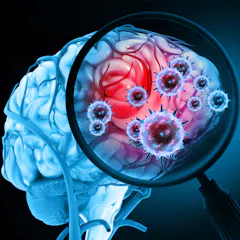
Inflammation and damage to the olfactory system from shingles, COVID-19 and herpes infections may contribute to Alzheimer’s disease.

In a systematic review of existing studies, researchers found that air pollution such as fine particulate matter can interfere with regions of the brain responsible for emotional regulation.

Psychologists know babies can form memories soon after birth. So why can’t people remember anything that happened to them before around age 2? A child development expert describes possible reasons.

Many people with epilepsy are unable to remember what happened immediately before they have a seizure. This may be because seizures and memory use the same pathways of the brain.

Ready to party post-pandemic, but at the same time feeling shy? Here’s how social isolation affects the brain – and what research suggests about the effects of resocialization.

New research demonstrates that it is more difficult to learn something new if the information had been rewarded in the past. In fact, the higher the reward, the worse the future learning.

Rats, too, struggle to learn how to do new things in new places — but it does get easier over time.
Attempts to find brain structures responsible for supposed cognitive sex differences have not succeeded.

Research shows napping helps young children learn, as well as enhancing their emotional well-being.
Top contributors
-

Senior Lecturer (Adjunct), Nutritional neuroscientist, Adelaide University
-
Professor of Cognitive Neuroscience, UCL
-
Head of Developmental Psychobiology Lab, Deakin University
-
Scientist at the Rotman Research Institute, Baycrest Health Sciences, and Assistant Professor, University of Toronto
-
Professor of Environmental Humanities, University of Kent
-
Associate professor, University of Sydney
-
Director of the Center for Behavioral Neuroscience and Professor of Psychology, American University
-
Associate Professor of Zoology, University of Oxford
-
Professor in Neuroscience, The Open University
-
Associate Professor of Communication Science and Disorders, Texas Woman's University
-
Director School of Medicine and Psychology, Australian National University
-
Post-doc in Neurological Surgery, School of Medicine, University of California, San Francisco
-
Associate Professor of Medicine, University of Florida
-
Professor of Biological Sciences, Macquarie University
-
Research associate, UCL