
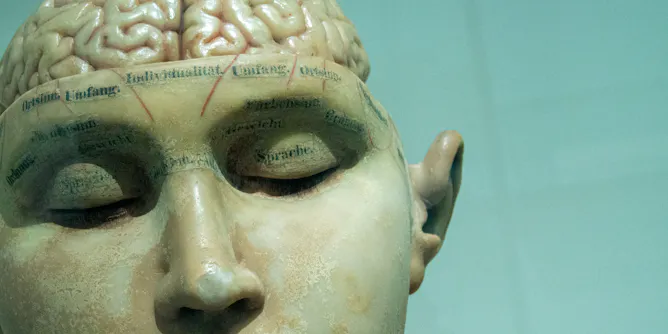
Having a word “on the tip of the tongue” has happened to all of us. Behind this everyday phenomenon lie complex brain mechanisms.
Articles on Memory
Displaying 61 - 80 of 416 articles

Recent research shows childhood memories of emotion towards a parent may be malleable. Should psychotherapies warn clients about this potential side effect?

Your sense of smell is directly linked to the part of your brain that generates emotions and memories.

The phrase ‘so help me God’ is believed to be a part of the presidential oath ever since George Washington is said to have used it 236 years ago. Except, says a historian - there is no evidence of it.

The more physically active a person was, the better they performed on a memory test the following day.

Neuroscientists found that music cannot only influence your emotions in the present − it can also alter how you remember your memories.

Photographer Lee Miller’s experience at Dachau, depicted in the film Lee, reminds us of the importance of photojournalists in war zones today.

If you stop to think about it, most of your knowledge can’t be clearly tied to one particular experience.

Human memory can be trained, but we need different techniques for different kinds of information.

Researchers are developing theories about the purpose of dreams and learning why some people seem to be better at remembering them.

Makeshift memorials are public expressions of private mourning in response to trauma and tragedy.
Some moral frameworks tell us lying is bad. But what if telling someone with dementia the truth could cause them trauma or other harms?

The benefits of HIIT workouts persisted even five years later.

Our research shows the smallest of appearance changes are enough to lead to mistaken identifications in a police line-up. It doesn’t bode well for the justice system.
This phenomenon can help us understand polarisation in society.

Nonna’s pizza dough? A cocktail from a tropical holiday? Food and drinks can evoke feelings of nostalgia and bittersweet memories.

You know that thing with the name? the whatsamajig? the whozeewhatzit?
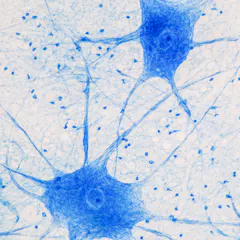
New research has revealed the role that kinesin, a nanoscopic motor protein, holds in the brain. It helps build dendritic spines, the physical structures that grow from neurons.
Deciphering how neurons talk to each other by reading the brain’s electrical activity has given scientists insights into memory and conditions like epilepsy and Alzheimer’s.

Many medical conditions can affect prospective memory. But so can excessive alcohol use.
Top contributors
-

Senior Lecturer (Adjunct), Nutritional neuroscientist, Adelaide University
-
Head of Developmental Psychobiology Lab, Deakin University
-
Professor of Educational Psychology, University of Wollongong
-
Associate Professor in Cognitive Science, Western Sydney University
-
Professor of Psychology, Lafayette College
-
Associate professor, University of Sydney
-
Professor of Music Psychology, Durham University
-
Pro Vice-Chancellor (Research Performance and Development) and Professor of Cognitive Science, Macquarie University
-
Professor of Clinical Neuropsychology, University of Cambridge
-
Professor of Anatomy, University of Bristol
-
Reader in Psychology, Aston University
-
Senior Lecturer, The University of Melbourne
-
Professor of Cognitive Psychology, City St George's, University of London
-
Senior Lecturer in Psychology, City St George's, University of London
-
Professor, Neuropsychology, University of Westminster