

Hollywood loves a character who has the perfect total recall of a photographic memory. But this idea is a fantasy. It’s not how memory works – for good reason.
Articles on Forgetting
Displaying 1 - 20 of 27 articles

Doing everything for your child robs them of an opportunity to learn. Here are the dos and don'ts.

If you didn’t forget things, you’d be in for a world of trouble.

Can’t remember where you put your keys? It’s normal.

Go easy on your friend next time they forget about the plans you made or the favour they promised.

Errors don’t necessarily mean your mind is faulty. They may actually be a sign of a cognitive system with limited capacity working efficiently.

We’ve all been there: walked into a room and can’t remember what we came for. But how much is the actual doorway to blame for our forgetfulness?

When home and work life look the same, events tend to blur into a single unmemorable blob. And that’s when we start to forget things.

The decision to move the Stasi files into the German national archive has sparked debate of how memories of life before reunification should be handled.

Your memory may be unreliable – but that can be an advantage.

As children’s self-regulatory capacities and the prefrontal regions of their brains develop, so does their ability to carry out their future intentions.

Have you ever walked into a room and realised you can’t remember what you were looking for? We tend to do this more when we are thinking of a few things at once or doing two things at the same time.
Forgetting is beneficial for the human brain. But the internet has made it harder to let go of painful or problematic memories.
Even our most treasured memories can gradually change over time.

People kept diaries for two weeks recording how often things about them were forgotten. The results turned out to be surprising.
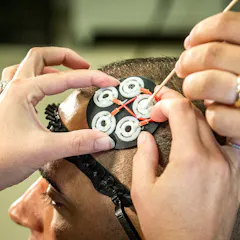
Tinkering with the brain’s electrical field shows tantalizing promise for boosting memory, but it doesn’t always work. A new study offers one reason why.

We come across dishonest acts in our day-to-day lives. Perhaps we commit them as well. But, guess what? Most of us care so much about being moral that we tend to forget our unethical behavior.

Memories help you gloss over those ugly bits with minimum fuss.

Memory has become prosthetic – outsourced to the internet. But remembering, not forgetting, is the enemy of creative reinvention.

Could the not-too-distant future hold “brain chip” technologies that we could all use to enhance our memories to the point of perfection? Not so fast: there are big benefits to forgetting.
Top contributors
-

Head of Developmental Psychobiology Lab, Deakin University
-
Senior Lecturer (Adjunct), Nutritional neuroscientist, Adelaide University
-
Reader in Psychology, Aston University
-
Associate Professor in Cognitive Science, Western Sydney University
-
Postdoctoral Scholar in Neuroscience, University of California, San Francisco
-
Clinical Research Fellow, University of Sydney
-
Assistant Professor of Management and Organizations, Northwestern University
-
Associate professor, University of Sydney
-
Deputy Principal and Deputy Vice Chancellor, University of Stirling
-
Lecturer in Psychology, University of Aberdeen
-
Associate Professor of Psychology, Bond University
-
Research fellow, UCL
-
Professor of Psychology, Durham University
-
Director, MARCS Institute for Brain, Behaviour & Development, Western Sydney University
-
Professor of Psychology, University of Bradford