

Your memory during exams isn’t just related to how much you study. It is also about how your brain functions under pressure.
Articles on Memory
Displaying 41 - 60 of 416 articles

Recent studies show that it’s possible to maintain good cognitive health as we age with certain leisure activities and pursuits that stimulate the brain.

Human society has marked collective dead for millennia. Such monuments have changed with the evolving nature of conflict, something Ukraine is now weighing.

Physical education has many cognitive benefits for kids – including for their working memory, problem solving and maths performance.
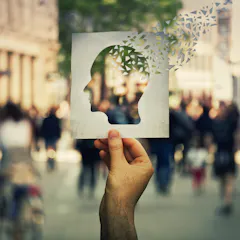
In court, scrutiny is normally focused on the alleged victim’s ability to recall details from the event.

Oral history contributors were able to share their stories, and many felt a sense of healing.

How to boost your mood and help your memory stay sharp.

Memories are constantly revised in acts of recollection. They are moulded by new information, beliefs and emotions, and other people’s versions of events.

Research offers insights into the ideal frequency for reviewing material to make sure it sticks.

Discovered in a Tokyo warehouse, a long-lost ballad by Taiwanese pop star Teresa Teng rekindles memories of an icon whose voice transcended Asia’s political fault lines.

In the popular novel The German Lesson, a character based on Nolde falls victim to Nazi policies on “degenerate art”. Recent research on the painter’s life tells a more complex story.

Your brain processes the pleasure of everyday behaviors like eating and drinking similarly to the pleasure of using drugs. Disentangling them requires understanding how memories are formed.

Health influencers – perhaps including Health Secretary RFK Jr. – are promoting the chemical as an elixir that improves memory and focus. But evidence for these claims is thin.

Research shows people remember the past to solve problems in the present. But memory might be most effective when defining a problem or implementing a solution.

Novelty primes your brain to learn, while links with existing knowledge make memories stick.
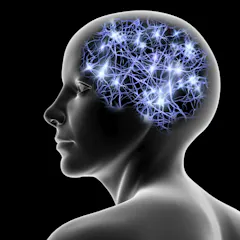
As you experience or encounter new things, your brain must encode this information via the right neural networks at the right time.

Use stories, rhymes and acronyms that catch your imagination.

Although we aren’t consciously aware of our ‘automatic memory,’ it influences almost all of our thoughts, behaviour and feelings.

Sigmund Freud originally developed the idea of repression and actually revised his definition later in life.

Note-taking on a laptop may be faster but handwriting engages the brain in a more active way than typing.
Top contributors
-

Senior Lecturer (Adjunct), Nutritional neuroscientist, Adelaide University
-
Head of Developmental Psychobiology Lab, Deakin University
-
Professor of Educational Psychology, University of Wollongong
-
Associate Professor in Cognitive Science, Western Sydney University
-
Professor of Psychology, Lafayette College
-
Associate professor, University of Sydney
-
Professor of Music Psychology, Durham University
-
Pro Vice-Chancellor (Research Performance and Development) and Professor of Cognitive Science, Macquarie University
-
Professor of Clinical Neuropsychology, University of Cambridge
-
Professor of Anatomy, University of Bristol
-
Reader in Psychology, Aston University
-
Senior Lecturer, The University of Melbourne
-
Professor of Cognitive Psychology, City St George's, University of London
-
Senior Lecturer in Psychology, City St George's, University of London
-
Professor, Neuropsychology, University of Westminster