

Hollywood loves a character who has the perfect total recall of a photographic memory. But this idea is a fantasy. It’s not how memory works – for good reason.
Articles on Memory
Displaying 21 - 40 of 416 articles

Your brain doesn’t run out of space – it runs out of attention. The science of why two people can live the same moment and remember it very differently.
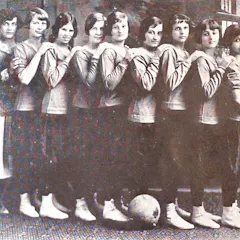
A review of nearly 100 years of high school yearbooks from Salinas High School in California showcases a nostalgic, not always accurate, version of high school.

Why do medical students remember rude mnemonics decades later? The answer reveals something fascinating about how all of us learn and remember.
From putting your phone away to getting better at ‘chunking’, a neuroscience researcher explains how to make your memory better.
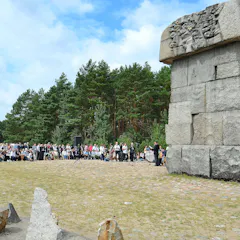
Topics such as sexual assault have been difficult for survivors and historians to write about, even decades after the war.

Whenever you ride a bike or knit a sweater, you’re using your procedural memory. Two cognitive scientists explain what it is and how it works.

New research shows even wrong memories leave a fuzzy trace that supports recognition and improves decision-making.
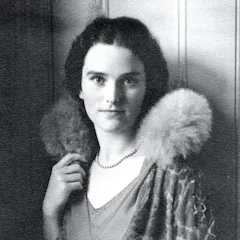
A beautifully written book that shows why nostalgia is not to be trusted.

Some elderly people have the memory of someone 30 or 40 years younger.

If archives were destroyed and public history suppressed, where else might the past be found?

Forgetting why you walked into a room isn’t a sign of cognitive decline. It’s your brain doing exactly what it evolved to do.
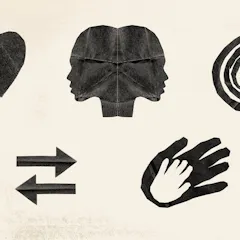
Emirati Princess Al Qasimi is pro-Palestine and this year’s Sydney Biennale arts director, a choice that has drawn criticism. But should art be comfortable?
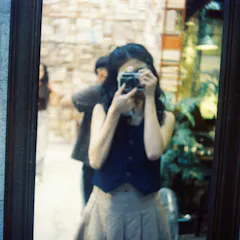
Memory is at the very heart of who we are, but it’s surprisingly complex too.

Most people experience earworms at least weekly, especially if you listen to a lot of music.
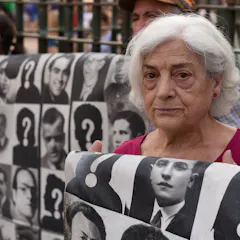
Women were often jailed for their association with anti-Franco male relatives. Behind bars, they suffered mental and physical torture.

Of the nearly 150 attacks that have taken place in Paris since 1974, only a few have left a mark on its ‘urban memory’. Why do so many attacks remain absent from the public sphere?

Music is deeply woven into our sense of self and place, becoming, in effect, an emotional map of a person’s life.
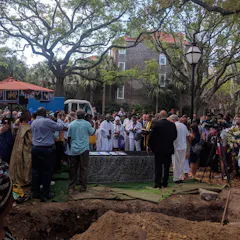
The movement to protect the long-obscured sites allows communities to reckon with painful histories through healing, remembrance and ancestral connection.
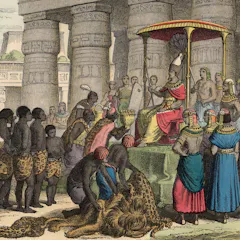
There was a reason Southern businessmen and thinkers were inspired by ancient Egypt: To them, it served as proof that all great civilizations were hierarchal societies sustained by enslaved labor.
Top contributors
-

Senior Lecturer (Adjunct), Nutritional neuroscientist, Adelaide University
-
Head of Developmental Psychobiology Lab, Deakin University
-
Professor of Educational Psychology, University of Wollongong
-
Associate Professor in Cognitive Science, Western Sydney University
-
Professor of Psychology, Lafayette College
-
Associate professor, University of Sydney
-
Professor of Music Psychology, Durham University
-
Pro Vice-Chancellor (Research Performance and Development) and Professor of Cognitive Science, Macquarie University
-
Professor of Clinical Neuropsychology, University of Cambridge
-
Professor of Anatomy, University of Bristol
-
Reader in Psychology, Aston University
-
Senior Lecturer, The University of Melbourne
-
Professor of Cognitive Psychology, City St George's, University of London
-
Senior Lecturer in Psychology, City St George's, University of London
-
Professor, Neuropsychology, University of Westminster