
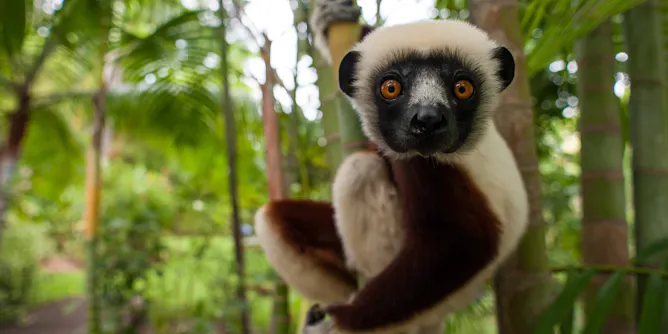
Many people in the Global South will find themselves poorer, hungrier, and much closer to exploitable wildlife.
Articles on Wildlife conservation
Displaying 221 - 240 of 570 articles
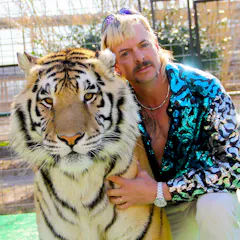
There are twice as many tigers in the US as there are in the wild.

On one of the world’s most remote islands, a species of duck has learned to scavenge on dead seals.

Each B&B is a green sanctuary for pollinators, containing pollinating plants and shelters like beehives and nesting boxes.
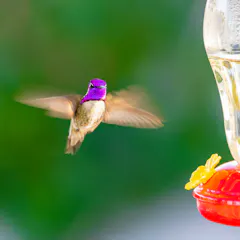
Millions of Americans feed wild birds, especially in winter and spring. Studies show that this can influence birds’ health and behavior in surprising ways.

Scientists hope to learn what makes certain red squirrels able to survive squirrelpox.
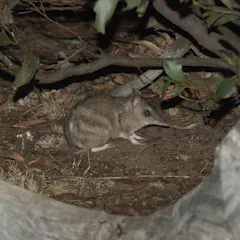
These Aussie diggers boost the health of our soils. But up until recently, we didn’t know just how much soil they can turn over (hint: it’s a lot).
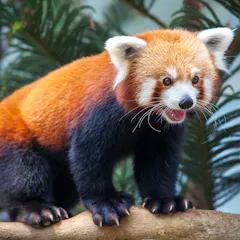
Should scientists keep both species genetically-separate and ‘pure’, even if that risks extinction?

North America’s prairies once were home to millions of wild animals. Today, most of that land is farmed or developed, but some grasslands have never been plowed and could be rewilded.
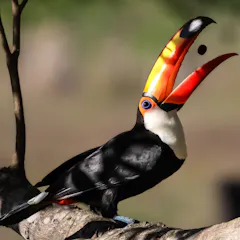
In the absence of animals to help larger trees reproduce, forests are suffering.
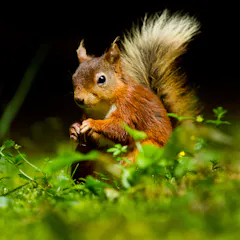
Major new ‘State of Nature’ report shows wildlife numbers still falling but conservation measures can work.
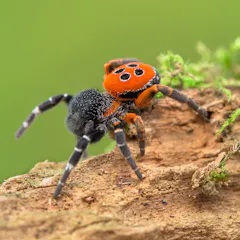
Don’t be afraid of spiders – be afraid for spiders
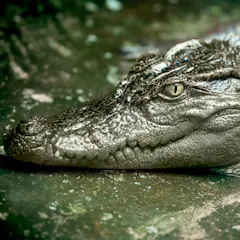
Fewer than 1,000 Siamese crocodiles exist, but can captive crocs survive again in the wild?
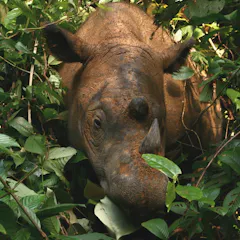
The world mourns the loss of Malaysia’s last male Sumatran rhino. Can anything stop the slide of the species towards extinction?
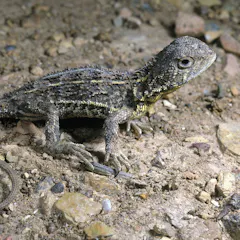
The Victorian grassland earless dragon may well be the first lizard species driven to extinction on Australia’s mainland. But conservationists aren’t ready to declare it dead just yet.
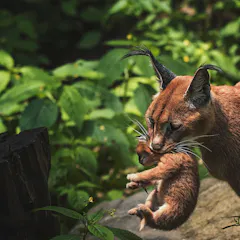
Household rat poison is endangering caracals, and other wildlife species in Cape Town, that prey on poisoned rodents. If not managed, this can negatively alter the region’s ecosystem.
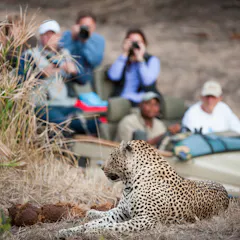
Trophy hunting is not the solution to Africa’s wildlife conservation challenges. There are other ways.
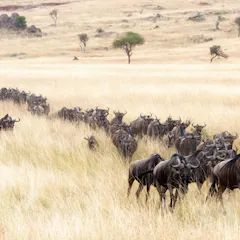
Four of the five contemporary migrations in East Africa are severely threatened and have virtually collapsed.
In Europe, biodiversity is under threat. But three major trends mean we’re still optimistic.
At an international summit in Egypt this month, nations will hopefully make progress towards recognising the economic value of wildlife and other environmental assets.
Top contributors
-

Professor in Wildlife Ecology and Conservation, School of Life & Environmental Sciences, Deakin University
-
Lecturer in the School of Applied Sciences, Edinburgh Napier University
-
Distinguished Research Professor and Australian Laureate, James Cook University
-
Professor of Wildlife Conservation, University of Salford
-
Honorary Research Fellow, University of Sydney
-
Professor of Conservation Biology, Charles Darwin University
-
Professor in Terrestrial Ecology, Deakin University
-
Professor in Ecology, Charles Sturt University
-
Professor in Conservation Science, School of the Environment, The University of Queensland
-
Professor of Environmental Management, The University of Queensland
-
Professor of Conservation and Sustainable Livelihoods, Charles Darwin University
-
Distinguished Professor of Ecology, Fenner School of Environment and Society, Australian National University
-
Professor in Biodiversity and Conservation, The University of Queensland
-
ARC Future Fellow, Queensland University of Technology
-
Professor of Conservation Science, University of Newcastle