
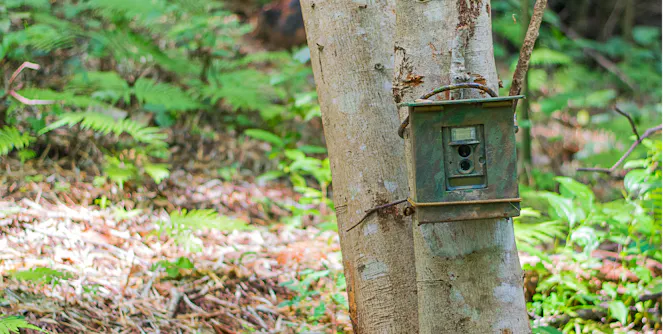
Conservation surveillance can generate fear and anger among local people.
Articles on Wildlife conservation
Displaying 241 - 260 of 570 articles

Climate change is shrinking Arctic sea ice and opening the region to ship traffic. Whales, seals and other marine mammals could be at risk unless nations adopt rules to protect them.
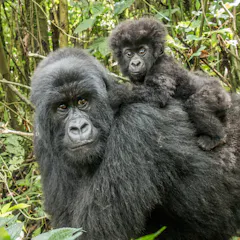
The WWF’s report avoids the C-word – here’s why that matters.
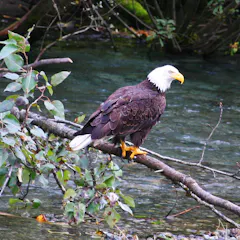
How should the US spend limited funds for conserving endangered species? A new data tool lets managers compare different strategies so they can allocate money to protect the most species.

A movement built on inequality can also perpetuate that same inequality.
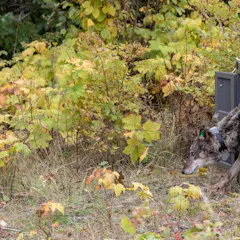
The National Park Service is moving wolves to Isle Royale in Lake Superior to replenish a small pack on the island. Wolves prey on moose, which are overgrazing the island. It doesn’t hurt that they are charismatic.
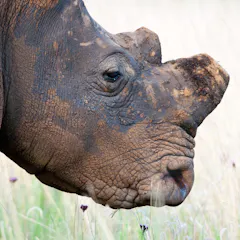
Saving the rhino means tackling demand for its horn.

The WA government has announced plans to reclassify dingoes as no different to wild dogs - paving the way for them to be culled at will. But dingoes are unique and deserve to be recognised as such.
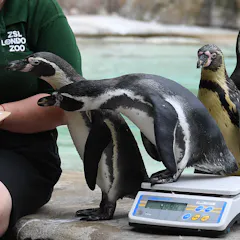
Data collected by zoos can help scientists model the populations of endangered species.
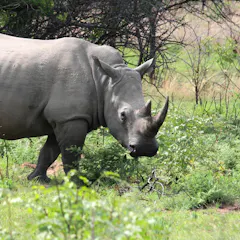
Scientists have created embryos from the eggs of southern white rhino and sperm from their northern counterparts.
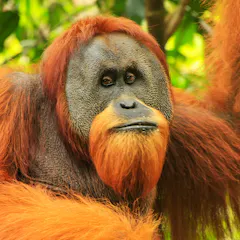
Time to rethink orangutan conservation, now we know that our red relatives are actually very adaptable.

The average Australian feral cat kills 225 reptiles a year, which adds up to 596 million in total, according to a new estimate. Pet cats, meanwhile, kill a further 53 million.
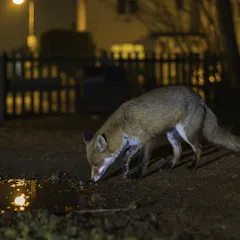
It’s becoming harder and harder for animals to find human-free spaces on the planet. New research suggests that to try to avoid people, mammals are shifting activity from the day to the nighttime.

The world’s national parks cover an area bigger than South America. But a new survey finds that one-third of this area is subject to pressure from human developments, potentially putting wildlife at risk.

Ecology is in the midst of a technological revolution. From tiny sensors that can be fitted to animals, to swarms of remotely-piloted drones, researchers have a host of new ways to study the natural world.
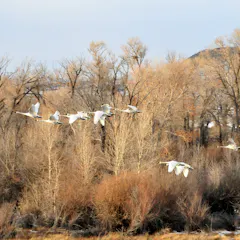
The Trump administration is narrowing protection for migratory birds to cover only deliberate harm such as hunting, but not threats like development or pollution that kill millions of birds yearly.
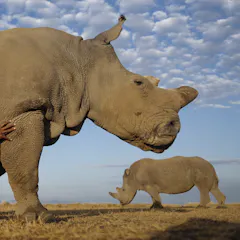
Rhino resurrection is tempting, but if humans cannot save a species in nature, what future for animals that we manufacture?
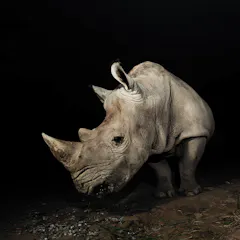
We can’t save all endangered species, but we could save some. Zoo populations will be the last hope for many threatened species.

Three researchers studied the “crop raiders” of the Brazilian rainforest in the hope of aiding both local farmers and wildlife conservation.
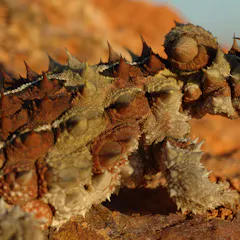
Most of Australia’s plants and animals are found nowhere else on Earth. This remarkable biodiversity requires a bolder, brighter conservation vision.
Top contributors
-

Professor in Wildlife Ecology and Conservation, School of Life & Environmental Sciences, Deakin University
-
Lecturer in the School of Applied Sciences, Edinburgh Napier University
-
Distinguished Research Professor and Australian Laureate, James Cook University
-
Professor of Wildlife Conservation, University of Salford
-
Honorary Research Fellow, University of Sydney
-
Professor of Conservation Biology, Charles Darwin University
-
Professor in Terrestrial Ecology, Deakin University
-
Professor in Ecology, Charles Sturt University
-
Professor in Conservation Science, School of the Environment, The University of Queensland
-
Professor of Environmental Management, The University of Queensland
-
Professor of Conservation and Sustainable Livelihoods, Charles Darwin University
-
Distinguished Professor of Ecology, Fenner School of Environment and Society, Australian National University
-
Professor in Biodiversity and Conservation, The University of Queensland
-
ARC Future Fellow, Queensland University of Technology
-
Professor of Conservation Science, University of Newcastle