
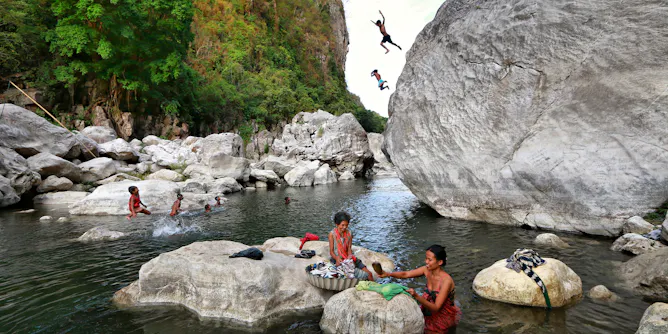
Community participation is vital to achieve the Sustainable Development Goals. But at the moment it often comes too little, too late.
Articles on Water security
Displaying 101 - 120 of 146 articles
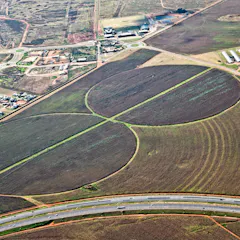
Urbanisation will require massive amounts of water to sustain the livelihoods of millions expected to move into cities. This may happen at farmers’ expense.
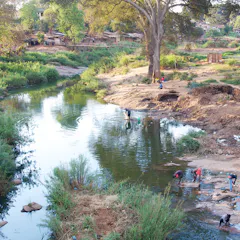
There have been modest improvements in water and sanitation provision in Africa, but there is still a long way to go. Most citizens rate their governments’ performance in this sphere poorly.
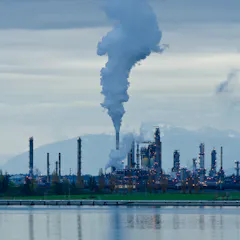
Climate change is forcing some hard decisions when it comes to water use: energy or food production?
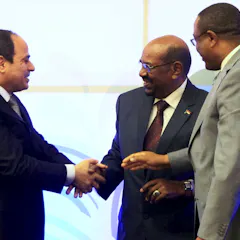
The leaders of Ethiopia, Egypt and Sudan have shown some commitment to sharing the waters of the Nile. But hard negotiations on the Grand Ethiopian Renaissance Dam are only beginning.
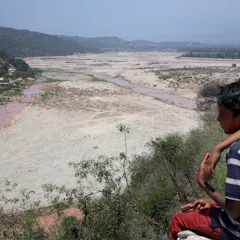
Ambitious plans to divert rivers are all very well, but what is needed is to manage water sources at the local level.
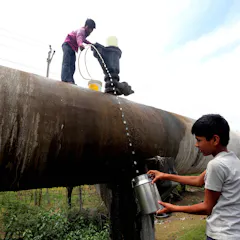
Disruptive innovation is needed if the world is to meet its clean water targets.
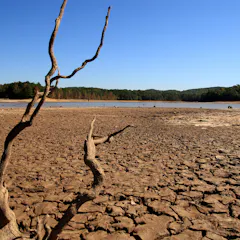
Can we predict where in the world will be water-stressed? Using a more fine-tuned model, researchers find there is no global water crisis, just local ones.
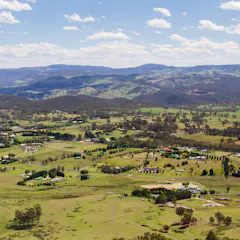
Growing population, growing demand for food, climate change: Australia’s rural lands are facing a number of pressures. So how can we sustainably use them in the future?
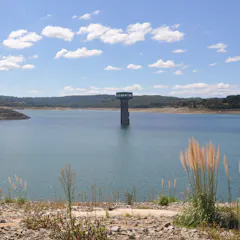
Despite its long idle, Melbourne’s desalination plant plays a vital role in providing water in a drying climate.

Australians eat a lot of water. Nearly 500 L is required to produce the food each of us eats every day.
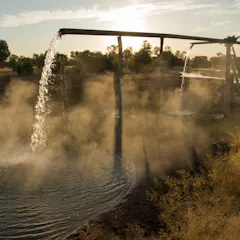
There’s enough water under the ground to form a lake 100m deep over the earth.
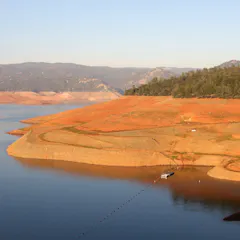
California’s drought is dragging on into its fifth year. What can the state learn from Australia’s 15-year millennium drought?
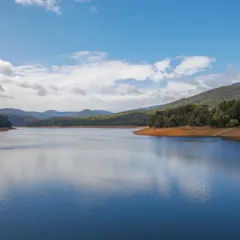
The Millennium Drought ended more than five years ago, but several years of below-average rainfall and El Niño have brought drought back to many parts of Australia. Our latest report on water in Australia shows rainfall is continuing to decline in eastern Australia and increase in the north.
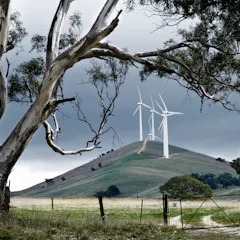
We have all the tools to achieve economic growth and environmental sustainability - we just have to choose to use them.
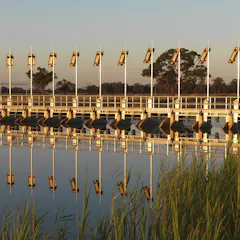
With El Niño upon us and the prospect of water scarcity ahead, how well positioned are we to make accurate and timely decisions about water resources?
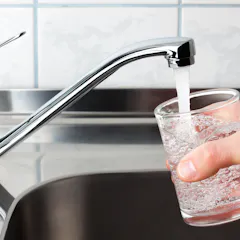
Would you drink recycled water? New surveys suggest Australians concerned about water shortages are ready for alternative sources.
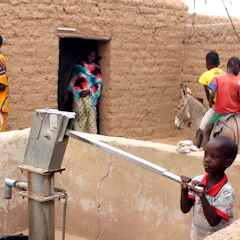
Geosciences can be a valuable tool in the fight to provide Sub-Saharan Africa with safe drinking water.

Papua New Guinea is now facing a drought and frosts that look set to be worse than 1997, when hundreds of people died. So how can memories of 1997 save lives over the next few months?

Climate change leads to increased likelihood of drought, but strategies for mitigation could make things even worse. How can we resolve the conundrum?
Top contributors
-

Associate Professor in Environmental Science, Western Sydney University
-
Director of the Institute for Water, Environment and Health (UNU-INWEH), United Nations University
-
Associate Professor of Civil Engineering, Boise State University; United Nations University
-
Senior Lecturer, Western Sydney University
-
Professor of Civil, Environmental and Ecological Engineering, Purdue University
-
Senior Research Scientist in Climate, North Central Climate Adaptation Science Center & Cooperative Institute for Research in Environmental Sciences, University of Colorado Boulder
-
Professor of Biochemistry, Michigan State University
-
Professor of Water Security, Graduate Institute – Institut de hautes études internationales et du développement (IHEID)
-
Professor and Head of School of Civil Engineering, University of Sydney
-
Professor of Civil & Environmental Engineering and Earth System Science, University of California, Irvine
-
Reader / Associate Professor in Environmental Geoscience, Sheffield Hallam University
-
Professor of Environmental and Soil Chemistry, Michigan State University
-
Research Associate in Climate Science, Massachusetts Institute of Technology (MIT)
-
Associate Professor of Water Resources Engineering, Oklahoma State University
-
Assistant Professor of Emergency and Disaster Health Systems, University of Maryland, Baltimore County