

Children need physical play to develop their strength, coordination, and motor skills.
Articles on UK Schools
Displaying 61 - 80 of 289 articles

Teachers can create supportive, optimal learning environments through a nuanced use of voice in the classroom.

Books ranging from biographies to the history of suffrage and of ordinary women.

Inclusion cannot mean simply placing pupils with educational needs and disabilities in the same room with their peers.

Libraries should be an inclusive resource for communities of children with diverse cultural and linguistic backgrounds and learning needs.
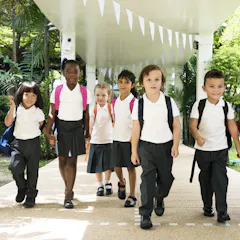
Mixed-age classes can support a greater sense of belonging and community in schools, when children across year groups form friendships.

Homework that’s creative or linked to your passions is more enjoyable.

Reading stories with young children lays the foundation for language and literacy development.
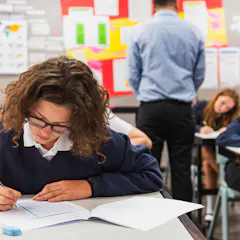
Pupils must adapt to new teachers, routines, academic demands and social dynamics.

Students may be encouraged to study and take exams in subjects that don’t suit them and that they don’t enjoy.

Many people, including teenagers, struggle with menstrual symptoms that affect their health and wellbeing.

For students taking three A-levels, the most popular combination of subjects was biology, chemistry and maths.
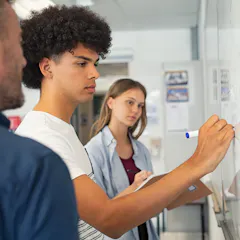
Many courses at university include mathematical or quantitative elements but do not require A-level maths for entry.

Removing ECHPs leads to the possibility of children who need more specialist support missing out.

It’s only by talking about it in sex education classes that young people can learn there is no safe way to strangle or choke their partner.

Sex and relationships education should create a safe space for open discussion.

A skateboarding mindset – being prepared to learn difficult tricks in unfamiliar settings – helps students master other kinds of skill.

Around 418 million children globally receive a free school meal.

Recalling multiplication facts doesn’t automatically help children to apply their knowledge.

Organising and attending proms builds teenagers’ leadership skills and creativity.
Top contributors
-

Professor of Education and Public Policy, Durham University
-
Associate Professor at the Health Services Management Centre, University of Birmingham
-
Professor of Early Childhood and Primary Education, UCL
-
Rosalind Hollis Professor of Education for Social Justice, University of Hull
-
Associate Professor, School of Education, Durham University
-
Professor of Education Research, School of Education, University of Birmingham
-
Professor of Education, Sheffield Hallam University
-
Assistant Professor of Behavioural Science, Warwick Business School, University of Warwick
-
Research Fellow in Social Sciences, Nottingham Trent University
-
Lecturer in Education, Swansea University
-
Associate Pro Vice Chancellor for Student Inclusion and Professor of Learning and Teaching in Higher Education, University of East Anglia
-
Director, Nottingham Institute of Education, Nottingham Trent University
-
Professor of Sociology of Education, UCL
-
Associate Professor of Education Policy, Nottingham Trent University
-
Senior Lecturer in Psychology in Education, University of Bristol