

Preparing for an uncertain future is less about predicting which jobs will survive than developing skills that allow people to adapt as work changes.
Articles on GCSEs
Displaying 1 - 20 of 81 articles

Results season can bring pressure to have a career plan. Here’s how to explore your options without having all the answers now.

Physical activity improves cognitive function – our ability to think and process information.

New research suggests GCSE science builds thinking skills that matter far beyond the lab.

Over a third of GCSE, AS and A-level exam papers in 2023 made no mention of women at all.
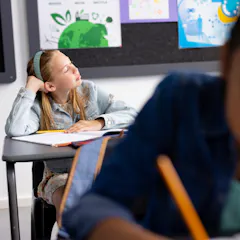
In England, where high-stakes testing is common, students’ fear of failure is higher.

Capitalising on children’s existing multilingualism would be beneficial.

Once a thriving part of the national curriculum, design and technology has suffered years of decline.
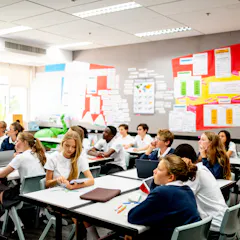
By listening more closely to the interests and goals of young people in schools, we can start to provide the language teaching they want.

Students may be encouraged to study and take exams in subjects that don’t suit them and that they don’t enjoy.
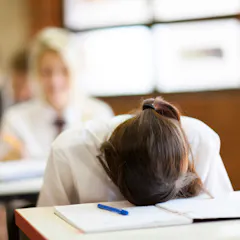
Many people, including teenagers, struggle with menstrual symptoms that affect their health and wellbeing.

A languages curriculum enriched with linguistics is appealing to students and teachers.
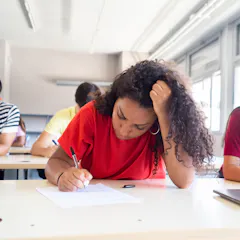
Novelty primes your brain to learn, while links with existing knowledge make memories stick.

Use stories, rhymes and acronyms that catch your imagination.

Pupils from poorer backgrounds – those eligible for free school meals – made less progress in their schooling than their peers.
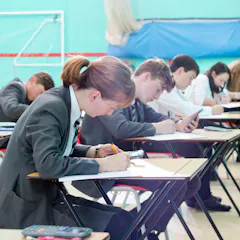
Many sixth forms and sixth form colleges require grade four or above in maths and English to study A-levels or new vocational qualifications such as T-levels.

Since 2003, the number of GCSE entries in German has fallen from 125,663 to this year’s 35,913.

It’s possible even more young people would like to study maths but can’t find the right course.
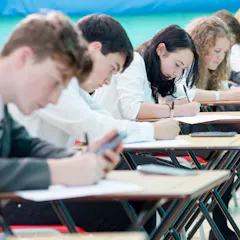
Changes have included a return to exam-focused assessment.

Very compressed study schedules lead to a catastrophic amount of forgetting.
Top contributors
-

Director of the Oxford University Centre for Educational Assessment, University of Oxford
-
Head of Department and Senior Lecturer in Education and Social Justice, Lancaster University
-
Sir Henry Wellcome Postdoctoral Fellow, King's College London
-
Senior Lecturer (Psychology in Education), Liverpool John Moores University
-
Programme Leader, MA in Educational Assessment, UCL
-
Lecturer in Languages Education, University of Sheffield
-
Reader in Psychology, Queen Mary University of London
-
Director, Nottingham Institute of Education, Nottingham Trent University
-
Vice-Chancellor and Prinicipal, Brunel University of London
-
Professor of Educational Assessment, UCL
-
Professor in Education, Liverpool John Moores University
-
PhD student, University of Oxford
-
Reader in Social Statistics at the Centre for Multilevel Modelling, University of Bristol
-
Senior lecturer for PGCE Primary, Cardiff Metropolitan University
-
Phd Student, Institute of Psychiatry, Psychology & Neuroscience, King's College London