
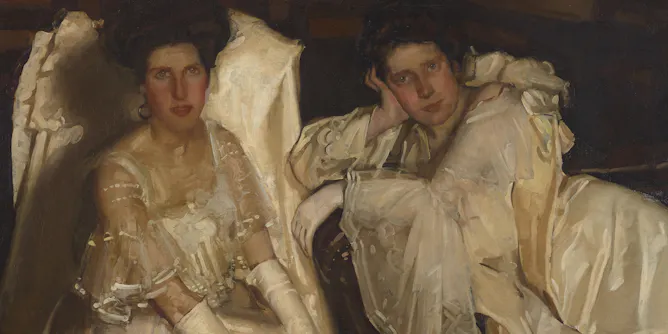
Hugh Ramsay’s Two girls in white, was painted just two years before he died at the age of 28 in 1906. It is the central work in the National Gallery of Australia’s survey exhibition.
Articles on Tuberculosis (TB)
Displaying 101 - 120 of 193 articles
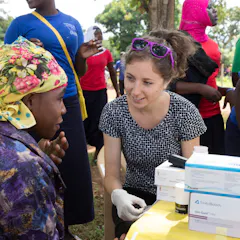
Global health researchers, funders and journals are not walking the talk on equity, diversity and inclusion.

Many of the most fundamental aspects of TB disease remain unknown. For example, after exposure to the organism that causes TB, why do only some people get infected and only some of those fall ill?

Rapid population ageing has prompted researchers to study disease trends in older South Africans. The aim is to understand the role that specific health conditions play in ageing among rural people.
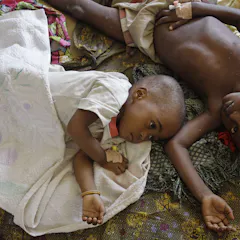
There’s a big market for new treatments for TB, malaria and other ailments. But most of these diseases afflict low-income people unable to pay for medicine.
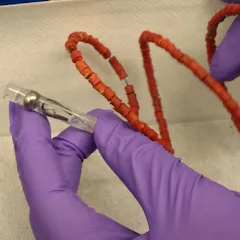
Treating infectious diseases is a huge challenge because patients often fail to take the medicine for the long duration, especially for tuberculosis. Now there’s a new device that may help.

What should be done to ensure that the SDGs actually change countries’ development trajectories? Here are four practical steps.
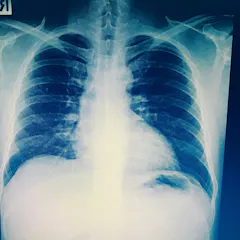
The push to end TB requires significant investment into the research and development of new diagnostics and treatments.
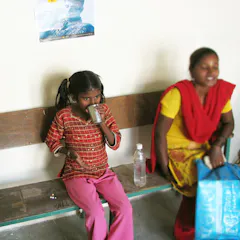
Tuberculosis kills more people globally than any other infectious disease. A human-rights approach and investment in quality care are essential to ending the global epidemic.
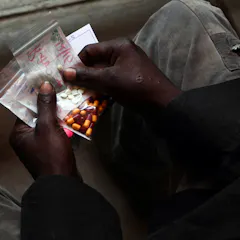
New research shows that the treatment of drug resistant-TB can be reduced from the current duration of 20 to 24 months to less than a year.

TB outside the lungs accounted for 14% of TB cases recorded globally in 2017.

In Southern Africa, high rates of HIV infection have been the primary driver of TB

Warthogs are an important species in managing bovine TB.
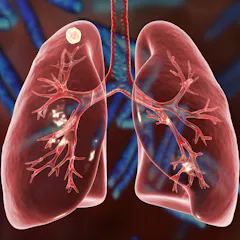
In Manitoba, Canada, researchers have used health databases to better understand how people with tuberculosis interact with the health-care system.
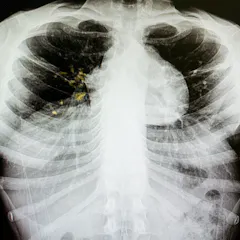
Using a large number of computers to screen TB drugs reduces the cost and time.
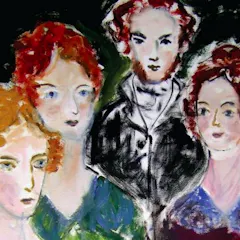
Despite the myth of consumption as an ethereal, wasting disease, the more prosaic truth is that the Brontës likely infected one another with tuberculosis.

We cannot end TB with century-old technologies and poor quality care. It is time to reinvent the way we are managing TB, and overcome our collective failures of the imagination.
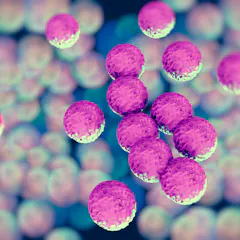
Antibiotic resistance is a major and growing global health threat. These five recent examples show us how dangerous it can be.

The reason that nanoparticles hold such hope for TB treatment is that they can be carefully targeted.
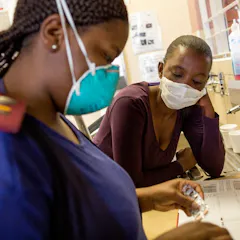
The bill to provide universal health care in South Africa is not the silver bullet for the challenges in the health sector.
Top contributors
-

Canada Research Chair of Epidemiology & Global Health, McGill University
-
Assistant Professor, Africa Health Research Institute (AHRI)
-
Head of the Centre of Excellence for Biomedical TB Research, University of the Witwatersrand
-
Deputy Director of the Centre for Tuberculosis Research, Reader in Tuberculosis and Social Medicine, Liverpool School of Tropical Medicine, Liverpool, UK; and Honorary Research Associate at Karolinska Institutet, Stockholm, Sweden, and, University of Liverpool
-
Faculty Member, Africa Health Research Institute; Associate professor, UCL
-
Associate Professor, Melbourne Health
-
Extraordinary Senior Lecture in the Department of Global Health, Stellenbosch University
-
Honorary Research Associate, Centre for Infectious Disease Epidemiology and Research, University of Cape Town
-
Professor; Director Sydney ID, University of Sydney
-
Faculty Member, Africa Health Research Institute; Wellcome Trust Senior Research Fellow, UCL
-
Associate Professor, Pharmaceutical Sciences, University of the Western Cape
-
Extraordinary Professor, Global Health, Stellenbosch University; South African Medical Research Council
-
Associate Professor of Biomedical Engineering, University of Michigan
-
Associate Professor, SARChI Research Chair in Mycobactomics, Stellenbosch University
-
Head of the Division of Pulmonology, University of Cape Town