
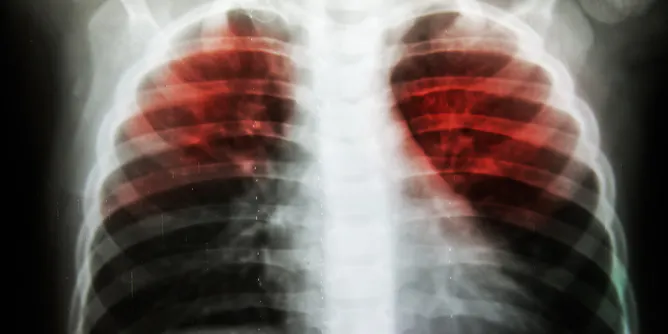
In Australia, there are around 1200 to 1300 cases of tuberculosis each year which means we are among the lowest-risk countries in the world.
Articles on Tuberculosis (TB)
Displaying 141 - 160 of 193 articles
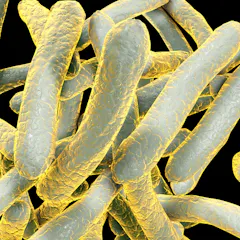
Scientists have struggled to diagnose TB in people with compromised immune systems because of the low levels of the bacteria in their body.
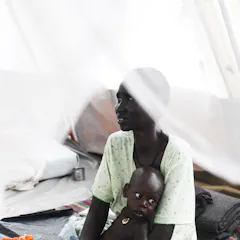
Tuberculosis transmitted from animals to humans is a growing concern in poor countries. As we observe World Tuberculosis Day, it’s worth asking why.
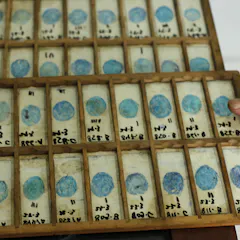
Advanced lab tests have entered the market to improve tuberculosis diagnosis. This will ensure prompt and correct treatment in managing the disease.

To tackle TB a dynamic change in discourse is needed. The focus must be on how to respond to emerging complexities the disease presents.
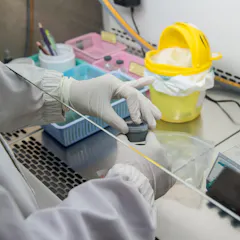
Shortening the treatment period has become a top priority within TB research but studies to date have been unsuccessful.

There’s a growing body of evidence that shows we could be doing more for the close to billion children at risk of intestinal worms. We simply cannot afford to ignore it.
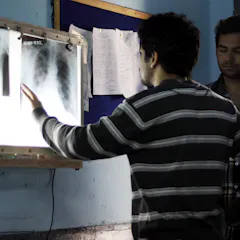
Eradicating TB won’t happen unless the number of people who are latent carriers is tackled. A new estimate suggests it’s a much bigger problem than previously thought.
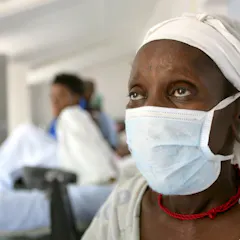
Antibiotics that were not originally earmarked to treat TB have shown the first signs of effectiveness and could be added to the much-needed arsenal of drugs to fight the deadly disease.
The burden of communicable disease is declining in Africa and life expectancy is increasing. But non-communicable diseases like diabetes, cardiovascular disease and cancer are wreaking havoc.

When people migrate they can end up worse off when it comes to getting access to health care. Analysing migration trends can help drive local public health policy towards the correct targets.

Two musicals set in working class mining communities – one in the UK and the other in South Africa – have diametrically opposed messages: one of hope; the other, despair.
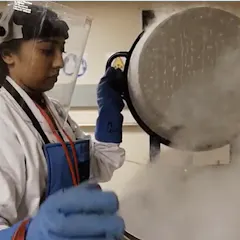
A new centre in South Africa will work to significantly reduce emerging HIV and TB co-infections.
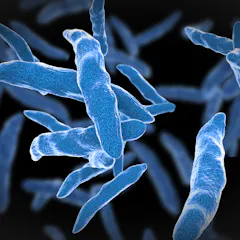
Scientists have found proteins in the body that promote lung inflammation which helps the bacteria that causes TB to spread throughout the lung.

A new study shows that by using genomics, you can cut down the lengthy process of testing for drug-resistance TB to a matter of days.
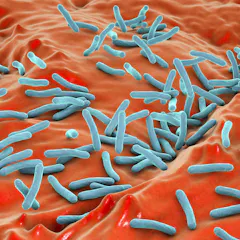
South African scientists have found a way to single out the problematic parts of the bacteria causing TB that results in drug resistance.
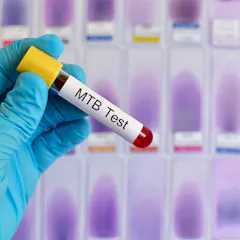
African scientists have developed and patented a test for TB that overcomes two major challenges with current methods: it delivers quick results and is much cheaper.

Understanding what causes diseases is a life-and-death matter. It is a complicated issue that has generated a great deal of debate in the medical community.
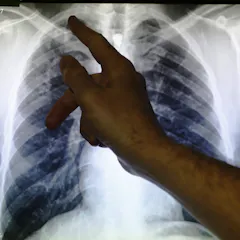
Many people in the U.S. have no idea that TB is still found here, or what a major health risk it poses in other parts of the world.

In countries such as South Africa with a high burden of TB and HIV, vitamin D could be an extremely effective and cheap weapon to include in the arsenal against TB and HIV.
Top contributors
-

Canada Research Chair of Epidemiology & Global Health, McGill University
-
Assistant Professor, Africa Health Research Institute (AHRI)
-
Head of the Centre of Excellence for Biomedical TB Research, University of the Witwatersrand
-
Deputy Director of the Centre for Tuberculosis Research, Reader in Tuberculosis and Social Medicine, Liverpool School of Tropical Medicine, Liverpool, UK; and Honorary Research Associate at Karolinska Institutet, Stockholm, Sweden, and, University of Liverpool
-
Faculty Member, Africa Health Research Institute; Associate professor, UCL
-
Associate Professor, Melbourne Health
-
Extraordinary Senior Lecture in the Department of Global Health, Stellenbosch University
-
Honorary Research Associate, Centre for Infectious Disease Epidemiology and Research, University of Cape Town
-
Professor; Director Sydney ID, University of Sydney
-
Faculty Member, Africa Health Research Institute; Wellcome Trust Senior Research Fellow, UCL
-
Associate Professor, Pharmaceutical Sciences, University of the Western Cape
-
Extraordinary Professor, Global Health, Stellenbosch University; South African Medical Research Council
-
Associate Professor of Biomedical Engineering, University of Michigan
-
Associate Professor, SARChI Research Chair in Mycobactomics, Stellenbosch University
-
Head of the Division of Pulmonology, University of Cape Town