

Malaria, tuberculosis and HIV/AIDS are regarded as the ‘big three’ infectious diseases. This is where scientists are at in their efforts to find a vaccine for each one.
Articles on Tuberculosis (TB)
Displaying 81 - 100 of 193 articles

When Abbott Thayer’s wife succumbed to the disease, his life and art underwent a dramatic shift.
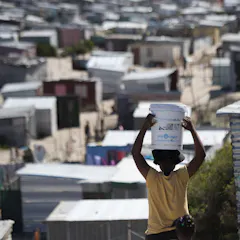
COVID-19 has stretched South Africa’s public health services to capacity. In response, the services have increased their capacity through innovation.
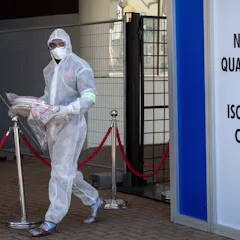
The redirection of resources to COVID-19 has enormous consequences for the provision of healthcare services for other diseases, in particular, HIV programmes.
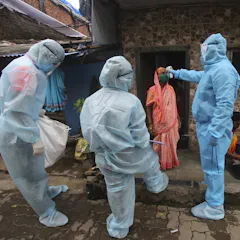
The high cost of pharmaceuticals often means only the richest patients get lifesaving medicines. As coronavirus drugs emerge, it will require hard, creative work to ensure they’re available to all.
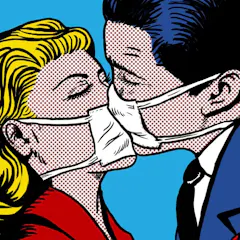
A century ago, Australians were battling another pandemic, tuberculosis, with public health measures many will find familiar today.
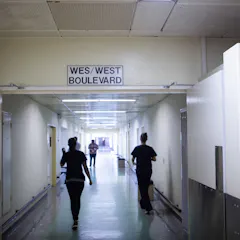
The study of two hospitals was a first for researching the microbiology of the built environment in South Africa – a multi-disciplinary approach to understanding how to design healthier buildings.
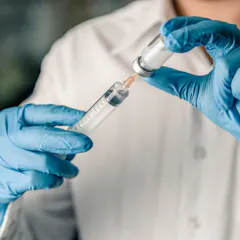
A vaccine historically used to prevent tuberculosis is now among the contenders for a COVID-19 vaccine. So what is the BCG vaccine and why might it work against coronavirus?
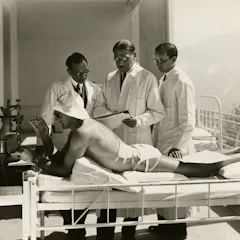
Sunlight is not a cure for everything, and certainly not for COVID-19, but 100 years ago it was a popular treatment.

Australia has been tightening the border between PNG and the Torres Strait Islands in recent years, exacerbating poverty and the spread of tuberculosis in villages that depend on cross-border trade.
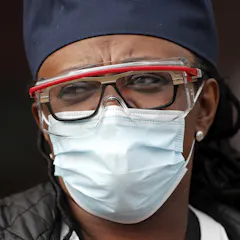
Blacks are dying at higher rates from COVID than whites, showing yet another example of gaps in outcomes between blacks and other groups. The cause is more sociological than biological.
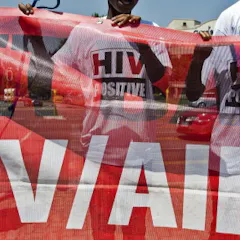
Very little is known about the relationship between COVID-19 and HIV and TB. What is known is that people’s lungs are affected by all three.
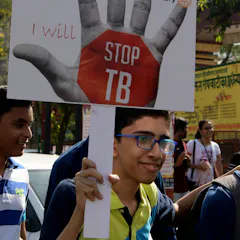
Today is World TB Day. With attention turned toward coronavirus, it might seem too much to think about. But there’s a lot to consider about the role of young people in stopping both diseases.
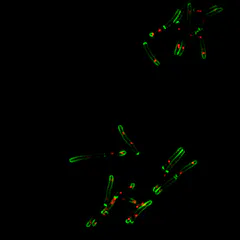
Scientists need greater understanding of the bacterium’s basic biology, as well as more about how it is spread from one individual to the next.

There are many questions left unanswered because the outbreak is still in an early stage.

In some communities, over a quarter of the children were misclassified as iron replete whereas they were iron deficient.
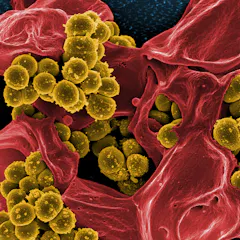
Pathogens rapidly evolve resistance to antibiotics. AI could keep us a step ahead of deadly infections.
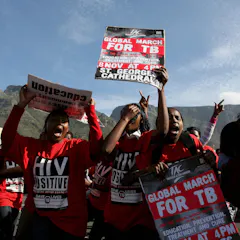
Obstacles to getting more people with TB treated extend beyond cost. It starts with locating people at greatest risk and expanding preventive treatment programmes.
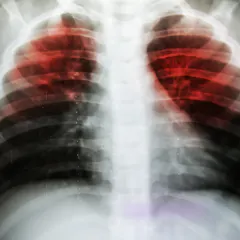
There are more effective ways to give the tuberculosis vaccine.

Bioinformatics can be applied to a range of problems, such as understanding the genome sequence of organisms or coming up with new drugs.
Top contributors
-

Canada Research Chair of Epidemiology & Global Health, McGill University
-
Assistant Professor, Africa Health Research Institute (AHRI)
-
Head of the Centre of Excellence for Biomedical TB Research, University of the Witwatersrand
-
Deputy Director of the Centre for Tuberculosis Research, Reader in Tuberculosis and Social Medicine, Liverpool School of Tropical Medicine, Liverpool, UK; and Honorary Research Associate at Karolinska Institutet, Stockholm, Sweden, and, University of Liverpool
-
Faculty Member, Africa Health Research Institute; Associate professor, UCL
-
Associate Professor, Melbourne Health
-
Extraordinary Senior Lecture in the Department of Global Health, Stellenbosch University
-
Honorary Research Associate, Centre for Infectious Disease Epidemiology and Research, University of Cape Town
-
Professor; Director Sydney ID, University of Sydney
-
Faculty Member, Africa Health Research Institute; Wellcome Trust Senior Research Fellow, UCL
-
Associate Professor, Pharmaceutical Sciences, University of the Western Cape
-
Extraordinary Professor, Global Health, Stellenbosch University; South African Medical Research Council
-
Associate Professor of Biomedical Engineering, University of Michigan
-
Associate Professor, SARChI Research Chair in Mycobactomics, Stellenbosch University
-
Head of the Division of Pulmonology, University of Cape Town