
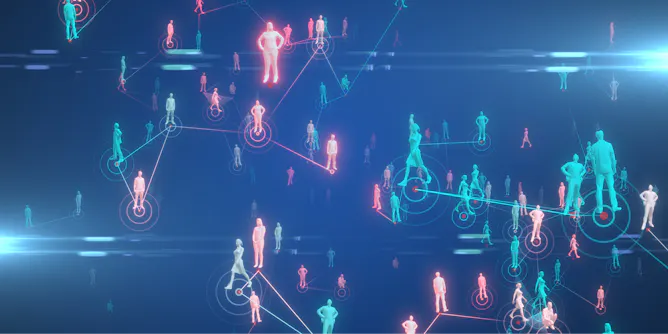
The government of Ontario’s announcement of funding of a wearable contact tracking device for workplaces raises concerns about privacy and surveillance.
Articles on Surveillance
Displaying 161 - 180 of 411 articles

The responsibility should not simply lie with employees who are working even harder.

Innovative border control technologies may be great for governments cracking down on migration — but they could further disadvantage groups that are already vulnerable.

The Constitutional Court judgment is a huge victory, not only for journalists and lawyers who stand to benefit directly and immediately, but for broader society.

We already track potential vaccine side-effects in Australia. So we’ll be using, and building on, years of experience in monitoring any long-term effects of COVID-19 vaccines.
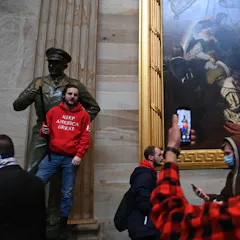
Facial recognition, social media and location tracking give law enforcement a leg up in a monumental investigation.

A recent Labor Department memo urges agencies to avoid releasing press releases accusing companies of violating laws, to protect the companies’ reputations. People are denied the same protections.

There is growing concern in some countries that restrictions designed to combat the pandemic may not be lifted once it is over.

A sweeping review of Australia’s national security laws has recommended a new single legislative framework governing electronic surveillance activities.
Equity and privacy problems with online proctoring reflect a larger issue: Students look to universities to set an example of integrity.

The use of artificial intelligence in health care is on the rise, and the concerns of the public need to be considered in developing policy that regulates its application.
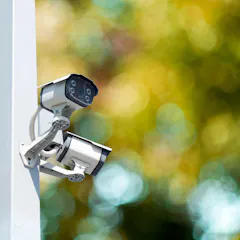
Surveillance tools such as these are perfectly legal in Australia, despite privacy concerns. But safeguards should still be put into place.
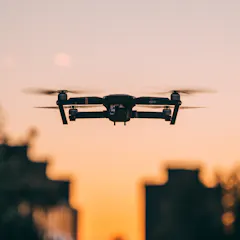
They began as wartime technology, but now drones are changing the way we witness the world, especially when we can’t see it for ourselves.

Technology is not neutral, as facial recognition algorithms and predictive policing have shown us. Algorithms discriminate by design, reflecting and reinforcing pre-existing biases.

If a new deal between Microsoft and ByteDance goes through, the Chinese company may withdraw ownership of its TikTok operations in not only the US – but also Australia, New Zealand and Canada.
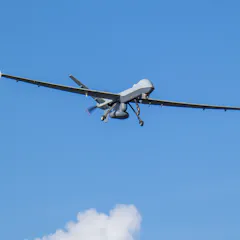
Avoiding drones’ prying eyes can be as complicated as donning a high-tech hoodie and as simple as ducking under a tree.

Following a privacy policy change in 2016, Google has collected users’ data from third-party websites and apps. The ACCC argues users were misled into signing away their privacy.

The massive increase in internet-connected devices will create an informal surveillance network that could be used to target protestors and activists.

Facial recognition algorithms will always make mistakes. But how can we make them less discriminatory?

Trust in the confidentiality of contact tracing broke down during the AIDS epidemic. Today, it’s faltering again.
Top contributors
-

Associate Professor in Telecommunications Engineering, Swinburne University of Technology
-
Research Director of the Security and Surveillance Research group; Professor, The University of Queensland
-
Professorial Fellow, University of Canberra
-
Professor of Digital Society, University of Glasgow
-
Affiliated Faculty Member, Institute for Computational and Data Sciences, Penn State
-
Associate Professor, School of Law, University of Canberra
-
Senior Lecturer in Technology, The Open University
-
Research engineer, Advanced Surveillance Project, CSIRO
-
Senior Researcher and Project Manager, Advanced Surveillance Project, CSIRO
-
Lecturer in Technology and Crime, Griffith University
-
Professor and Director, Centre for Research into Information, Surveillance and Privacy, University of Stirling
-
Emeritus Professor in Law and Criminal Justice, Adelaide University
-
Professor of Global Legal Studies, Birmingham Law School, University of Birmingham
-
Head, The Cyber Academy, Edinburgh Napier University
-
Professor of Cyber Security Practice, Edith Cowan University