
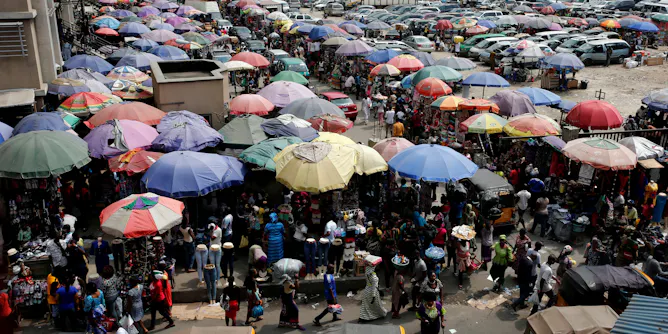
Scholars have started to investigate what it really means to be middle class in Africa.
Articles on Sub-Saharan Africa
Displaying 121 - 140 of 184 articles

The world’s population has reached 8 billion and is expected to climb to nearly 10 billion by 2050. Why will population growth inevitably continue? Should we try to reduce or stop this growth?

Indian-made antivenoms, common throughout Africa because they are affordable, showed little-to-no neutralisation of the African Echis venoms.
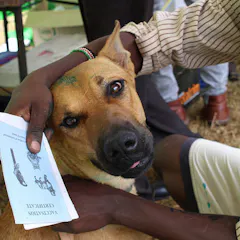
By tackling local threats and controlling existing diseases, countries are able to build the capacity needed to deal with future emerging disease threats.
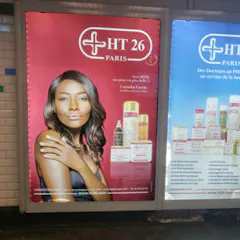
Despite their dangers, skin-bleaching products are grow in popularity in Africa, Asia and even Europe. France’s colonial history holds one of the keys to better understanding this trend.
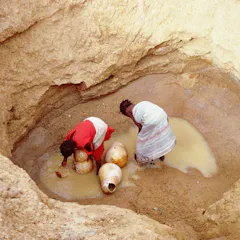
Dry areas make up more than 41% of land around the globe and are home to more than two billion people. Despite climate change and other challenges, there are ways to combat land degradation.
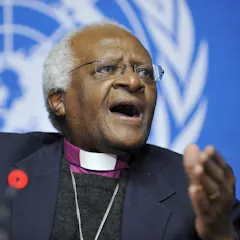
Archbishop Bishop Desmond Tutu is well known for having invoked an ubuntu ethic to evaluate South African society, and he can take substantial credit for having made the term familiar.

Faced with a massive food production shortfall, Africa can look towards India’s Green Revolution to jump start its agricultural output.
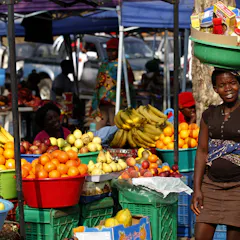
Most African cities are expensive, informal and non-industrial. This has produced unique socioeconomic and environmental risks that must be carefully considered in policy development.

Sub-Saharan Africa is one of the hot spots of Christian higher education growth worldwide, a trend that can be observed across the continent.
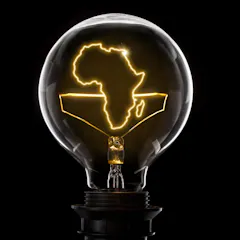
Africa’s overall contribution to research might be small, but smart people are undertaking smart and important work on and about the continent.
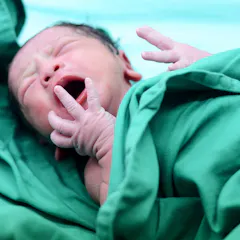
Many women in African countries who are medically required to have caesarean sections aren’t able to access them due to weak health systems and a lack of resources.
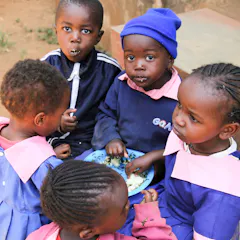
Getting local farmers involved in school feeding schemes has the potential to boost livelihoods and revitalise rural economies in Africa.
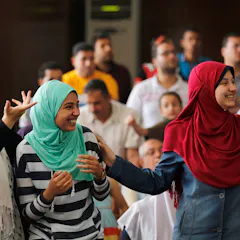
Unless we’re addressing inequalities everywhere, we will achieve equality nowhere.

Newly recognised genetic populations carry their evolutionary history with them, and the history of their habits. This is why detecting new species is so important.
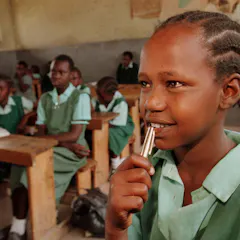
Society, parents, schools and popular media all perpetuate the myth that girls don’t have the brains or ability to be scientists. Of course, that simply isn’t true.
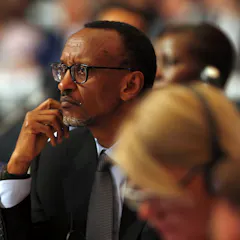
A Trump presidency brings into question America’s traditional approach to Africa, especially Rwanda. But a true shift in US foreign policy in Africa is not a priority for the Trump administration.
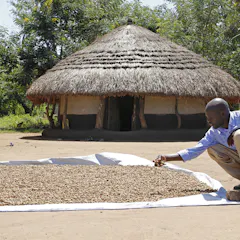
US farmers and agribusiness can help themselves by helping Africa to meet its rapidly growing food needs.

South Africa lacks a clear definition of disability – and its limited view of who should be regarded as having a disability in the labour market is at odds with international practice.

South Africa’s weather is very attractive to international visitors. Climate change could alter their perceptions unless mitigation strategies are put in place.
Top contributors
-

Extraordinary Professor, Global Health, Stellenbosch University; South African Medical Research Council
-
Professor of Pharmacy, University of Tasmania
-
Professor of the Practice of International Development, Harvard Kennedy School
-
Professor, School of Public Health, University of Gothenburg Sweden, University of the Witwatersrand
-
Editor-in-Chief of the South African Journal of Science and Consultant, Vice Principal for Research and Graduate Education, University of Pretoria
-
Associate professor, University of Canberra
-
sociologue (Institut des mondes africains), École des Hautes Études en Sciences Sociales (EHESS)
-
Assistant professor, The Education University of Hong Kong
-
Teaching Assistant Professor, University of Pittsburg and Visiting Associate Professor, The University of Osaka, University of Pittsburgh
-
Professor of medicine and deputy director of the Desmond Tutu HIV Centre at the Institute of Infectious Disease and Molecular Medicine, University of Cape Town
-
Distinguished visiting professor, University of Glasgow
-
Director of the Africa Centre for Population Health and Professor of Virology, University of KwaZulu-Natal
-
Research Active Lecturer, Discipline of Psychology, Charles Darwin University, Charles Darwin University
-
Professor, Institute of African Studies, University of Leipzig
-
Research Scientist, African Population and Health Research Center