

The short term interests of investors could lead to long term problems in sub-Saharan Africa.
Articles on Sub-Saharan Africa
Displaying 101 - 120 of 184 articles

Survey shows Zimbabwean policy makers need not fear a public backlash if they choose to abolition of the death penalty.

At first, the 2010s seemed full of hope for democracy. The picture today is rather more complicated.

Each year, 500,000 people die of malaria annually, a preventable disease. Most of them children in Africa, where many anti-malarial drugs are fake or substandard.

As early as 1953, Balandier demonstrated how the struggle against colonialism was associated with an inverted vision of the world.
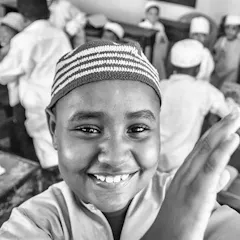
In Sub-Saharan Africa, Arab-Islamic education is neither a limited nor recent phenomena. While poorly understood, it remains a fundamental part of the educational development of the region.

Inequality is decried at campaign rallies and in the global commentariat. But little is being done at any policy level.

American charitable foundations have gradually established themselves as key players in the African academic sector. If the benefits have been remarkable, there are risks as well.
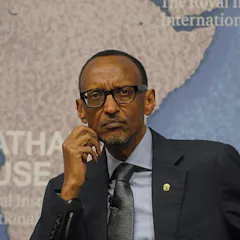
Writing about Rwanda sometimes gives the impression of crossing a minefield. It is not a question of controversies between researchers but of denunciation and intimidation.

About 263 million children and youth worldwide are out of school. If some progress have been made, especially on school attendance, huge gaps remain on gender parity or equity in schooling choices.

Coordinated international efforts may be key to improving the life expectancy and health of many snakebite victims.
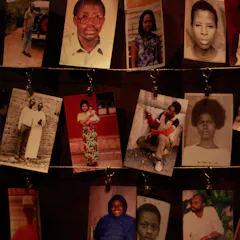
It is shocking to see the extent to which humanitarian workers in Rwanda became regular eyewitnesses to violence, murder and large-scale massacres in 1994.

Diagnosing babies with HIV as early as possible is critical to ensuring that they get onto treatment.
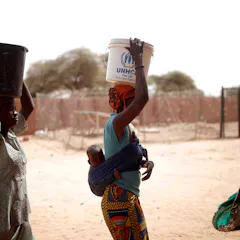
Developing a map of African countries’ water poverty levels offers a transparent analysis for policymakers, governments and organisations that deal with water issues.

Governments must understand that the factors making cities convenient and productive also make their residents prone to obesity. They must confront this challenge with intelligent, focused policies.

A clinical trial currently underway in France could confirm that that HIV treatment can be safely reduced to just four days a week, while maintaining the same efficacy.

Understanding where there are high numbers of new HIV infections is important to establishing whether interventions are working or not.

The political crisis in Zimbabwe reveals the shortcomings of African intergovernmental organisations and their (in)capacity to guarantee democratic functioning in the member states.
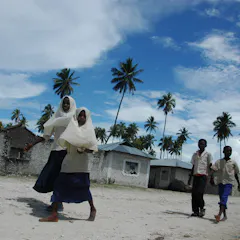
Creating more opportunities for young women and girls to work and earn money is a possible solution to early marriages. Subsidising secondary education to keep poorer girls in school is another.

Johannesburg’s central business district is developing into a major cross border shopping hub, servicing the broader sub-Saharan region and has a potential to grow even further.
Top contributors
-

Extraordinary Professor, Global Health, Stellenbosch University; South African Medical Research Council
-
Professor of Pharmacy, University of Tasmania
-
Professor of the Practice of International Development, Harvard Kennedy School
-
Professor, School of Public Health, University of Gothenburg Sweden, University of the Witwatersrand
-
Editor-in-Chief of the South African Journal of Science and Consultant, Vice Principal for Research and Graduate Education, University of Pretoria
-
Associate professor, University of Canberra
-
sociologue (Institut des mondes africains), École des Hautes Études en Sciences Sociales (EHESS)
-
Assistant professor, The Education University of Hong Kong
-
Teaching Assistant Professor, University of Pittsburg and Visiting Associate Professor, The University of Osaka, University of Pittsburgh
-
Professor of medicine and deputy director of the Desmond Tutu HIV Centre at the Institute of Infectious Disease and Molecular Medicine, University of Cape Town
-
Distinguished visiting professor, University of Glasgow
-
Director of the Africa Centre for Population Health and Professor of Virology, University of KwaZulu-Natal
-
Research Active Lecturer, Discipline of Psychology, Charles Darwin University, Charles Darwin University
-
Professor, Institute of African Studies, University of Leipzig
-
Research Scientist, African Population and Health Research Center