

A new report has found that Africa’s air pollution is already causing more premature deaths than unsafe water or childhood malnutrition.
Articles on Sub-Saharan Africa
Displaying 141 - 160 of 184 articles

So-called lifestyle diseases such as cancer and heart disease have been rising in Africa, adding to the already huge burden of disease in poor countries. But the research has not kept pace.
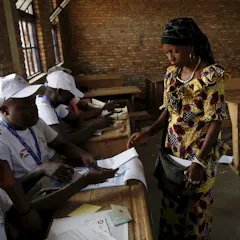
If women aren’t given their full rights, they’re less likely to believe in democratic institutions.

The factors limiting poultry production are similar to those affecting the rest of the agricultural systems.

Increasing legume production can turn the tide for African farmers who struggle with poor soils, declining farm yields and worsening nutrition in one fell swoop
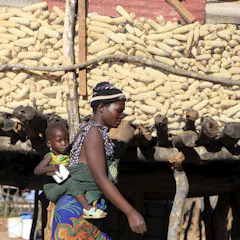
Economic growth alone won’t end hunger. Good policies and programmes are needed, too. Scientists and researchers have a role to play in these initiatives.

The focus of the 2016 International AIDS Conference has on access to necessary antiretrovirals, equity and making sure no-one is left behind. But there is a funding gap that needs to be addressed.

Studies have suggested that women using a particular kind of injectable contraceptive are more susceptible to HIV infection. Research in mice offers new insights.

Taking antiretrovirals is key to reducing HIV infection rates, but the challenge lies in making sure people who know they are infected actually take the drugs.

Current epidemiological and financial trends suggest there’s a major risk of a substantial shortfall in the funds required to sustain life-saving antiretroviral programmes.
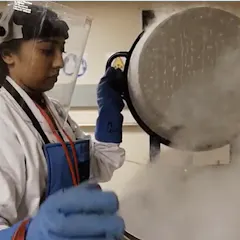
A new centre in South Africa will work to significantly reduce emerging HIV and TB co-infections.

Invasive species and diseases pose a major threat to agriculture – particularly in the countries that can least afford it.

Genomic research must take place in Africa because African populations have evolved significantly and their genetic composition is more diverse than that of populations elsewhere.

More than two million women across the world suffer from obstetric fistula – a hole in the birth canal that makes them incontinent – but this can be avoided.

At least a dozen sub-Saharan Africa countries have raised debt through sovereign bonds. The chickens are now coming home to roost.

Between 1995 and 2013 the US provided about US$98 billion in aid to sub-Saharan Africa. But the country’s economic and political reach is slowly declining.

New initiative with old handsets halves rates of the disease in southern Tanzania – and is being applied to other conditions, too.

Education can be a powerful tool to stop the practice of child marriage. It empowers girls, and their success can ultimately boost their communities.
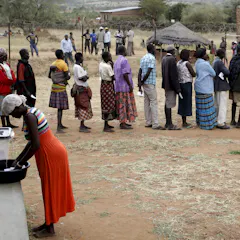
The Ugandan police refuse to ‘hand over power to the opposition to destabilise the peace we fought for’.
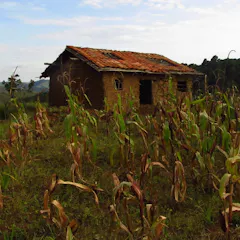
The modernisation of agriculture has been touted by economists and the IMF as a way of reducing poverty in sub-Saharan Africa. But caution about the benefits of the Green Revolution is advisable.
Top contributors
-

Extraordinary Professor, Global Health, Stellenbosch University; South African Medical Research Council
-
Professor of Pharmacy, University of Tasmania
-
Professor of the Practice of International Development, Harvard Kennedy School
-
Professor, School of Public Health, University of Gothenburg Sweden, University of the Witwatersrand
-
Editor-in-Chief of the South African Journal of Science and Consultant, Vice Principal for Research and Graduate Education, University of Pretoria
-
Associate professor, University of Canberra
-
sociologue (Institut des mondes africains), École des Hautes Études en Sciences Sociales (EHESS)
-
Assistant professor, The Education University of Hong Kong
-
Teaching Assistant Professor, University of Pittsburg and Visiting Associate Professor, The University of Osaka, University of Pittsburgh
-
Professor of medicine and deputy director of the Desmond Tutu HIV Centre at the Institute of Infectious Disease and Molecular Medicine, University of Cape Town
-
Distinguished visiting professor, University of Glasgow
-
Director of the Africa Centre for Population Health and Professor of Virology, University of KwaZulu-Natal
-
Research Active Lecturer, Discipline of Psychology, Charles Darwin University, Charles Darwin University
-
Professor, Institute of African Studies, University of Leipzig
-
Research Scientist, African Population and Health Research Center