
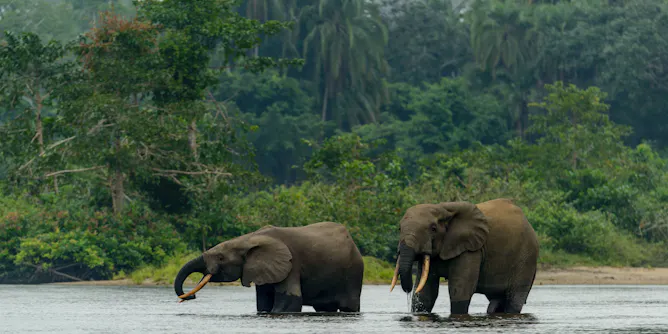
Setting up the world’s biggest giant tropical forest reserve in the Congo Basin is a step towards conserving the area and creating jobs for local communities.
Articles on Solutions
Displaying 81 - 100 of 135 articles
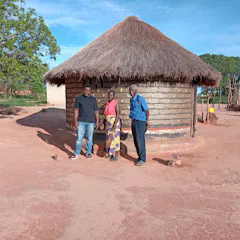
New research has found that rural Zambians are much more likely to adopt solar power if they see it working for their neighbours.
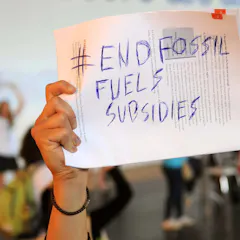
South Africa subsidises fossil fuel companies to the tune of R118 billion (US$6.2 billion) a year. As G20 president, South Africa must push to end these subsidies.
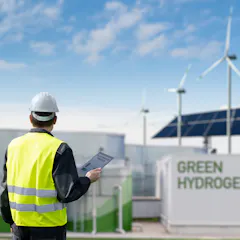
Researchers warn that South Africa and Chile should avoid taking out huge loans to set up green hydrogen industries.

A new report by the non-profit organisation Action Aid calculates that wealthier countries owe Africa US$36 trillion in climate debt.
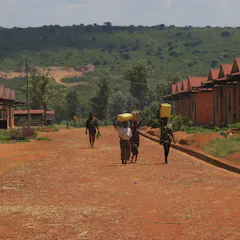
The Rwandan government moves people at risk of natural disasters or homelessness into safer villages.
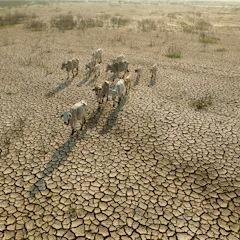
There is a need for democratic participation in designing and implementing social innovations for climate adaptation.
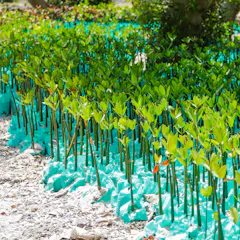
Universities in Senegal and South Africa are now teaching the skills of setting up nature-inspired projects to deal with some of the problems of climate change.
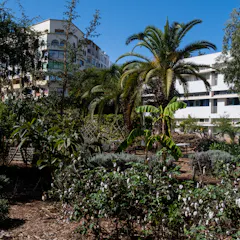
Using nature to solve environmental damage caused by humans can work on a local level, but can nature-based solutions be scaled up enough to address climate change?

Global scientific reports about climate change are largely written and reviewed by older researchers from the global north.
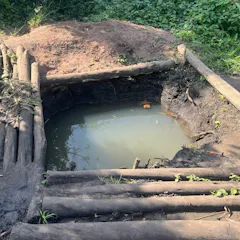
Indigenous knowledge systems have helped small-scale farmers keep food on the table during times of drought.
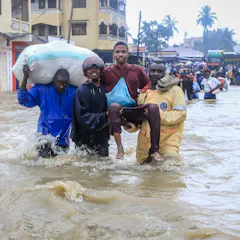
Climate information services that warn of impending disasters need to be set up fast if African countries are to have a chance of minimising the damage caused by extreme weather.

The South African Reserve Bank’s mandate is price and financial stability. It has the tools to identify, analyse and manage these risks, including those linked to climate change.
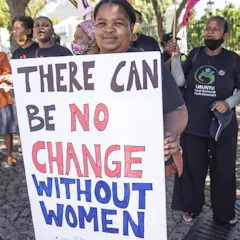
Evidence suggests that a low-carbon transition could worsen gender inequalities if not properly addressed in climate policy.

The green talent in short supply includes wind and solar farm technicians and engineers, solar panel installers, green energy auditors, hydrogen fuel cell specialists, and data scientists.
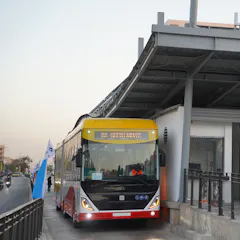
Sub-Saharan Africa is lagging behind in the transition to electric cars and motorbikes. Investment in local manufacturing, renewable energy and storage systems to supply charging stations is needed.
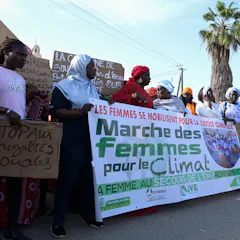
The media must do more to create awareness about the role communities can play in adapting to climate change.

Off-grid solar energy is a panacea to the electricity crisis in Africa.
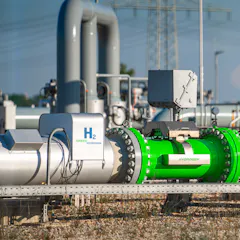
The European Union gave South Africa grants of €32 million to set up a green hydrogen industry. But the real cost to do this will be €20 billion. More funds are needed.

Smallholder farmers in Nigeria have told researchers they’d benefit from livestock index insurance which pays farmers when weather stations indicate that a severe drought or storm has hit the area.
Top contributors
-

Professor in Mechanical and Mechatronic Engineering, Stellenbosch University
-
Professor of Climate Change, Food Systems and Health and Director of The Lancet Countdown in Africa, London School of Hygiene & Tropical Medicine
-
Senior Lecturer at Oyo State College of Agriculture and Technology, Igboora, Nigeria and Extraordinary Senior Lecturer at Indigenous Knowledge Systems Centre, North-West University, Mafikeng, South Africa, North-West University
-
Ass. Professor, University of Maryland Eastern Shore; North-West University
-
Researcher, Centre for Global Change, Walter Sisulu University
-
Research Scientist: Centre for Global Change, Walter Sisulu University
-
Professor and Head of the Department of Geography, Geoinformatics & Meteorology, University of Pretoria
-
Senior research officer: Climate Adaptation in the African Climate and Development Initiative (ACDI), University of Cape Town
-
Researcher in Environmental Science, Rhodes University
-
Professor of Environmental Science, Rhodes University
-
Professor in Engineering, Stellenbosch University
-
Lecturer in the Department of Management, Uganda Management Institute
-
Professor in Operations Management, Trinity College Dublin
-
Senior Research Associate, University of Johannesburg
-
Research Associate, University of Oxford