
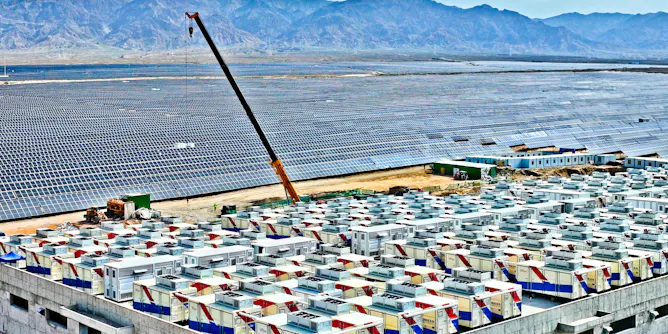
To harness its abundant sunlight and wind, South Africa needs renewable energy storage systems to store this clean power. The government must encourage companies to set up giant battery systems.
Articles on Solutions
Displaying 101 - 120 of 135 articles

Baobabs have been a source of food, fibre and medicine in Africa for centuries.
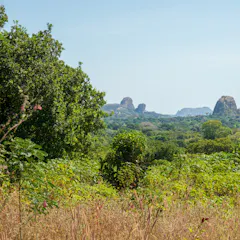
Scientists find miombo woodlands are likely to be storing up to twice the amount of carbon previously thought.
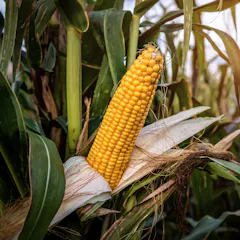
Hundreds of small-scale farmers in South Africa’s North West province who switched to eco-friendly, climate-smart farming have seen their maize harvest shoot up and their soil improve.

Climate and weather play a large role in people’s leisure travel decisions.
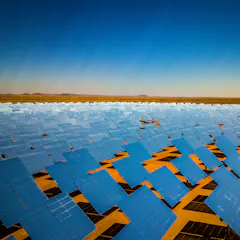
Africa could be headed for a green growth scenario, where it curbs greenhouse gas emissions and grows economies through local manufacturing of green energy equipment.
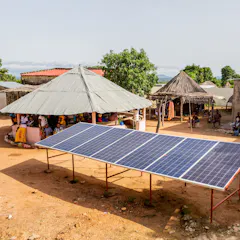
The principles of ubuntu (a person is only human through others) should underpin the rollout of renewable energy in rural Zimbabwe if everyone is to get equal access to solar power.

With the climate heating up rapidly, African cities must green every space to cool down and absorb more rain water, minimising floods. Nature-based solutions can make a huge difference.
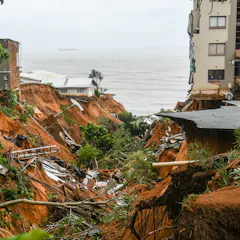
South Africa’s game reserves, tourist parks, chalets and ocean activities are being disrupted by extreme weather. To protect livelihoods, urban planning needs to adapt to climate change fast.
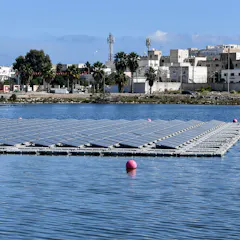
Floating solar panel systems on lakes and dams could generate much of Africa’s energy, decrease greehouse gas emissions, and stop freshwater evaporating, new research has found.
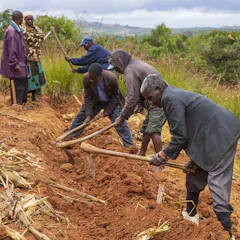
New research has found that smallholder farmers in Malawi can grow bigger maize crops if they plant maize with legumes in deep beds with natural ditches to catch water alongside.

The remote Bassari community, located between Senegal and Guinea, experiences climate change as one of many changes. They are best placed to come up with solutions that work for them.
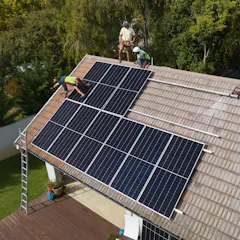
Only 5% of South Africa’s energy comes from solar power while 85% is generated from coal. Loans, more subsidies and security for rooftop solar panels need to be put in place.
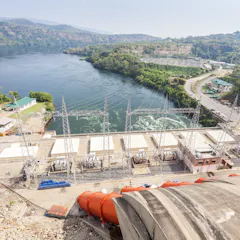
As renewable energy becomes cheaper and climate change affects water availability, the contribution of hydropower will decline.
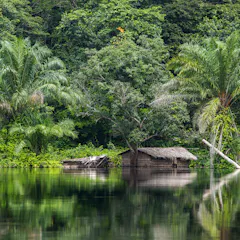
The carbon stored by forests can be bought by polluting companies to offset their emissions. This can displace communities who depend on natural forests for their livelihoods.

Kenya, Ethiopia, Djibouti, South Sudan and Uganda are investigating whether deep groundwater bores could support drought stricken communities. Could a networked approach help?

Sweet sorghum has multipurpose post-harvest uses. It can produce grains, animal feed and sugary juice, making it unique among crops.

Baby corals may hold promise for building coral reef resilience in Seychelles and beyond.
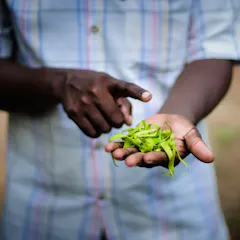
Biogas systems that generate cooking gas from plant waste can be relatively low-cost to set up. They come with environmental and health benefits for rural people who have only firewood to cook with.
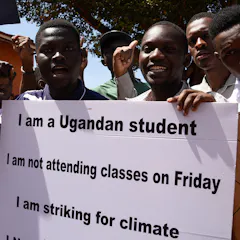
Business and management graduates can become the kind of sustainability champions the world needs today.
Top contributors
-

Professor in Mechanical and Mechatronic Engineering, Stellenbosch University
-
Professor of Climate Change, Food Systems and Health and Director of The Lancet Countdown in Africa, London School of Hygiene & Tropical Medicine
-
Senior Lecturer at Oyo State College of Agriculture and Technology, Igboora, Nigeria and Extraordinary Senior Lecturer at Indigenous Knowledge Systems Centre, North-West University, Mafikeng, South Africa, North-West University
-
Ass. Professor, University of Maryland Eastern Shore; North-West University
-
Researcher, Centre for Global Change, Walter Sisulu University
-
Research Scientist: Centre for Global Change, Walter Sisulu University
-
Professor and Head of the Department of Geography, Geoinformatics & Meteorology, University of Pretoria
-
Senior research officer: Climate Adaptation in the African Climate and Development Initiative (ACDI), University of Cape Town
-
Researcher in Environmental Science, Rhodes University
-
Professor of Environmental Science, Rhodes University
-
Professor in Engineering, Stellenbosch University
-
Lecturer in the Department of Management, Uganda Management Institute
-
Professor in Operations Management, Trinity College Dublin
-
Senior Research Associate, University of Johannesburg
-
Research Associate, University of Oxford