
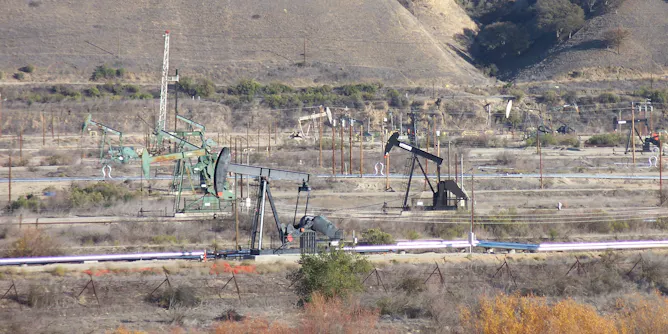
California was thought to be an exception, a place where oil field operations and tectonic faults apparently coexisted without much problem. Not any more.
Articles on Seismology
Displaying 41 - 60 of 98 articles
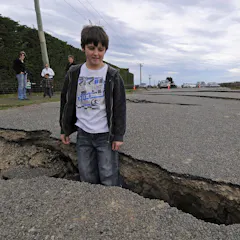
We might not be able to predict the next big earthquake, but we can make sure we’re ready for it and understand the risks.
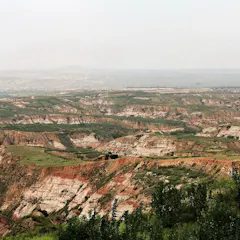
A big dip in the Earth’s crust may record an ancient continental collision from the dawn of plate tectonics.
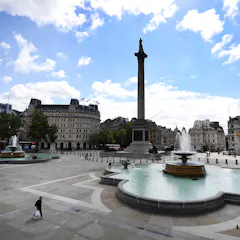
Measuring seismic noice could show whether people are following future lockdown measures.
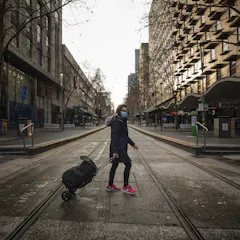
A network of sensitive instruments in schools around Australia is recording the eerie silence of the coronavirus pandemic — and tiny earthquakes that would otherwise be undetectable.
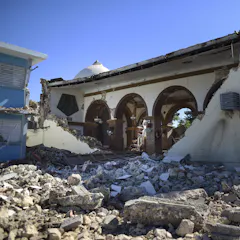
Puerto Rico’s January earthquakes came after many foreshocks and have been followed by numerous aftershocks. Scientists are studying these sequences to improve earthquake forecasting.
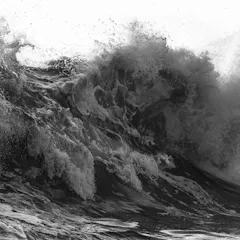
A tricky kind of earthquake that happens in the soft rock of the ocean floor causes much larger tsunamis than their magnitude would predict. New research pinpoints a way to identify the danger fast.
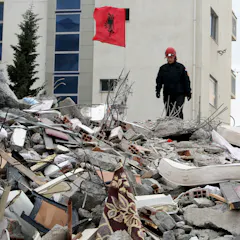
Post-earthquake aftershocks are often assumed to be less violent, but that’s not always the case.
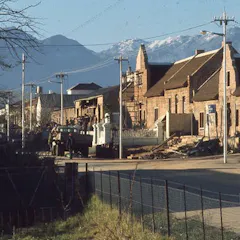
There are three important issues to consider when thinking about quakes: what causes them; how to prepare and plan for them; and, how to move on after a damaging quake.
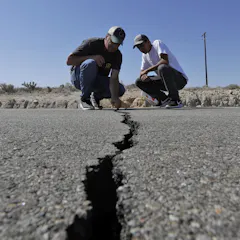
Engineers know how and where to build to minimize earthquake damage. But laws don’t always reflect that wisdom. A new study suggests it’s because of a mismatch between risk perceptions and reality.
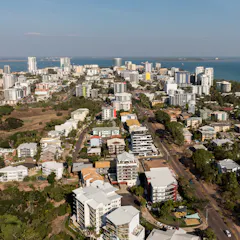
Because it happened within the Australian Plate rather than at a plate boundary, shockwaves from the quake travelled more efficiently to Darwin than to cities closer to the epicentre.
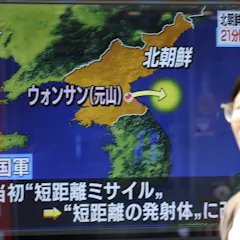
North Korea is a major military threat to the US and its Asian allies, but exactly how powerful are its nuclear weapons? An earth scientist explains why it’s hard to answer this question.
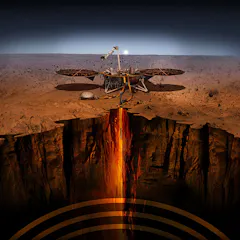
From turning on instruments to gathering the first data, the next few months will be busy for Mars scientists.
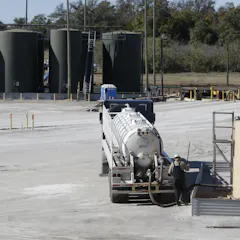
New research shows that injecting wastewater deep underground can cause earthquakes far from the injection site. It also raises questions about which rock layers are the safest injection targets.
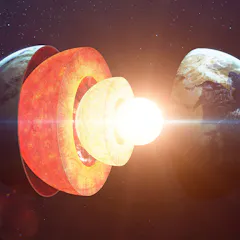
Seismologists use sensors to build images of the interior of the earth. Making the invisible, visible.
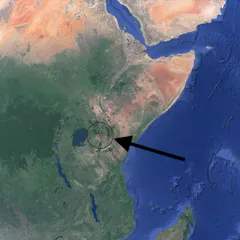
East Africa Rift is undergoing a process that will see the Horn of Africa split from the rest of the continent.
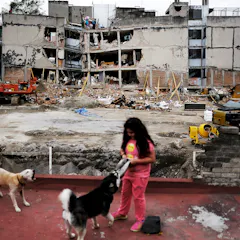
Not all earthquakes are made equal. A study on the Sept. 2017 quake that killed 300 in Mexico City found that both its location and cause were unusual.
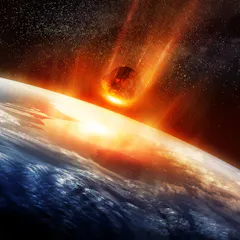
Research suggests a new threat to life on Earth from the meteorite’s crash: Via seismic waves, the impact triggered massive undersea eruptions, as big as any ever seen in our planet’s history.
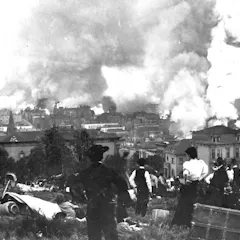
According to current forecasts, California has a 93 percent chance of an earthquake with magnitude 7 or greater occurring by 2045. Early warning systems, now in development, could limit casualties and damage.
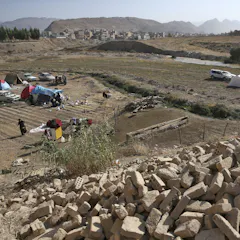
The Nov. 12 earthquake wasn’t centered on any known major faults in the Earth’s crust. In its wake, scientists will collect data to add detail to what they know about seismic activity in the area.
Top contributors
-

Professor of Earthquake Science, The University of Melbourne
-
Earthquake Scientist, Monash University
-
Professor, Head of Geophysics, Director of Warramunga Array, Australian National University
-
Reader in Physical Geography and Natural Hazards, Coventry University
-
Professor of Geophysics and Department Head, Colorado State University
-
Research chair, University of the Witwatersrand
-
Professor, Australian National University
-
Professor in Earth Sciences, Nanyang Technological University, Singapore, and Emeritus Professor of Mineral Physics, University of Cambridge
-
Professor of Planetary Geosciences, The Open University
-
ARC DECRA Fellow in Geophysics, Australian National University
-
Research Fellow in Computational Seismology, UCL
-
Associate Professor in Global Seismology, University of Bristol
-
Ph.D. Candidate in Earth and Planetary Sciences, Northwestern University
-
PhD Candidate, School of Earth Sciences, University of Bristol
-
Professor, School of Geography, Environment and Earth Sciences, Te Herenga Waka — Victoria University of Wellington