
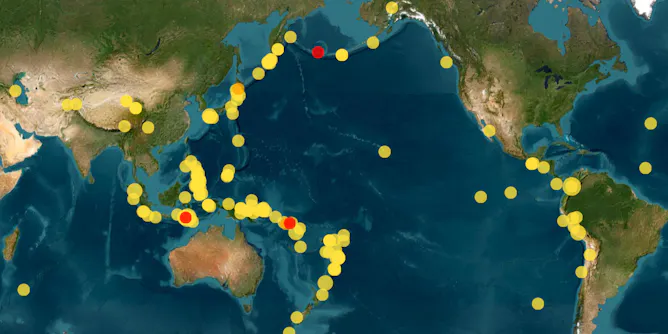
Scientists have been able to catalogue the largest earthquakes for a very long time.
Articles on Tectonic plates
Displaying 1 - 20 of 49 articles
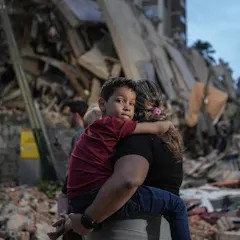
Both faults are along plate boundaries that move in similar ways and have ruptured in enormously destructive earthquakes in the past.
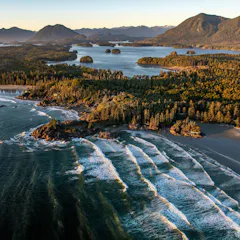
The interpretation that the subduction zone is winding down gets ahead of the science. What the new research actually shows is far more complex and interesting.
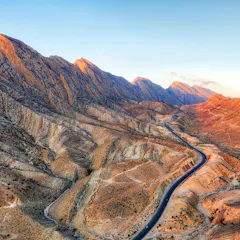
Geologically, North Field–South Pars is a single structure. Politically, it is divided by a maritime boundary
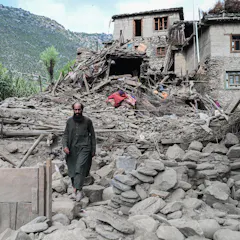
The type of buildings that are common in rural Afghanistan help explain why this earthquake was so deadly.
The mysterious ‘ghost mountains’ – buried beneath kilometres of Antarctic ice – have puzzled scientists for decades.
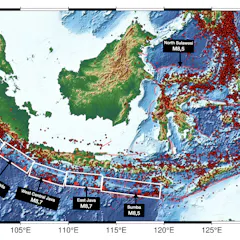
The 2004 Aceh Earthquake and Tsunami was one of the biggest natural disasters in history. This tragedy provided important lessons for improving disaster risk mitigation.
Mount Everest is growing surprisingly quickly – but are rivers or earthquakes responsible?
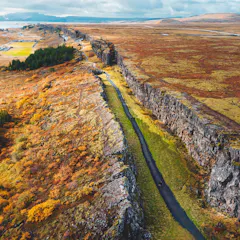
The first time Earth’s geologic record – information found inside rocks – has been used to create an animation of this kind.
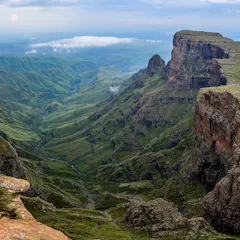
Motion deep in the Earth called a mantle wave can lift up the toughest parts of our planet.

The earthquake, one of New Jersey’s largest on record, could be felt from Maryland to Boston. But don’t read too much into it.

Iceland is known as ‘the land of fire and ice’ for a reason.
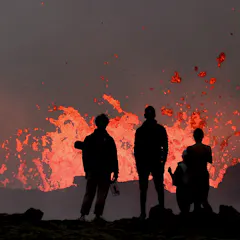
Iceland’s volcanic activity is generally tame compared with explosive eruptions along the Pacific’s Ring of Fire. This time, it’s shaking up a town.

The earthquake was caused by the collision of two tectonic plates.
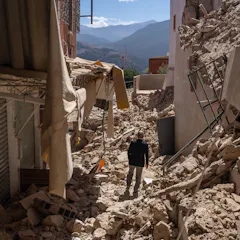
Earthquakes cannot be predicted; the best tools to mitigate the impact are seismic hazard studies.

There’s no single reason many Asian animals spread to Australia but few went the other way – but climate, geography and the slow drift of tectonic plates all played a role.
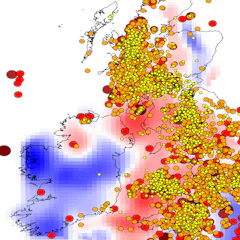
Variations in the thickness of tectonic plates may explain why Britain experiences many more earthquakes than neighbouring Ireland.
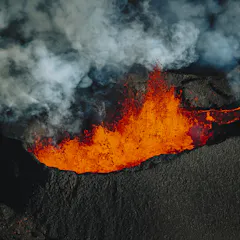
As they shape the Earth, volcanoes inspire and terrify humans.
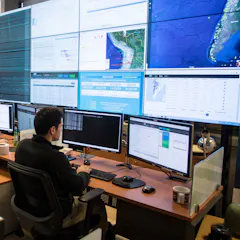
The idea that scientists could warn a region that a big quake was coming at a certain time – with enough advance notice for large-scale preparation and evacuation – remains a dream, not a reality.
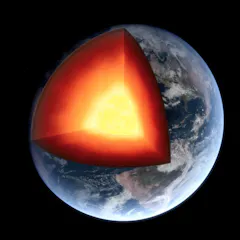
Starting at the surface, you would have to dig nearly 2,000 miles before reaching the Earth’s core. No one could survive that trip – and the 10,000-degree F heat once there would vaporize you anyway.
Top contributors
-

Professor of Geology, Adelaide University
-
Honorary researcher, The University of Melbourne
-
Professor of Geophysics, University of Sydney
-
ARC DECRA Fellow, School of Geosciences, University of Sydney
-
Associate Professor, School of Geosciences, University of Sydney
-
ARC Early Career Industry Fellow, School of Geography, Earth and Atmospheric Sciences, The University of Melbourne
-
Professor of Geology, West Virginia University
-
Senior Curator of Geosciences, Museums Victoria Research Institute; Monash University
-
Associate Professor in Geophysics, Te Herenga Waka — Victoria University of Wellington
-
Adjunct Research Fellow, Curtin University
-
Ph.D. Candidate in Earth and Planetary Sciences, Northwestern University
-
Assistant Lecturer in Volcanology, Monash University
-
Professor of Earth Sciences, University of Oregon
-
Professor, Australian National University
-
Postdoctoral Associate of Earth Sciences, University of Minnesota