
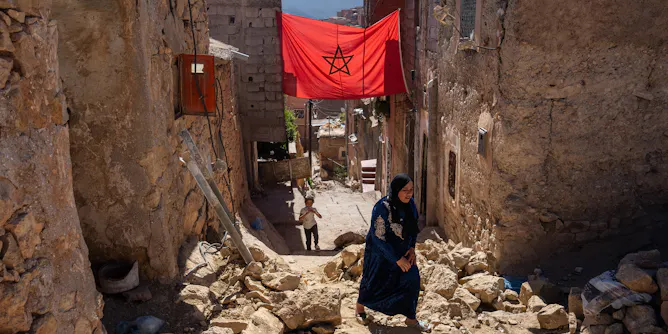
The earthquake was caused by the collision of two tectonic plates.
Articles on Seismology
Displaying 21 - 40 of 98 articles
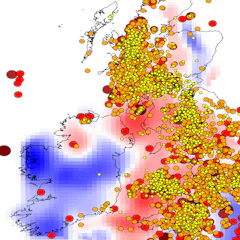
Variations in the thickness of tectonic plates may explain why Britain experiences many more earthquakes than neighbouring Ireland.
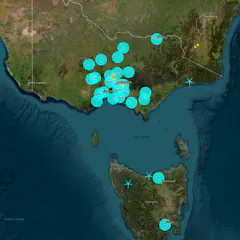
Some people were woken up near midnight by a powerful ground-shake. But did you know earthquakes occur in the greater Melbourne region about once a month – even though we can’t always feel them?
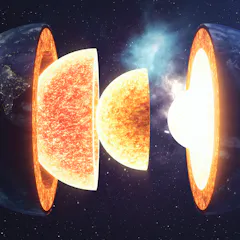
Earth doesn’t just have an inner core. It also has an innermost inner core, a solid ball within the solid ball in the very middle of the planet.
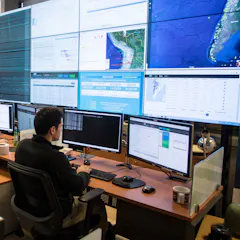
The idea that scientists could warn a region that a big quake was coming at a certain time – with enough advance notice for large-scale preparation and evacuation – remains a dream, not a reality.
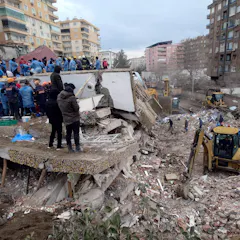
The Turkish government was well aware of earthquake-resilient construction techniques.
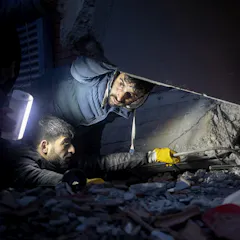
At least 1,700 people are thought to have died.
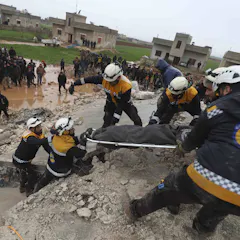
Using space imagery can help guide relief efforts to critical areas during a natural disaster.
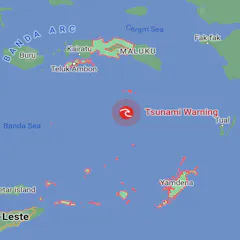
Earthquakes originating underneath the ocean are often accompanied by tsunami warnings. Here’s what determines the tsunami risk.
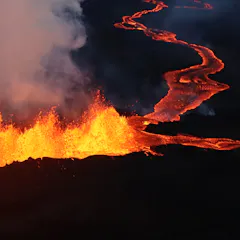
A scientist who led one of the first projects to map the Hawaiian Islands’ deep volcanic plumbing explains what’s going on under the surface as Mauna Loa erupts.
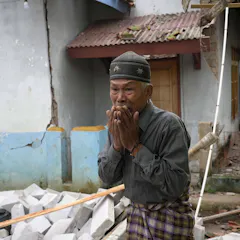
The Java quake was so devastating in part because it occurred so close to the surface.
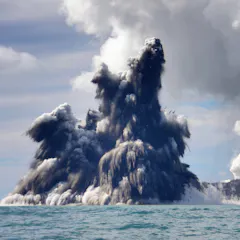
Monitoring volcanoes is a bit trickier when they’re deep under the ocean’s surface.

Many Victorians claim their cat or dog was acting strangely before yesterday’s earthquake. And while there’s no real evidence animals can predict a quake, they may be more sensitive to very tiny ones.

When will the next earthquake come? We don’t know, but that doesn’t mean we can’t get our cities ready.
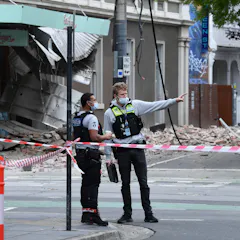
A largely hidden fault beneath the Victorian Alps has triggered a magnitude 5.8 quake that was felt as far afield as Sydney, Adelaide and Launceston. Here’s what we know so far.
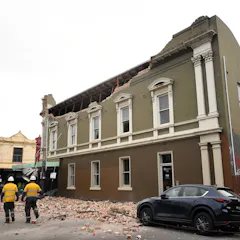
The geological record tells us we have had earthquakes in Australia’s deeper past much larger — possibly up to and bigger than magnitude 7.0.
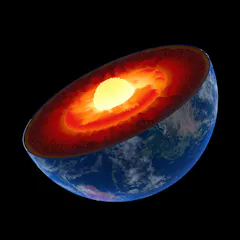
8,000 tonnes of molten iron solidifies in Earth’s inner core every second – but it’s not distributed equally.
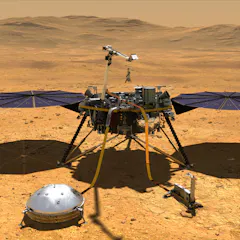
Mars’ core is larger and less dense than we thought.
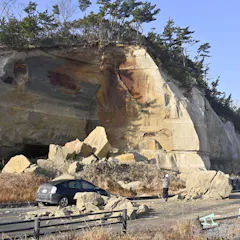
Aftershocks of a major earthquake can continue for years or even decades.

CC BY-NC-ND13.2 MB (download)
Earthquakes can be caused by human, or seismic, activity. Is South Africa adequately prepared?
Top contributors
-

Professor of Earthquake Science, The University of Melbourne
-
Earthquake Scientist, Monash University
-
Professor, Head of Geophysics, Director of Warramunga Array, Australian National University
-
Reader in Physical Geography and Natural Hazards, Coventry University
-
Professor of Geophysics and Department Head, Colorado State University
-
Research chair, University of the Witwatersrand
-
Professor, Australian National University
-
Professor in Earth Sciences, Nanyang Technological University, Singapore, and Emeritus Professor of Mineral Physics, University of Cambridge
-
Professor of Planetary Geosciences, The Open University
-
ARC DECRA Fellow in Geophysics, Australian National University
-
Research Fellow in Computational Seismology, UCL
-
Associate Professor in Global Seismology, University of Bristol
-
Ph.D. Candidate in Earth and Planetary Sciences, Northwestern University
-
PhD Candidate, School of Earth Sciences, University of Bristol
-
Professor, School of Geography, Environment and Earth Sciences, Te Herenga Waka — Victoria University of Wellington