
The key to supporting science innovation is funding and shaping it at its earliest stages, while innovative ventures are still housed within universities — and even before the ventures are founded.
Articles on Scientific research
Displaying 61 - 80 of 126 articles
Authors writing for Nature journals will also need to separate sex and gender data, so it can’t just be lumped in with other results.
There remains a crucial need for animal models to understand health and disease and to develop medicines.

Scientists can be asked to help find solutions during disasters. A study of how archaeologists worked on the problem of looting during the Syrian war offers lessons for science done during crisis.
One of the most famous stats in the climate debate is the 97% of scientists who endorse the consensus on human-induced global heating. Ahead of the Glasgow summit, that figure has climbed even higher.
Preprints are scientific papers made available before being published in a peer-reviewed journal. The Australian Research Council has banned researchers from citing them in grant applications.

New research shows gene name autocorrection remains a problem for genomics articles. Here’s why it’s a wake up call for research reproducibility.
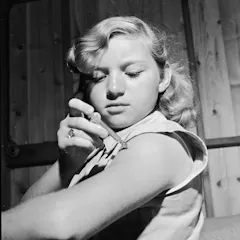
A biomedical engineer explains the basic research that led to the discovery of insulin and its transformation into a lifesaving treatment for millions of people with diabetes.

The microbiologist who directs the National Emerging Infectious Diseases Laboratories at Boston University explains all the biosafety precautions in place that help him feel safer in the lab than out.
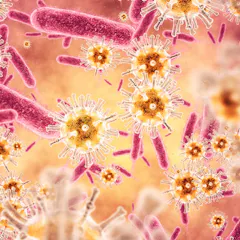
Scientists get up close and personal with deadly pathogens to give doctors the tools they need to treat people sickened by germs. The key is keeping the researchers – and everyone around them – safe.
The peer-review process is an essential part to ensure the quality of scientific research, but the pandemic-driven demand for information means that research is publicized before it has been reviewed.
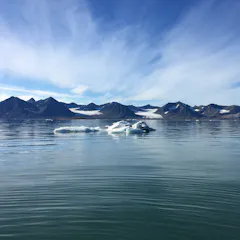
Three scientists describe the fieldwork they’ve had to delay in 2020 because of the pandemic. These are setbacks not just for their careers, but for the body of scientific knowledge.
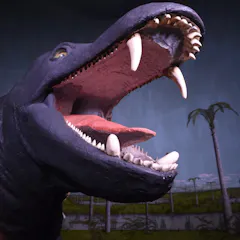
Museums around the world have been grappling with the issue of diorama removal.
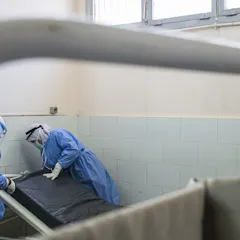
Investments are starting to help grow the African continent’s science preparedness.
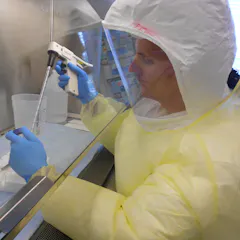
To find a SARS-CoV-2 vaccine, scientists need to work hands-on with the highly infectious coronavirus. It happens in a super secure lab designed to keep them safe and prevent any escapes.
The number of preliminary or unsubstantiated treatments or risk factors for the coronavirus is increasing. Here’s one reason why.
The rapid sharing of research is so vital. In cases like the COVID-19 pandemic, it can save lives.
With travel halted and universities and research institutions shutting down, scientists are having trouble keeping their research running. Here’s why that matters outside the lab.

The EPA has just adopted a rule that limits what kinds of science regulators can use in setting rules. A scholar explains how this shift could impede his work mapping child lead poisoning.
The EU’s next research programme needs to change how universities and business work together.
Top contributors
-

Professor of Computer Science, Université Grenoble Alpes (UGA)
-
Previous Vice President of the Academy of Science of South Africa and DSI-NRF SARChI chair in Fungal Genomics, Professor in Genetics, University of Pretoria, University of Pretoria
-
Professor of Computer Science, Institut de Recherche en Informatique de Toulouse
-
Contributing editor, Retraction Watch
-
University Distinguished Professor of Astronomy, University of Arizona
-
Professor of Sociology, Education and Demography, Penn State
-
Professor of Sociology of Education, University of Luxembourg
-
Professor of Natural Resources and Environmental Science, University of Vermont
-
Professor of Public Affairs, The Ohio State University
-
Editor-in-Chief of the South African Journal of Science and Consultant, Vice Principal for Research and Graduate Education, University of Pretoria
-
Associate professor in Vertebrate Palaeontology, University of the Witwatersrand
-
Associate Professor of Physics, Union College
-
Royal Society University Research Fellow and Lecturer in Particle Physics, UCL
-
Open Evidence Research, UOC - Universitat Oberta de Catalunya
-
Research Fellow in Semiconductor Physics, University of Sheffield