

Grant abstracts with more words, more complex language and more storytelling tend to earn more money – even if that’s not exactly what funders say they’d want.
Articles on Scientific research
Displaying 81 - 100 of 126 articles

In an era of big scientific collaborations, China’s renegade actions have hurt its reputation. As international researchers back away, it may be the country’s military that ultimately suffers.
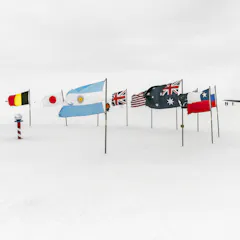
There are some limits on what countries can do in the Antarctic, but not when it comes to science.
Most biobanks, whether small or large, have high quality assurance and control measures in place.

CC BY-ND49 MB (download)
A podcast on twins, including why stereotypes about their relationship are so damaging, and why they are so useful to scientists.

Money always seems tight for university scientists. A sociologist conducted hundreds of interviews to see how they think about funding sources and profit motives for basic and applied research.
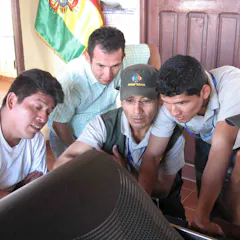
Science can’t just stay in the ivory tower. But what does impact really mean and how does it happen? A study of more than a decade of ecological fieldwork projects in Bolivia suggests a better way.

The Cambridge Analytica scandal wasn’t a data breach – it was a violation of academic ethics. Maybe it’s universities, not social networks, that need to update their privacy settings.
Research institutes and “centres of excellence” exist around the world to draw talent and to share resources - all with the aim of solving important problems.
Scientists are rewarded with funding and publications when they come up with innovative findings. But in the midst of a ‘reproducibility crisis,’ being new isn’t the only thing to value about research.
We are observing two new phenomena. On one hand doubt is shed on the quality of entire scientific fields or sub-fields. On the other this doubt is played out in the open, in the media and blogosphere.

Science isn’t cold, hard facts uncovered by emotionless robots. Acknowledging how and where values play a role promotes a more realistic view and can advance science’s reputation for reliability.
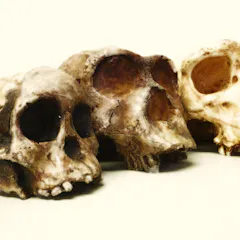
Recent research suggests that humankind’s origins lay outside of Africa. This is the nature of science: a paradigm that cannot be questioned on a regular basis becomes a dogma.
South Africa’s National Research Foundation will dramatically scale back “incentive” funding to rated researchers, both those who already have a rating and those who will be rated in the future.
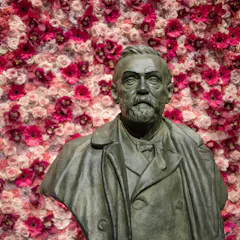
Today’s scientific research is characterized by interdisciplinary, international collaboration. Awards like the Nobel Prizes haven’t caught up.
Scientific truth is based on a body of research which has been tried and tested by many researchers over time. Peer review filters the good science from the bad.
A new study connects the dots between published science and patented innovations, mapping just how society benefits from basic scientific research.

Research dollars don’t stay locked up in academia and government labs. R&D collaborations with the private sector are common – and grow the innovation economy.
Even if alien life is never discovered, all is not lost.
Africa’s overall contribution to research might be small, but smart people are undertaking smart and important work on and about the continent.
Top contributors
-

Professor of Computer Science, Université Grenoble Alpes (UGA)
-
Previous Vice President of the Academy of Science of South Africa and DSI-NRF SARChI chair in Fungal Genomics, Professor in Genetics, University of Pretoria, University of Pretoria
-
Professor of Computer Science, Institut de Recherche en Informatique de Toulouse
-
Contributing editor, Retraction Watch
-
University Distinguished Professor of Astronomy, University of Arizona
-
Professor of Sociology, Education and Demography, Penn State
-
Professor of Sociology of Education, University of Luxembourg
-
Professor of Natural Resources and Environmental Science, University of Vermont
-
Professor of Public Affairs, The Ohio State University
-
Editor-in-Chief of the South African Journal of Science and Consultant, Vice Principal for Research and Graduate Education, University of Pretoria
-
Associate professor in Vertebrate Palaeontology, University of the Witwatersrand
-
Associate Professor of Physics, Union College
-
Royal Society University Research Fellow and Lecturer in Particle Physics, UCL
-
Open Evidence Research, UOC - Universitat Oberta de Catalunya
-
Research Fellow in Semiconductor Physics, University of Sheffield