

US-funded research into the health of people abroad has large health and economic benefits for Americans.
Articles on Research funding
Displaying 1 - 20 of 324 articles
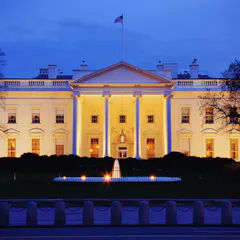
A new White House science strategy, laid out in a report titled Science: A New Golden Age, challenges an 80-year-old model that made the US the global scientific leader.

Beyond deprioritizing scientific merit, the Trump administration’s proposal also restricts researchers’ ability to share their findings and collaborate with each other.

If we want to be reminded what real damage to a science system looks like, we only need to glance across the Atlantic.

There is no approved vaccine to curb the Ebola outbreak in the Democratic Republic of the Congo and Uganda. But new funding offers hope.

Is meat healthy or not? The answer can depend on who funded the research, according to a new study.

What do US researchers make of all the Trump administration science-related policy changes? A survey of 280 academic scientists asked them.

Scientific innovation has been driving US economic growth for decades. Losing that edge means losing access to the technologies and brainpower that come with it.

A program cut has Australian astronomers up in arms – but it points at much bigger problems with national research funding.

When the Trump administration took aim at higher education and the scientific research enterprise, a university dean had to figure out on the fly how to support scientists and their work at his school.
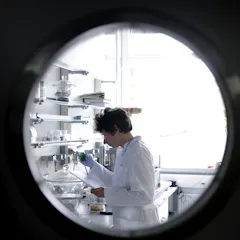
US science lost a great deal in 2025, including tens of billions of dollars of federal funding, entire research agencies and programs, and a generation of researchers.
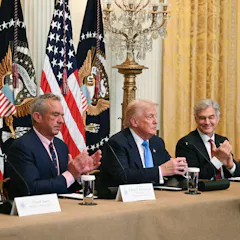
The Trump administration is rewriting the 80-year-old American social contract for science research.
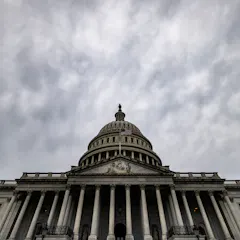
The Trump administration is not just reforming the US research system – it is trying to remake it.

Studying charismatic species increased the likelihood of negative workplace experiences for younger colleagues, women and researchers.

Many of the canceled grants were investments in the science and infrastructure necessary to keep the lights on in coming years, especially when the grid is under stress.

Australia’s universities face escalating, deliberate efforts from foreign spies who want to steal commercially and militarily valuable research.

The federal government is more likely to fund curiosity-driven basic research, while industry is more likely to support research that has a clearer eventual payoff.

Taxpayer-funded investment supports basic research that can yield crucial medical advancements down the line and make lifesaving drugs and technologies affordable for everyday people.
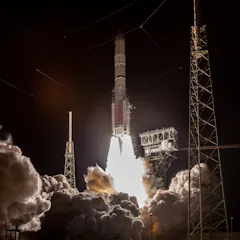
To understand what makes space exploration worthwhile, we need to look beyond rigid cost–benefit analysis.

Chaos at the CDC and the sharp move away from mRNA vaccines has public health experts alarmed.
Top contributors
-

Chair, The Conversation Media Group
-
Chief Executive, CSIRO
-
Associate Professor (hon) at the Centre for Public Awareness of Science, Australian National University
-
Professor of Natural Philosophy in the Department of Physics, University of York
-
Professor of Statistics, Queensland University of Technology
-
Executive Director, Development & Communications, Australian Technology Network of Universities
-
Secretary for Science Policy at the Australian Academy of Science, and Senior Deputy Vice-Chancellor, UNSW
-
Adjunct professor, University of Canberra
-
Adjunct Professor, University of Sydney
-
Emeritus Professor, Australian National University
-
Professor of Health Economics, Duke-NUS Medical School
-
Associate Professor, Researcher Development (EMCR), La Trobe University
-
Previous Vice President of the Academy of Science of South Africa and DSI-NRF SARChI chair in Fungal Genomics, Professor in Genetics, University of Pretoria, University of Pretoria
-
Honorary associate professor of economy and society, Macquarie University
-
ARC Laureate Fellow, Swinburne University of Technology