
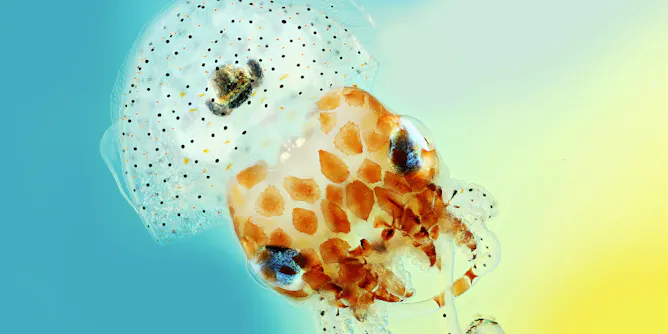
A better understanding of science among ordinary people validates the vast amounts of public funds spent on scientific research.
Articles on Scientific research
Displaying 101 - 120 of 126 articles
Any field that collects and analyzes data relies on statistical techniques to make sense of it all. Modern, more accurate methods should supplant the old ways… but in many cases, they haven’t yet.
What are research dollars actually spent on? Rather than looking at artifacts like publications and patents, a new initiative directly tracks the people and businesses that receive research funding.
In science, the word ‘theory’ has a very specific meaning that’s easy for nonscientists to misunderstand or misconstrue. Here’s what a theory must withstand to be accepted by the scientific community.
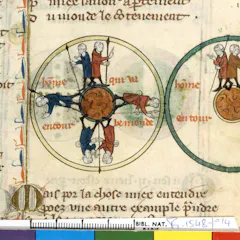
The case for neoclassicism in science.
So many good ideas fail to make it out of the research lab because of a lack of funding.
A scientific breakthrough in a vacuum may be free of ethical implications. But many developments can be used for good or evil, or both. There’s a fine balance on what to control and to what extent.

The traditional mode of publishing scientific research faces much criticism – primarily for being too slow and sometimes shoddily done. Maybe fewer publications of higher quality is the way forward.
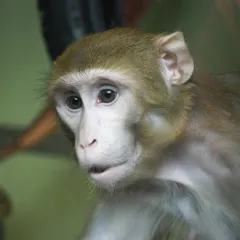
Without research on primates, we wouldn’t be able to understand the human brain – or repair it.
Embracing more rigorous scientific methods would mean getting science right more often than we currently do. But the way we value and reward scientists makes this a challenge.

Economic growth alone won’t end hunger. Good policies and programmes are needed, too. Scientists and researchers have a role to play in these initiatives.
The very goal of science, to discover the new and unknown, is hampered by any outdated personal beliefs scientists hold.
Science and technology research has become so complicated and expensive that a gap has grown between the experiments scientists would like to do and what they have the means to do.

Sometimes big research news bypasses the usual scientific publishing process. Here’s why that’s not good for scientists or the public.
A new model of citizen-led science is emerging – as in the case of Flint, Michigan’s poisoned water. Rather than simply supporting scientists, citizens ask their own questions and set the research agenda.
Scientists often prioritize deep goals over broad ones. But today’s “wicked” problems demand an interdisciplinary approach. A new study shows how they can tweak work styles to alter their deep/broad ratio.

African research is largely invisible, kept in the shadows by publishing barriers and structural obstacles. A platform built in Brazil and rolled out across the developing world could be the solution.
The field of psychology is trying to absorb a recent big study that was able to replicate only 36 out of 100 major research papers. That finding is an issue, but maybe not for the reason you think.

Despite macho career advice, it’s time for scientists – and everyone else – to understand that the point is to work smarter, not longer and to strive for a realistic and livable work/life balance.
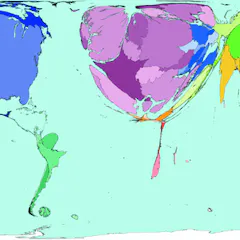
There are huge global inequalities in knowledge production and exchange. What drives this inequality and how can it be corrected?
Top contributors
-

Professor of Computer Science, Université Grenoble Alpes (UGA)
-
Previous Vice President of the Academy of Science of South Africa and DSI-NRF SARChI chair in Fungal Genomics, Professor in Genetics, University of Pretoria, University of Pretoria
-
Professor of Computer Science, Institut de Recherche en Informatique de Toulouse
-
Contributing editor, Retraction Watch
-
University Distinguished Professor of Astronomy, University of Arizona
-
Professor of Sociology, Education and Demography, Penn State
-
Professor of Sociology of Education, University of Luxembourg
-
Professor of Natural Resources and Environmental Science, University of Vermont
-
Professor of Public Affairs, The Ohio State University
-
Editor-in-Chief of the South African Journal of Science and Consultant, Vice Principal for Research and Graduate Education, University of Pretoria
-
Associate professor in Vertebrate Palaeontology, University of the Witwatersrand
-
Associate Professor of Physics, Union College
-
Royal Society University Research Fellow and Lecturer in Particle Physics, UCL
-
Open Evidence Research, UOC - Universitat Oberta de Catalunya
-
Research Fellow in Semiconductor Physics, University of Sheffield