
AI infractions could result in a year-long ban from the arXiv system, which is an essential communication channel in many fields of research.
Articles on Scientific publishing
Displaying 1 - 20 of 59 articles
‘Diamond open access’ means research is free to read, free to publish. It’s a public good – but it relies on volunteer labour.

‘Green open access’ has existed for decades – and it’s not hard to get academics to use it more.
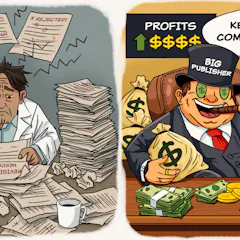
Academic publishing system often allows scientific errors to persist because it prioritises profit and prestige over timely correction.

Scientists write papers to share their results – and gain prestige and advance their careers. In this competitive field, selection can favor AI-written papers, citation cartels, paper mills and more.

Peer review is an important step after a researcher has carried out a scientific study but before it gets published by a journal and shared with the world.
Once errors creep into the AI knowledge base, they can be very hard to get out.

The world’s library of scientific papers is becoming contaminated as fraudsters use ‘paper mills’ to game scholarly publishing for profit.

Science sleuths are stepping up efforts to detect bogus science papers. This includes building tools that comb through millions of journal articles for signs of tortured phrases spawned by AI.
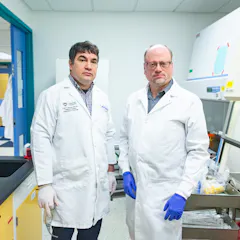
‘Paper mills’ are contaminating the world’s scholarly output with fake papers that hinder research. Lifesaving biomedical fields are especially hard hit.

Publications drive university rankings and career progression. But the relentless pressure to publish has contributed to an increase in fraudulent data.
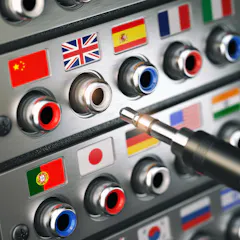
Around 98% of all research is published in English, posing a serious problem for the global scientific community.

A study of 736 biological science journals showed only a small fraction are making efforts to foster a multilingual scientific community.

Nature’s recent efforts to redefine the ethical responsibilities of scientists leave a lot to be desired.

Lack of free access to research leads to discrimination, both in academia and for us all. The new guidance from the US is a huge step in the right direction.

Many scientists stuck at home during university closures dealt with increased domestic responsibilities. But some groups had it worse than others.

In many other countries, a majority of research publications are now open access, but the system of paying for access still dominates academic publishing in Australia.

Scientists and science publishers are sharing information as fast as they can during the COVID-19 pandemic. Speed and openness bring new challenges, but they are the way forward for research.
The h-index has become an indicator of quality for many researchers and may influence the allocation of research funds. But some question its value.

If expert advice on the pandemic turns out to be wrong, it will have dire consequences for how reliable scientific evidence is treated in other policy areas, such as climate change.
Top contributors
-

Professor of Computer Science, Université Grenoble Alpes (UGA)
-
Professor of Computer Science, Institut de Recherche en Informatique de Toulouse
-
Contributing editor, Retraction Watch
-
Lecturer in Library Science, City St George's, University of London
-
Editor in Chief, Medical Journal of Australia, Queensland University of Technology
-
Postdoctoral Research Fellow in Psychiatry and Behavioral Sciences, Medical University of South Carolina
-
University Librarian and Vice Provost for Digital Scholarship, University of California, Davis
-
Professor of Psychology, Stetson University
-
Postdoctoral fellow, Kellogg School of Management, University of North Carolina at Chapel Hill
-
David H Smith Conservation Research Fellow, University of North Carolina at Chapel Hill
-
Professor, University of Regensburg
-
Professor, School of Biosciences & School of Historical and Philosophical Studies, The University of Melbourne
-
Professor of Marine Science & Founder/Director of Blue Carbon Lab, Deakin University
-
Senior Lecturer, Department of Computer Science, University of Auckland, Waipapa Taumata Rau
-
Researcher in Medical Sciences, Wilfrid Laurier University