
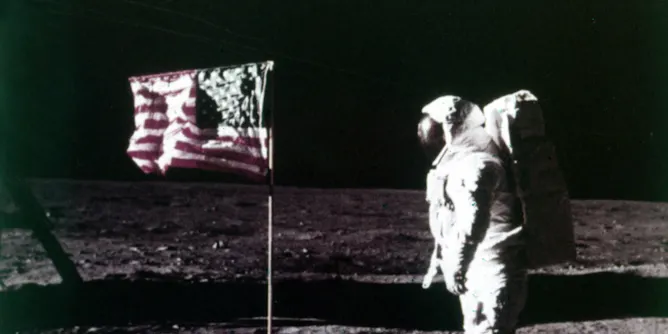
The Trump administration has terminated hundreds of federal grants that support engineering, biology, geology, computer science, STEM education and much more.
Articles on Scientific research
Displaying 21 - 40 of 126 articles
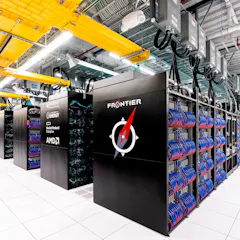
Today’s supercomputers are enormously powerful, but the work they do − running AI and tackling difficult science − is pushing them to their limits. Building bigger supercomputers won’t be easy.
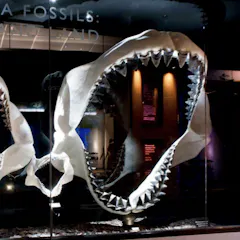
Basic research that doesn’t have a specific industrial or experimental application still adds value outside the lab by engaging people with exciting research.
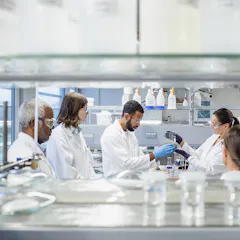
Trump’s DEI-related executive orders may affect early career scientists and researchers who study representation in science, but most research grants are unaffected.
The jury’s out on whether the US is still at the top of global science. Proposed cuts to major agencies could mean completely ceding that title.

It costs money to maintain the various facilities, utilities and personnel that allow scientists to conduct research in the first place. Without federal support, institutions are left scrambling.

The world’s library of scientific papers is becoming contaminated as fraudsters use ‘paper mills’ to game scholarly publishing for profit.
Science sleuths are stepping up efforts to detect bogus science papers. This includes building tools that comb through millions of journal articles for signs of tortured phrases spawned by AI.
‘Paper mills’ are contaminating the world’s scholarly output with fake papers that hinder research. Lifesaving biomedical fields are especially hard hit.
Nearly 40% of all gifts and grants and 60% of the total number of dollars given backed initiatives based in the foundation’s own state.

Biden’s legacy includes elevating science’s influence in federal decision-making and considering the social and ethical effects of research.

Don’t be fooled by the image of a mad scientist isolated in his basement laboratory. Science is a collaborative endeavor, and international teams have contributed to a huge rise in scientific output.
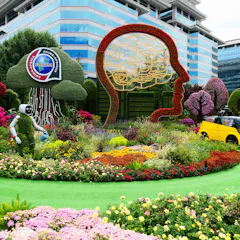
China’s engagement with Africa has evolved over the past 24 years, with a shift towards mutually beneficial investments.
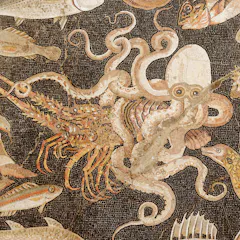
Through reports and testimonies from everyday people, ancient polymaths were able to learn a great deal about the natural world. But sometimes it was hard to separate fact from fiction.
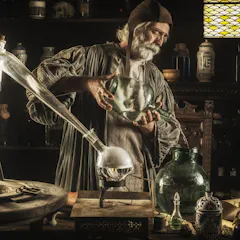
Unrealistic, outdated ideas that idealize science can set the public up to distrust scientists and the research process. A philosopher of science describes 3 aspects of how science really gets done.

The scientific and broader community must join together to advance Southern Ocean science and protect this vital natural asset.
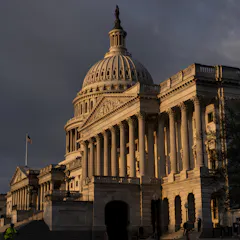
Research funding is down in recent years despite promises made with the CHIPS and Science Act.
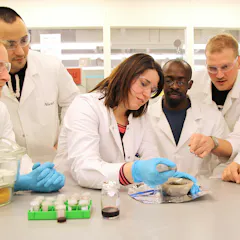
New research reveals star scientists contribute surprisingly little to scientific discovery.
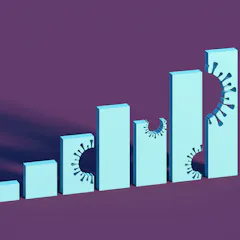
Pressure to ‘publish or perish’ and get results out as quickly as possible has led to weak study designs and shortened peer-review processes.
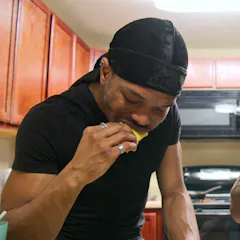
The new Netflix documentary follows identical twins as they adopt different diets. This is a great example of a twin study – a uniquely useful research tool in science.
Top contributors
-

Professor of Computer Science, Université Grenoble Alpes (UGA)
-
Previous Vice President of the Academy of Science of South Africa and DSI-NRF SARChI chair in Fungal Genomics, Professor in Genetics, University of Pretoria, University of Pretoria
-
Professor of Computer Science, Institut de Recherche en Informatique de Toulouse
-
Contributing editor, Retraction Watch
-
University Distinguished Professor of Astronomy, University of Arizona
-
Professor of Sociology, Education and Demography, Penn State
-
Professor of Sociology of Education, University of Luxembourg
-
Professor of Natural Resources and Environmental Science, University of Vermont
-
Professor of Public Affairs, The Ohio State University
-
Editor-in-Chief of the South African Journal of Science and Consultant, Vice Principal for Research and Graduate Education, University of Pretoria
-
Associate professor in Vertebrate Palaeontology, University of the Witwatersrand
-
Associate Professor of Physics, Union College
-
Royal Society University Research Fellow and Lecturer in Particle Physics, UCL
-
Open Evidence Research, UOC - Universitat Oberta de Catalunya
-
Research Fellow in Semiconductor Physics, University of Sheffield