
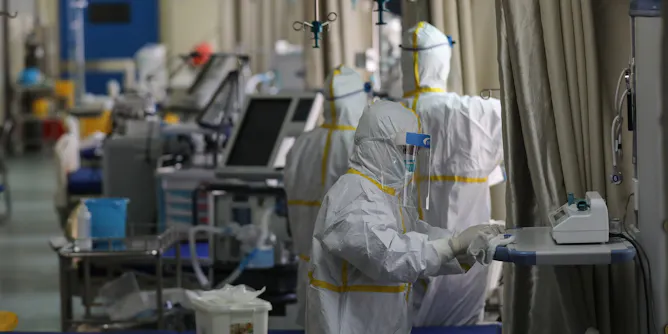
Several questions about the origin of the outbreak remain with no clear data on what this was or if it was an animal source.
Articles on Science and innovation for development
Displaying 161 - 180 of 251 articles

The biggest lesson has been that controlling a disease outbreak like Ebola is impossible without community trust and engagement.

In some communities, over a quarter of the children were misclassified as iron replete whereas they were iron deficient.
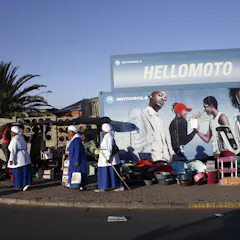
Policies need to address human develop challenges, if people are to be equitably brought on line.

CC BY-NC-ND8.02 MB (download)
South Africa should not uncritically embrace the Fourth Industrial Revolution.
The key to ending the HIV epidemic is a vaccine that will provide long-lasting protection and alleviate the need for prevention methods.

CC BY-NC-ND5.67 MB (download)
Acoustic monitoring is ideal for tracking the abundance of a species over time, because it has minimal impact on the species being monitored.
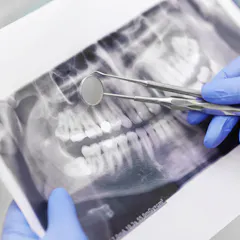
Dentists need to have a sound understanding of genetics to treat and manage patients effectively.
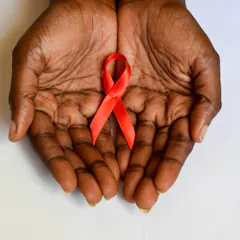
The discovery of a new strain of HIV gives scientists a better understanding of the virus.

Nigeria has to plug the gaps at points of entry to keep infectious diseases at bay.

The Nigeria Centre for Disease Control says it will use lessons from the Ebola outbreak to strengthen its risk communications capacity.
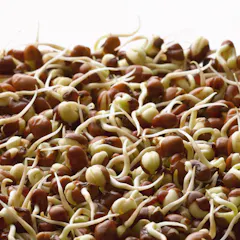
Nigeria recently approved the world’s first GM cowpea, which provides full protection against the pod-borer Maruca, a major problem for this important crop.
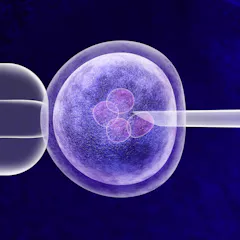
The debate about gene editing will help shape the future of the human race. But how should the discussion get started?
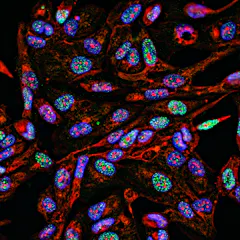
There is a need to move from conventional cancer treatments to more targeted and personalised therapies.

Legislation as well as academic research governance bodies have failed to safeguard the rights of participants from Africa in genomics research.

Bioinformatics can be applied to a range of problems, such as understanding the genome sequence of organisms or coming up with new drugs.

CC BY-NC-ND3.8 MB (download)
That future is one of ever-changing data, analytics and computer infrastructure.
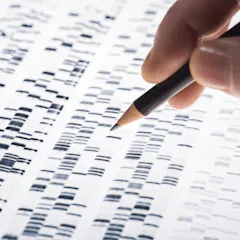
Africa is known to be where humans originated. This makes it the most genetically diverse region in the world. Diversity in other populations represents a subset of the diversity within Africa.

The aim is to discover, develop and facilitate delivery of anti-malarial medicines to help tackle the burden of malaria in endemic countries and support malaria eradication.
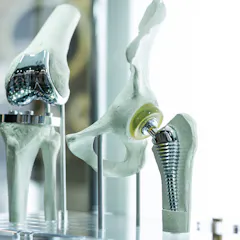
Low-cost titanium alloys in South Africa could be used in non-aerospace sectors, such as car parts, medical devices, implants, jewellery and kitchen appliances.
Top contributors
-

Senior Lecturer International Law, Bioethics, Emerging Tech, University of KwaZulu-Natal
-
Fellow, Nigerian Academy of Science
-
Professor of medicine and deputy director of the Desmond Tutu HIV Centre at the Institute of Infectious Disease and Molecular Medicine, University of Cape Town
-
Professor of Organic Chemistry, Neville Isdell Chair in African-centric Drug Discovery & Development, and Director of the Holistic Drug Discovery and Development (H3D) Centre, University of Cape Town
-
Dean Faculty of Health Sciences and Professor of Vaccinology at University of the Witwatersrand; and Director of the SAMRC Vaccines and Infectious Diseases Analytics Research Unit, University of the Witwatersrand
-
Professor of the Practice of International Development, Harvard Kennedy School
-
Post Doctoral Fellow, University of KwaZulu-Natal
-
Professor in Biochemistry, Genetics and Microbiology, and Professor at Future Africa, University of Pretoria, University of Pretoria
-
Principal Medical Scientist and Head of Laboratory for Antimalarial Resistance Monitoring and Malaria Operational Research, National Institute for Communicable Diseases
-
Head of the Centre of Excellence for Biomedical TB Research, University of the Witwatersrand
-
Chair of Policy Innovation, School for Data Science and Computational Thinking, Stellenbosch University
-
Head of the Division of Pulmonology, University of Cape Town
-
Associate Professor, Cape Peninsula University of Technology
-
Professor and Chair of Genomic Diversity, Queen Mary University of London
-
Tutorial Fellow, School of Medicine, University of Nairobi, University of Nairobi