

Access to funding, energy, and new customers were all ranked among key resources for survival. But businesses overwhelmingly said their people were their most important asset.
Articles on Resilience
Displaying 41 - 60 of 261 articles
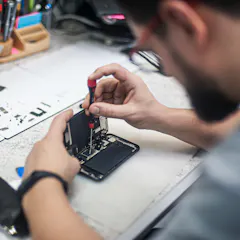
The right to repair can increase the amount of well-paying Canadian jobs and reduce Canada’s dependence on unpredictable global markets.
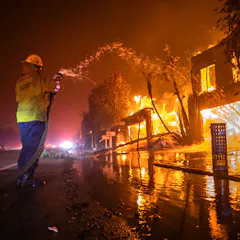
Accepting change in the aftermath of natural disasters is hard. But long-term survival may require embracing managed retreat rather than repeated rebuilds.

War, abuse, neglect and famine leave deep scars, but our psyches can heal.

A focus on resilience risks shifting responsibility for mental health onto those affected, rather than calling out factors contributing to poor mental health.

Treating all adversity as inherently negative does a disservice to children and their ability to develop adaptive coping mechanisms that can protect them in future cases of adversity.

We can’t isolate human misery from its broader context. But while adverse environments play a role in the youth mental health crisis, culture is crucial too.

Long before the pandemic, health care workers were experiencing high levels of stress, burnout and compassion fatigue, all of which contribute to reduced quality of care for patients.
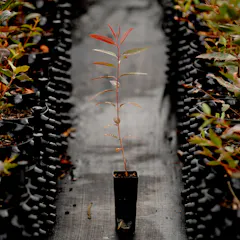
Nature can provide solutions to problems such as biodiversity loss and climate change. But the best nature-based solutions are resilient to disturbance such as fire or drought and future change.
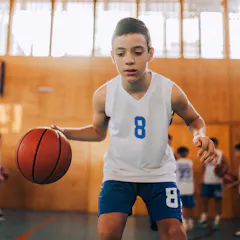
A new book critiquing our contemporary emphasis on personal resilience is deeply flawed, writes Nick Haslam.
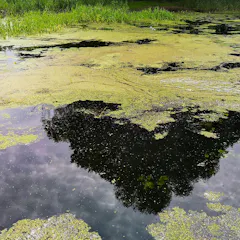
There’s more than one way to be resilient.

Olympians will also need to think about how they can protect themselves from the post-Olympic blues.

Increasingly, high-profile athletes are making a point of taking a break from competing to protect either their mental or physical health.

Adverse outcomes post-trauma are most likely experienced by those who’re isolated, blamed for their own misfortune, or displaced or disconnected from their family or community
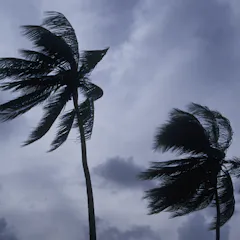
Hardening electric transmission systems and monitoring ocean temperatures are two key priorities.
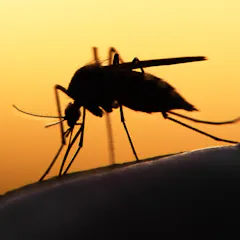
If the needs of both parasites and hosts are met by the niche, they can move in. Increasing biodiversity may therefore be a double-edged sword.
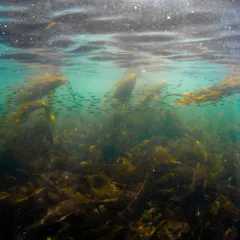
Kelp forests around the world, and in Canada, are under threat. New research sheds further light on the health, and resilience, of these crucial ecosystems.

The viability of any music culture depends on the availability of musicians.
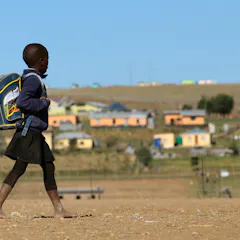
Rural school leaders must develop resilience in their pursuit for learners’ success.

The toll of Russia’s invasion of Ukraine on people’s wellbeing was felt worldwide. The effects were temporary for most. But those high on certain psychological traits struggled for longer.
Top contributors
-

Professor of Political Science, Public Policy and Urban Affairs, Northeastern University
-
Associate Professor and Canada Research Chair in Human Dimensions of Water Resources and Water Resilience, Brock University
-
Lecturer in Applied Sport & Exercise Psychology, University of Portsmouth
-
Associate Professor, Environmental Sustainability Research Centre, Brock University
-
Assistant Professor of Communication and Cognitive Science, University of California, Davis
-
Professor of Psychology, The University of Texas at Austin
-
Doctor of Philosophy, University of British Columbia
-
Executive Director, Sustainable & Resilient Economy, The Ohio State University
-
Assistant Professor, Department of Educational and Counselling Psychology and Canada Research Chair in Youth Suicide Prevention, McGill University
-
Lecturer in Psychology, University of Bradford
-
Associate Professor, Macquarie University
-
Senior Lecturer, School of Global, Urban and Social Studies, RMIT University
-
Assistant Professor, McGill Group for Suicide Studies, Department of Psychiatry, Faculty of Medicine and Health Sciences, McGill University
-
Associate professor, University of Johannesburg
-
Associate Professor, International Research Institute of Disaster Science, Tohoku University