

Expectations that academics raise funds themselves and aim to publish in certain ‘quality’ publications are shaping research and where it is published.
Articles on Research funding
Displaying 81 - 100 of 324 articles

Mergers and splits involving education and research ministries, like the recent one in Indonesia, have huge consequences. How do other countries govern their national education and science policies?

The recent arrest of a Chinese-born scientist at MIT raises questions about the value of international science collaboration and its impact on the American innovation system.

Researchers will struggle to meet universities’ expectations of engagement beyond academia until this work is better recognised as part of their duties.
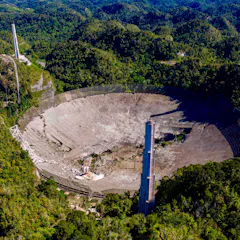
The collapse of the Arecibo Observatory in Puerto Rico was a result of financial neglect – and was a long time coming.

New Zealand spends about $500m on environmental research each year, but fails to invest systematically in monitoring programmes to track the changing environment.

Having to do engagement and impact assessments may feel like the last straw for weary and time-poor academics. But thinking about these things can underpin research excellence.

No-one wants our children to be used as research guinea pigs. High standards of ethical oversight are needed to ensure no child is exposed to possible harm.
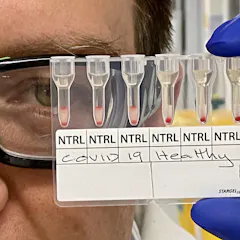
As well as extra funding for research beyond what has been announced in the budget for 2021, Australia must take half-a-dozen further steps to put the research sector back on a sound footing.
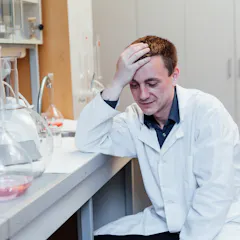
The early and mid-career researchers who bear most of the teaching and research workload are exhausted and underpaid. Many won’t survive the funding squeeze, but Australia can’t afford to lose them.

Lockdowns, working from home and funding cuts put a generation of Australian scientists at risk of dropping out.

Changes caused by COVID-19 in the higher education sector could alter the power dynamics between African researchers and those from developed countries.

Travel bans, a recession and the government’s university reform package will leave an estimated $4.7 billion gap in research funding that needs filling to maintain our current output.

Higher education institutions have started challenging the role of states as the dominant force in attracting foreign investment – particularly in terms of human talents and technological resources.

The desire of scholars and universities in Africa to fit into a model imposed from elsewhere may hinder development in Africa.
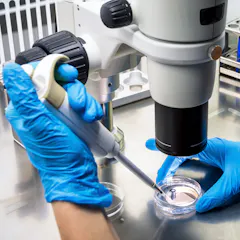
Australia’s research workforce will be severely impacted by the pandemic, with the effects likely to be felt for years, if not decades.
With a threatening virus sweeping the world, research efforts across sectors have ground to a halt. But one thing is clear: the non-scientific community has never valued research more.
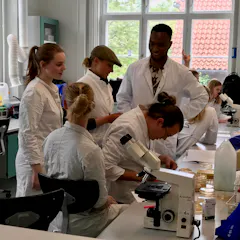
Global research funding, such as that offered by Denmark’s government, can open doors for African researchers to study abroad and then take their skills home.
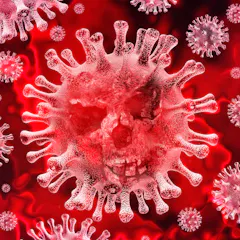
Previous and current research on coronaviruses helps inform the response to the current pandemic, but funding cuts could threaten these programs.

A symposium celebrated a roadmap for the American scientific enterprise laid out 75 years ago. What should be included in a US research plan that would last through the rest of this century?
Top contributors
-

Chair, The Conversation Media Group
-
Chief Executive, CSIRO
-
Associate Professor (hon) at the Centre for Public Awareness of Science, Australian National University
-
Professor of Natural Philosophy in the Department of Physics, University of York
-
Professor of Statistics, Queensland University of Technology
-
Executive Director, Development & Communications, Australian Technology Network of Universities
-
Secretary for Science Policy at the Australian Academy of Science, and Senior Deputy Vice-Chancellor, UNSW
-
Adjunct professor, University of Canberra
-
Adjunct Professor, University of Sydney
-
Emeritus Professor, Australian National University
-
Professor of Health Economics, Duke-NUS Medical School
-
Associate Professor, Researcher Development (EMCR), La Trobe University
-
Previous Vice President of the Academy of Science of South Africa and DSI-NRF SARChI chair in Fungal Genomics, Professor in Genetics, University of Pretoria, University of Pretoria
-
Honorary associate professor of economy and society, Macquarie University
-
ARC Laureate Fellow, Swinburne University of Technology