

Beyond deprioritizing scientific merit, the Trump administration’s proposal also restricts researchers’ ability to share their findings and collaborate with each other.
Articles on Federal research funding
Displaying 1 - 20 of 30 articles

Scientific innovation has been driving US economic growth for decades. Losing that edge means losing access to the technologies and brainpower that come with it.
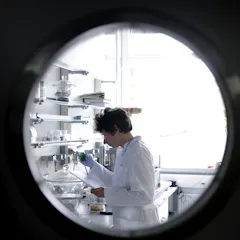
US science lost a great deal in 2025, including tens of billions of dollars of federal funding, entire research agencies and programs, and a generation of researchers.

Many of the world’s best and brightest STEM researchers have long moved to the US. But now that brain gain is at risk of reversing to become a brain drain, with science funding and visas in chaos.

When presidential administrations turn over, funding levels and project priorities change. A look at one specific government office demonstrates how these shifts in direction waste time and money.
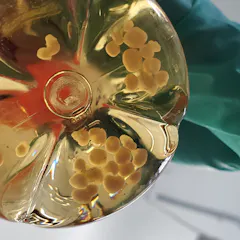
There are several steps between research on seemingly esoteric subjects and breakthrough medical treatments. Ethical oversight at every stage ensures science and society ultimately benefit.

Since 1971, the US has led the world in funding cancer research and developing new treatments that have driven down death rates. This may soon no longer be the case.

The National Institutes of Health has been integral to scientific progress in treating countless human diseases. Without its support, patients will ultimately pay the price.

It costs money to maintain the various facilities, utilities and personnel that allow scientists to conduct research in the first place. Without federal support, institutions are left scrambling.
A member of a grant review panel explains the ins and outs of applying for research funding – and the consequences of when the process suddenly stops.

The latest government showdown over the budget risks not only a shutdown but jobs, regional economies and America’s competitiveness in AI and other advanced fields.

Researchers are key to Canada’s capacity to create a high-tech economy, build the biomedical sector and seed entrepreneurial activity, but they can’t do it without research funding.

The director of the Office of Science and Technology Policy plays a critical role in achieving the president’s science goals. Facilitating cooperation among the dozens of research agencies is key.
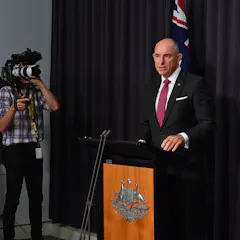
A Senate committee is discussing a bill designed to shore up the independence of the Australian Research Council, after recent high-profile cases of ministers vetoing research grants.

Decisions on research funding are too complex for a pub test. Assessing grant applications requires a high level of expertise and diligence, which the minister simply disregarded.

After years of government rhetoric about boosting the commercial benefits from university research, Australia’s record is still among the worst in the developed world.
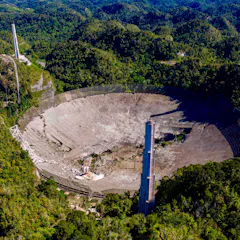
The collapse of the Arecibo Observatory in Puerto Rico was a result of financial neglect – and was a long time coming.
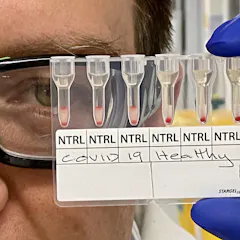
As well as extra funding for research beyond what has been announced in the budget for 2021, Australia must take half-a-dozen further steps to put the research sector back on a sound footing.

The early and mid-career researchers who bear most of the teaching and research workload are exhausted and underpaid. Many won’t survive the funding squeeze, but Australia can’t afford to lose them.

A symposium celebrated a roadmap for the American scientific enterprise laid out 75 years ago. What should be included in a US research plan that would last through the rest of this century?
Top contributors
-

Professor of Pharmaceutical Sciences, University of Iowa
-
Professor of Chemistry, Connecticut College
-
Associate Professor of Criminal Justice, Penn State
-
Associate Professor of Higher Education, Georgia State University
-
Professor of Law, UNSW Law School, UNSW
-
Invited User
-
Associate Professor of Health Law, Policy and Management, Boston University
-
Professor of History, University of Washington
-
Vice President for Research and Professor of Physics, Washington State University
-
Associate Professor of Sociology and Co-Director of the Center for Gender in Global Context, Michigan State University
-
Professor of Entrepreneurship and Strategy, J. L. Kellogg School of Management, Northwestern University
-
President and Vice Chancellor, Monash University
-
Associate Professor of Chemistry, Carnegie Mellon University
-
Assistant Professor of Health Policy and Administration, University of Illinois Chicago
-
Postdoctoral Fellow of Strategy, J. L. Kellogg School of Management, Northwestern University