
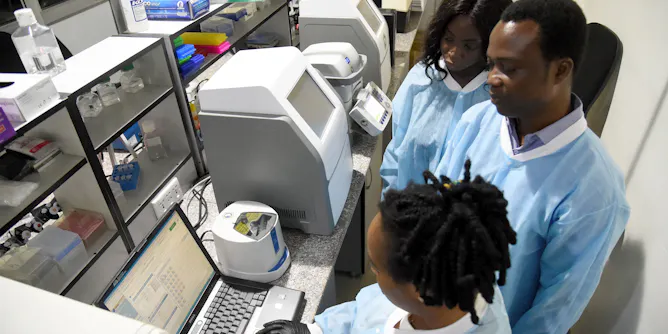
Molecular research is expensive, but worth it because of the burden of disease that it could relieve.
Articles on Research funding
Displaying 61 - 80 of 324 articles

The Coalition government showed a disdain for the arts, humanities and social sciences. The plight of these disciplines requires action from the incoming Labor government on three fronts.

Laboratory mice used in medical research are often kept in housing conditions that cause them to be overweight and stressed, with shorter lifespans.
Science is about more than crisis management – it’s about how we understand our present and future, and realise our potential as people

In Australia, space defence gets billions of dollars in funding, and commercial projects get hundreds of millions. Space science gets only $2 million a year.
A Senate committee is discussing a bill designed to shore up the independence of the Australian Research Council, after recent high-profile cases of ministers vetoing research grants.

Tay-Sachs is a rare and fatal neurodegerative disorder that most commonly affects children. Researchers have developed the first Tay-Sachs treatment to reach clinical trials.
The male-dominated makeup of the industry partners who are meant to lead the commercialisation of research could undermine the work towards gender equity in Australian universities.
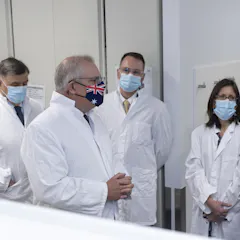
Australia has world-class research but low rates of research commercialisation by global standards. The scale and cultural focus of the government’s plan mean it could have an impact on this problem.

Decisions on research funding are too complex for a pub test. Assessing grant applications requires a high level of expertise and diligence, which the minister simply disregarded.

COVID-19 lockdowns have kept researchers from their labs and libraries and delayed projects. What can be done to reduce the likely impacts?
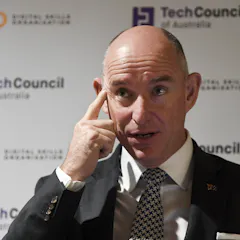
Basic research is best when it’s allowed to proceed on merit, rather than with political interference, says an open letter from 63 leading researchers protesting government interference in ARC grants.

After years of government rhetoric about boosting the commercial benefits from university research, Australia’s record is still among the worst in the developed world.
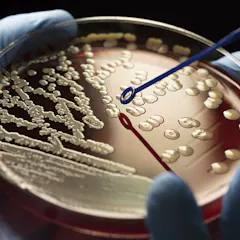
If no action is taken to address antibiotic resistance, infections from multidrug-resistant bacteria could cause 10 million deaths each year by 2050.

Academics in all areas have deep concerns about their ability to undertake research during the pandemic and the flow-on effects of this. Women and early career researchers were particularly hard hit.

Islamophobia increased post-9/11. Twenty years later, American Muslims are still dealing with the mental health effects – and research barriers limit what is known about what puts them at risk.

Australia’s R&D expenditure as a percentage of gross domestic product has declined over the past decade.

The lack of dedicated funding and support for research commercialisation, on top of the other obstacles academics face, means Australia’s poor performance is no mystery.

A more coordinated effort by scientists, stakeholders and community members will be required to stop the next deadly virus that’s already circulating in our midst.

The pandemic has underscored that the world requires agility for survival. That makes blue skies science, which encourages curiosity and nimble thinking, perhaps more important than ever.
Top contributors
-

Chair, The Conversation Media Group
-
Chief Executive, CSIRO
-
Associate Professor (hon) at the Centre for Public Awareness of Science, Australian National University
-
Professor of Natural Philosophy in the Department of Physics, University of York
-
Professor of Statistics, Queensland University of Technology
-
Executive Director, Development & Communications, Australian Technology Network of Universities
-
Secretary for Science Policy at the Australian Academy of Science, and Senior Deputy Vice-Chancellor, UNSW
-
Adjunct professor, University of Canberra
-
Adjunct Professor, University of Sydney
-
Emeritus Professor, Australian National University
-
Professor of Health Economics, Duke-NUS Medical School
-
Associate Professor, Researcher Development (EMCR), La Trobe University
-
Previous Vice President of the Academy of Science of South Africa and DSI-NRF SARChI chair in Fungal Genomics, Professor in Genetics, University of Pretoria, University of Pretoria
-
Honorary associate professor of economy and society, Macquarie University
-
ARC Laureate Fellow, Swinburne University of Technology