

A major review of the Australian Research Council follows years of concerns about political interference, tedious red tape and inadequate funding.
Articles on ARC
Displaying 1 - 20 of 37 articles
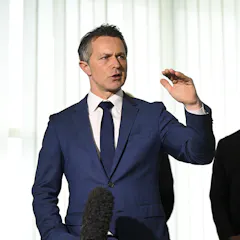
The new federal education minister has kicked off what could be a major reset of university research funding in Australia, with a review and stern letter to the Australian Research Council.
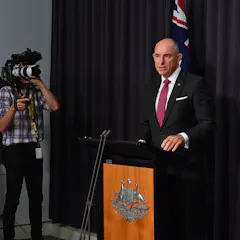
A Senate committee is discussing a bill designed to shore up the independence of the Australian Research Council, after recent high-profile cases of ministers vetoing research grants.

Decisions on research funding are too complex for a pub test. Assessing grant applications requires a high level of expertise and diligence, which the minister simply disregarded.
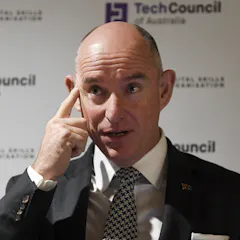
Government vetos of academic research reveal a worrying ignorance of the value of literature to Australia’s society, culture and economy.

After 11 years of Excellence in Research for Australia, the time and costs for universities and the value it creates for other sectors (none of which made submissions to a recent review) are unknown.
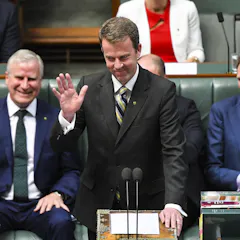
Decisions about research funding – and how those decisions are announced – should not be political and should follow a set schedule.
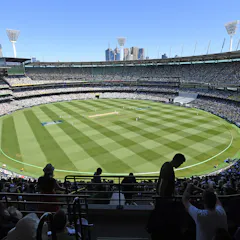
Did the minister or any of his staff read our application or any of the other ten he chose to reject?

Projects submitted to the Australian Research Council are vetted heavily by panels of experts. Minister Birmingham’s decision undermines this process.

Despite the Federal Government’s teacher education reforms and the push for evidence-based teaching, less than 2% of ARC research funding is directed to educational research.

Funding for research in Australia could soon depend on how much researchers engage with others who could benefit from and help out with the work.

The OzGRav Centre of Excellence for Gravitational Wave Discovery will enable Australian researchers to be at the forefront of gravitational wave astronomy.

The decision to refuse the ARC and academic researchers a right of reply appears to be a straightforward breach of the News Corp Australia code of conduct.

Well, here we are again. Lazy swipes by lazy blowhards at lazy academics lazing their way through hyper competitive granting procedures.
How does Australia fare in science and research funding? Where have recent cuts been made? This infographic shows the state of science funding in Australia.

Making the whole process of auditing research open to the public could help reduce the capacity for universities to game the system.

It’s hard enough to get research funding in Australia, so what if your work falls outside one of the areas declared a “priority”?

The latest round of research grant funding has been announced, and many worthy researchers have not made the cut. Why?

Government departments often commission research to help them understand and respond to policy issues. But they impose contract conditions that threaten to undermine the integrity of the work.
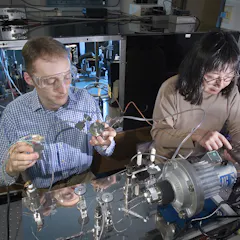
A shift in our research funding model to fund individual people rather than whole projects could help support the best science.
Top contributors
-

Chair, The Conversation Media Group
-
Senior Lecturer, Australian National Centre for the Public Awareness of Science, Australian National University
-
Associate Professor (hon) at the Centre for Public Awareness of Science, Australian National University
-
Associate Director Student Experience, Monash University
-
Associate Professor, School of Public Health and Preventive Medicine, Monash University
-
Associate Professor, School of Business and Tourism, Southern Cross University
-
Secretary for Science Policy at the Australian Academy of Science, and Senior Deputy Vice-Chancellor, UNSW
-
Scientia Professor of Evolution, UNSW
-
Australia's Chief Scientist, Office of the Chief Scientist
-
Senior Research Fellow, UNSW
-
Professor, Head of Department of Management, UTS Business School, University of Technology Sydney
-
Professor (Research) and Director, Monash Climate Change Communication Hub, Monash University
-
ARC Laureate Fellow, Swinburne University of Technology
-
Visiting Fellow, Crawford School of Public Policy, Australian National University
-
Associate Professor in Higher Education, The University of Melbourne