

Decisions about research funding – and how those decisions are announced – should not be political and should follow a set schedule.
Articles on Research funding
Displaying 101 - 120 of 324 articles

The EU’s next research programme needs to change how universities and business work together.

To move towards a knowledge-based economy, Indonesia needs to invest its research funds strategically.

The interests of pharmaceutical companies and public health are not the same. Industry dollars can distort research agendas, while framing health challenges and solutions in ways that benefit corporations.

Today, universities fulfil many of the science councils’ roles at a much lower cost while also training postgraduate students.
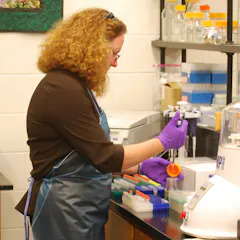
On average, important new lab techniques like CRISPR take 23 years to develop – but there is a public expectation that scientific breakthroughs occur quickly and efficiently.
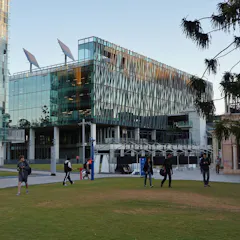
With a budget surplus in sight, it makes no sense to cut funding from Australia’s research capacity.

A 90-minute presentation in 1968 showed off the earliest desktop computer system. In the process it introduced the idea that technology could make individuals better – if government funded research.

Yet the money spent on student loans, Pell Grants and funding for research is not generally keeping pace with the demand for higher ed.

Working with African universities to effectively become research-intensive could transform sub-Saharan Africa’s higher education landscape.

The scientific community always wants more cash to fund research. A new study examines whether more concrete knowledge of science or more general interest in it is likelier to loosen the pursestrings.
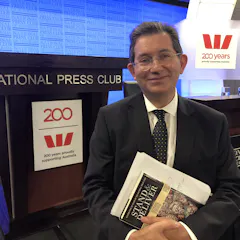
A new report found that every one dollar of public funding spent on Go8 university research generated A$9.76 across the Australian economy, a roughly 10 fold return on the government’s investment.

Basic research can be easy to mock as pointless and wasteful of resources. But it’s very often the foundation for future innovation – even in ways the original scientists couldn’t have imagined.

The exclusion of scholars based in the global South undermines their work.

China’s government is prioritizing world-class science and tech. An expert describes the Chinese research landscape – and questions its sustainability.

Money always seems tight for university scientists. A sociologist conducted hundreds of interviews to see how they think about funding sources and profit motives for basic and applied research.

In the hierarchy of diseases, those suffering from ‘high prestige’ diseases benefit from strong community and clinical support, while others are left in the dark.

Despite the Federal Government’s teacher education reforms and the push for evidence-based teaching, less than 2% of ARC research funding is directed to educational research.

Research partnerships between Australian universities, the Department of Defence and weapons manufacturers may not be ethically justifiable.

Given the challenges Australian cities face, the need for urban planning based on solid research is greater than ever. Sadly, when it comes to research funding, planning is at the back of the queue.
Top contributors
-

Chair, The Conversation Media Group
-
Chief Executive, CSIRO
-
Associate Professor (hon) at the Centre for Public Awareness of Science, Australian National University
-
Professor of Natural Philosophy in the Department of Physics, University of York
-
Professor of Statistics, Queensland University of Technology
-
Executive Director, Development & Communications, Australian Technology Network of Universities
-
Secretary for Science Policy at the Australian Academy of Science, and Senior Deputy Vice-Chancellor, UNSW
-
Adjunct professor, University of Canberra
-
Adjunct Professor, University of Sydney
-
Emeritus Professor, Australian National University
-
Professor of Health Economics, Duke-NUS Medical School
-
Associate Professor, Researcher Development (EMCR), La Trobe University
-
Previous Vice President of the Academy of Science of South Africa and DSI-NRF SARChI chair in Fungal Genomics, Professor in Genetics, University of Pretoria, University of Pretoria
-
Honorary associate professor of economy and society, Macquarie University
-
ARC Laureate Fellow, Swinburne University of Technology