
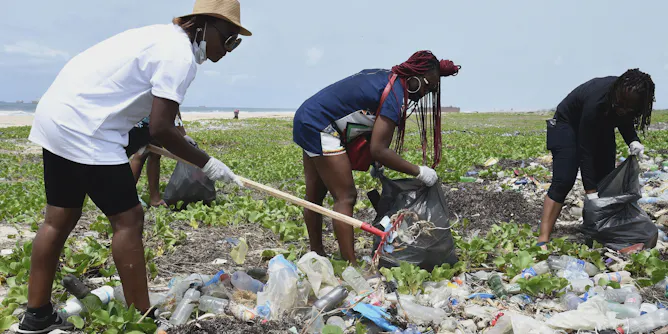
Nigeria generates 2.5 million tonnes of plastic waste yearly. Research and public enlightenment can help address the problem.
Articles on Recycling
Displaying 141 - 160 of 411 articles

Here’s some good environmental news – local governments and local actions have slashed the plastic on our beaches. Incentives, awareness and access are the key.

Priority should be given to improving municipal solid waste management in First Nation communities because they currently lack financial resources, infrastructure and solid waste diversion programs.
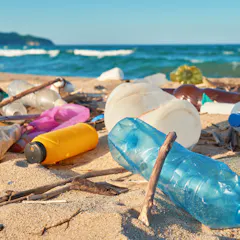
Plastic waste is a huge problem. To fix it, we need systemic change, not just a focus on picking it up or recycling plastic once it becomes rubbish.
Over 170 countries have endorsed a resolution to negotiate a plastics treaty that’s much more precise than the Paris climate change agreement.

Our new technology to recycle food waste into prebiotics uses no toxic chemicals and no fossil fuels.

Glass is produced from sand, is easy to recycle, and can be used to make concrete without any complex processing.
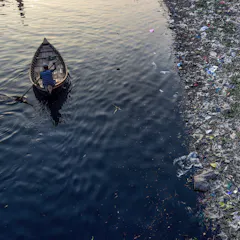
Representatives of 175 countries voted to start developing a global treaty to reduce plastic waste. Treaties addressing mercury, long-range air pollution and ozone depletion offer some lessons.
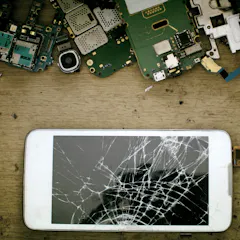
Tech companies still make it difficult to get gadgets repaired.
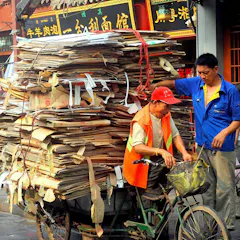
The principles of the low-tech movement offer a solution to overconsumption and rising emissions.
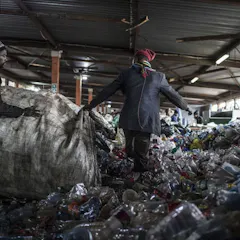
In South Africa, the work of ensuring plastic bottles are recycled lies with consumers and volunteers instead of the large industry polluters.
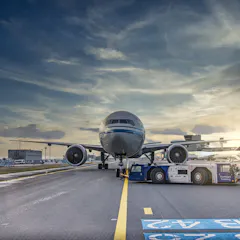
Using recycled plastic to wire planes could reduce their emissions while cutting down on waste from the 3-D printing industry.
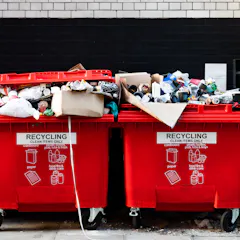
Tossing something into your recycling bin that can’t be processed does more harm than good.

These shows treat the symptoms of overconsumption but not the causes.

It’s not just about finding bargains.

When governments want people to do less of something, one way to make that happen is to charge them for doing it. That’s the idea behind pay-as-you-throw waste policies.
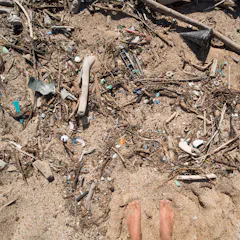
An estimated 8 million metric tons of plastic waste enters the ocean each year – equivalent to dumping in a garbage truckload of it every minute. A new report calls on the US to help stem the deluge.

In Canada, milk is available in jugs, cartons, bags and glass bottles. A new analysis reveals which type of container has the smallest environmental footprint — from container production to disposal.
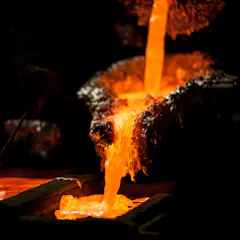
Aluminium is hugely useful, but energy-intensive to produce. What if we didn’t have to smelt any more?

One-tenth of global emissions result from the production and supply of building materials – and the construction process itself.
Top contributors
-

Senior Research Fellow, BehaviourWorks Australia, Monash University
-
Lecturer, School of Life and Environmental Sciences, Deakin University
-
Associate Professor and Research Director, Institute for Sustainable Futures, University of Technology Sydney
-
Professor of Global Environmental Politics, University of California, Berkeley
-
Professor of Applied Environmental Science, University of Southampton
-
Research Principal, Institute for Sustainable Futures, University of Technology Sydney
-
Chair professor - Circular Economy, The University of Melbourne
-
Research Chair, Indigenous Approaches to Environmental Management, Keele University
-
Senior Lecturer, School of Property, Construction and Project Management, RMIT University
-
Associate Dean and Head of Project Management, RMIT University
-
Professor of Sustainable Development, Keele University
-
Research Director, Institute for Sustainable Futures, University of Technology Sydney
-
Research associate, Loughborough University
-
PhD Candidate in Environmental Science, Policy, and Management, University of California, Berkeley
-
Birkbeck, University of London