
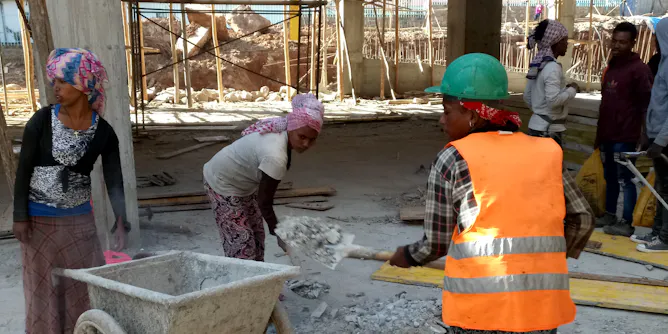
Ethnicity can be consciously adjusted in response to the risks women face in public spaces.
Articles on RandD
Displaying 221 - 240 of 3809 articles

Ransomware is a growing threat on the continent. There are a number of steps companies can take to combat it.
Nigeria has made some progress on voting rights for citizens with disabilities. But gaps persist.
The modernisation of small towns, while positive economically, brings hidden health costs.

The film suggests that building a library is not merely about a building or books; it is about dialogue and citizenship.

South Africa and Nigeria promised to reduce greenhouse gas emissions from oil and coal. But instead they’re planning to increase production of fossil fuels.

Most African climate-related financial policies remain voluntary, leaving climate risk as something to consider rather than a firm requirement.

Addresses are essential to society, governance and the economy in a modern world.
For the first time, countries now have a shared way to understand whether the world is actually improving at adapting to climate impacts.

South Africa needs to track whether beneficiaries of land reform policies are participating in the country’s thriving wildlife economy.
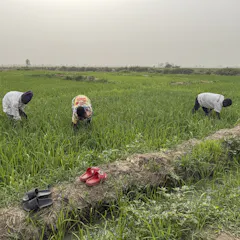
Climate-smart agricultural technologies increase crop sales revenue for farmers in the Sahel region.
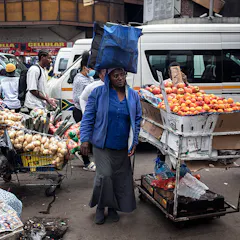
Informal trading is an integral part of the city of Johannesburg’s identity.
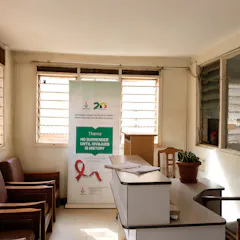
A mix of domestic revenue generation, efficiency gains and strategic partnerships is essential to sustain and expand HIV programmes despite declining external aid.

In South Africa, discarded pineapple leaves can now be turned into a low-cost, eco-friendly solution for both cleaning polluted water and forensics.

Visits matter because they offer what digital technologies cannot: presence.
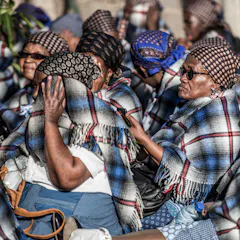
Labour migration separated husbands and wives for long periods.
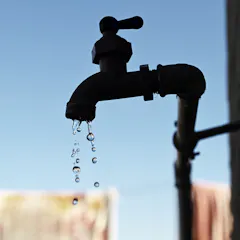
In a disaster or emergency, households can take steps to purify drinking water.

Conflict between baboons and humans won’t change unless human behaviour changes.

Social workers are often female and often arrive first on the scene, but have little protection.
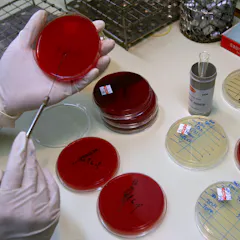
To make real progress, antimicrobial communication needs to be grounded in people’s lived experiences.
Top contributors
-

Senior Fellow, Department of Agricultural Economics, Stellenbosch University
-
Dean Faculty of Health Sciences and Professor of Vaccinology at University of the Witwatersrand; and Director of the SAMRC Vaccines and Infectious Diseases Analytics Research Unit, University of the Witwatersrand
-
Research Scientist, African Population and Health Research Center
-
Fellow, Nigerian Academy of Science
-
Principal Medical Scientist and Head of Laboratory for Antimalarial Resistance Monitoring and Malaria Operational Research, National Institute for Communicable Diseases
-
Medical scientist, National Institute for Communicable Diseases
-
Research Fellow, Tegemeo Institute, Egerton University
-
Pro Vice-Chancellor, Climate, Sustainability and Inequality and Director, Southern Centre for Inequality Studies, University of the Witwatersrand
-
Professor of medicine and deputy director of the Desmond Tutu HIV Centre at the Institute of Infectious Disease and Molecular Medicine, University of Cape Town
-
Professor of Sociology (Criminology, Victimology and Security Studies), University of Ibadan
-
Professor and Programme Director, SA MRC Centre for Health Economics and Decision Science - PRICELESS SA (Priority Cost Effective Lessons in Systems Strengthening South Africa), University of the Witwatersrand
-
Extraordinary Professor, Global Health, Stellenbosch University; South African Medical Research Council
-
Research associate at African Centre for Cities, University of Cape Town
-
Senior Research Associate, University of Johannesburg
-
Professor of Political Science and Chair of the South African Research Initiative in Gender Politics, Stellenbosch University