

Our ageing population presents several social and economic challenges, particularly for the health sector. Physical activity can tackle many of these.
Articles on Public transport
Displaying 221 - 240 of 329 articles
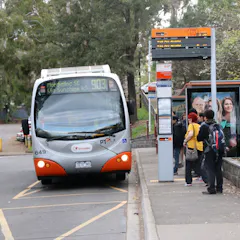
No matter whether competitive tendering or negotiation is used, operators that do not meet clear and transparent service benchmarks should be shown the door.
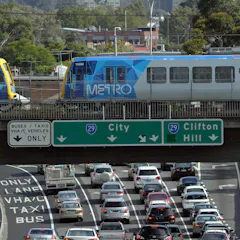
Instead of focusing on freeways, governments should change the way we pay for urban roads and public transport.
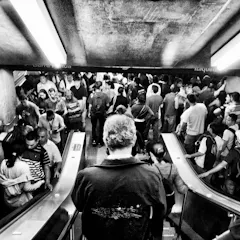
Subways seem like the perfect solution to improve air quality in cities. But what about air quality underground?
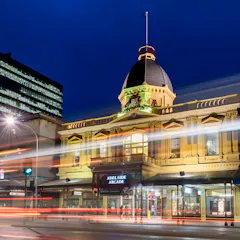
Smart city thinking makes good use of rapidly developing technology to help make cities work better, easier-to-navigate, safer, healthier and more enjoyable places to live.

While many talk about 30-minute cities, some aim for residents to be able to get to most services within 20 minutes. But cities like Melbourne have an awful lot of work to do to achieve their goal.
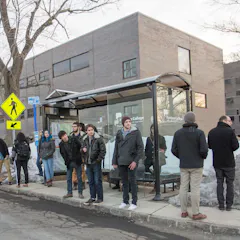
Many Americans live in transit deserts – areas where demand for transit exceeds the supply. To fix these gaps, we need to find and map them so agencies can add transit options in the right places.
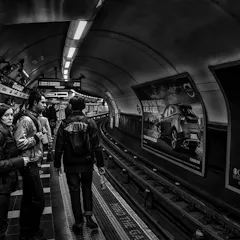
Most women feel unsafe when using public transport. Instead of gender segregation, researchers suggest gender-sensitive design could be a better way to ensure safety for all.
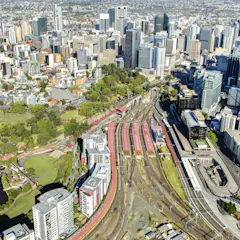
The rail project may well help get more commuters into the CBD, but offers few benefits for the parts of the broader metro area where most population growth is occurring.
New research shows many good intentions for creating urban environments that promote good health were not carried through. The solutions start with engaging more closely with residents themselves.

Estimated cost savings for rail and bus franchising from Infrastructure Australia and PwC will have government treasurers salivating. Problem is, the figures are almost certainly far too high.
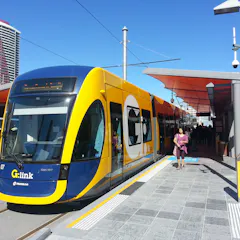
The light rail project pushed up property values within 800 metres of the stations by over 30% from 1996 to 2016. Gains on this scale offer a potential source of finance for public transport.
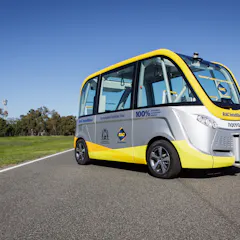
There’s every chance that, if mismanaged, driverless vehicle technologies will entrench the ills of car dependency.
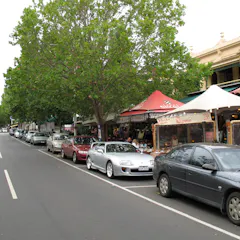
A new study shows that restaurateurs would be better off advocating for better public transport access to their precincts rather than for more parking.
Policy changes such as the ‘lockout laws’ have had profound impacts on inner Sydney nightlife. Transport data help us see whether these have caused problems to spill over into neighbouring areas.
The St Petersburg attack shows how engineering and psychology can help optimise how people are evacuated in a disaster.
A project set up north of Melbourne’s CBD aims to create a living laboratory for developing a highly integrated, smart, multimodal transport system.

Labor's edge over the government in the polls has seen the party stay united. But it has not stopped speculation about whether frontbencher Anthony Albanese would be a better leader of the party.
Perth’s Roe 8 project illustrates all that is wrong with how we are planning and managing infrastructure in our cities.

A combination of transit-oriented centres, inclusionary zoning and a special rate on land instead of stamp duty could make housing more affordable by cutting congestion, development and travel costs.
Top contributors
-

Professor of Sustainability, Curtin University
-
Senior Lecturer in Urban Planning, University of Auckland, Waipapa Taumata Rau
-
Associate Professor in Urban Planning, The University of Queensland
-
Honorary Professor of Planning, The University of Queensland
-
Associate Professor in Urban and Regional Planning, University of Sydney
-
Transport and Cities Program Director, Grattan Institute
-
Associate Professor of Urban Planning, The University of Melbourne
-
Professor of Transport Technology and Sustainability, Swinburne University of Technology
-
Researcher in Transport Policy and Governance, UCL
-
Professor of Human Geography, The University of Queensland
-
Professor of Operations Management, Manchester Metropolitan University
-
Adjunct Professor, Institute of Transport and Logistics Studies, University of Sydney Business School, University of Sydney
-
Senior Lecturer, Nottingham Business School
-
Honorary Senior Fellow in Transport Planning, The University of Melbourne
-
Professor of Urban Policy and Director, Urban Futures Enabling Impact Platform, RMIT University