
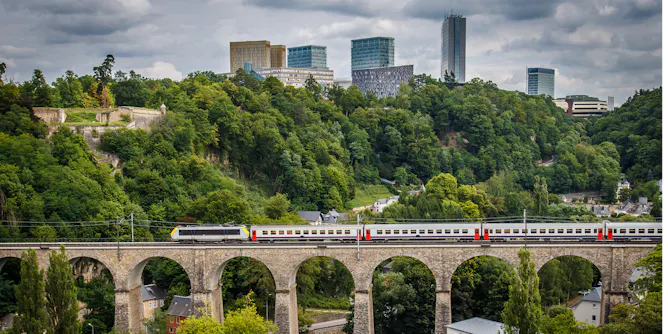
This attention grabbing policy has less to do with solving public transport problems, and more to do with the government’s nation-branding campaign.
Articles on Public transport
Displaying 181 - 200 of 329 articles

Under 10 percent of new Citi Bike and Divvy bike docks are sited where residents suggested using interactive online maps, a new study shows. But that doesn’t mean city officials weren’t listening.
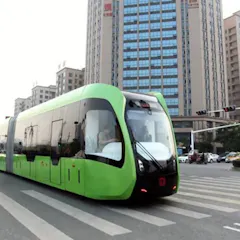
The autonomous rail rapid transit (ART) system developed in China might make buses sexy, but the technology alone won’t resolve the issues of road space and right of way in Australia.

The arrival of autonomous vehicles would ideally reduce the number of cars on our roads. But this is a pipe dream without a robust public transport system and willingness to share.
To cut emissions within the 12 years or so we have left to avoid disastrous global warming, we will need to change our old transport habits, using a combination of strategies to achieve this.
Whichever party wins, Victoria’s new government will have promised the biggest transport infrastructure project in Australian history. So what are the promises and are they backed by proper assessment?
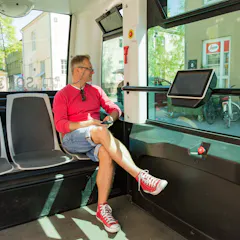
Apps that seamlessly combine all our travel options could be the most significant transport innovation since the automobile, but early trials show government policy support is vital to make MaaS work.

Jakarta’s minibuses can survive because of their socio-political functions and relation to the interests of thousands of business owners and workers in the capital.

For 40 years the author has argued that trains and trams are better than buses. New ‘trackless trams’, which take innovations from high speed rail and put them in a bus, have changed his mind.
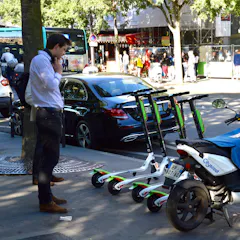
Shared electric scooters appeal as a way to cover that awkward distance between public transport stops and your destination. But first e-scooter operators must solve the littering and dumping problem.
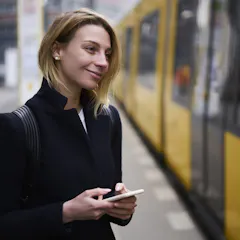
The UK pioneered smart cards such as Oyster. But now, experimentation is being stifled as cash-strapped councils struggle to deliver basic services.
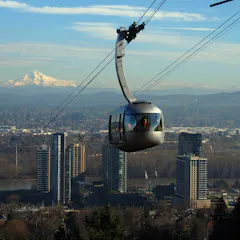
Popular as gondolas in ski-fields around the world, cable cars, aerial trams, wires or ropeways are increasingly used for mass transit in progressive cities. Is this the future for Australian cities?
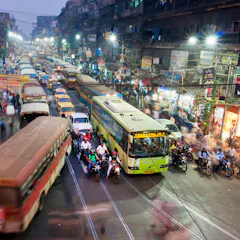
Staying at home puts women at greater risk of health problems – cities need to change to encourage them to go outside.
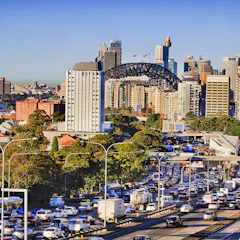
Busting congestion requires some creativity - and evidence-based methods. Here are four of these.
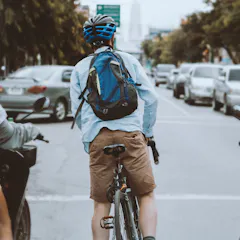
What’s your risk of dying if you cycle to work, versus the health benefits? What about walking, or driving, or catching a train? Here are the risks and benefits.

We see the daily commute as a waste of time. But there’s another way to see the experience: a whole life in the events and memories we form during these journeys, which change us as human beings.
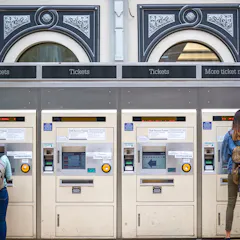
A dormant ‘cash mountain’ marks a nadir for London’s contactless travel card, but trouble has been brewing for some time.
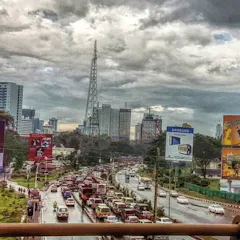
Research shows that cities benefit from car-free days in many ways.
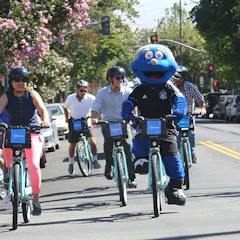
Urban planners often hope bike-share schemes might reduce reliance on cars and help with congestion. But very few of those who use share bikes have switched from driving.
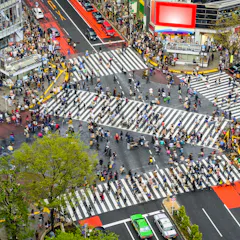
Daily routine affects how much polluted air we breathe.
Top contributors
-

Professor of Sustainability, Curtin University
-
Senior Lecturer in Urban Planning, University of Auckland, Waipapa Taumata Rau
-
Associate Professor in Urban Planning, The University of Queensland
-
Honorary Professor of Planning, The University of Queensland
-
Associate Professor in Urban and Regional Planning, University of Sydney
-
Transport and Cities Program Director, Grattan Institute
-
Associate Professor of Urban Planning, The University of Melbourne
-
Professor of Transport Technology and Sustainability, Swinburne University of Technology
-
Researcher in Transport Policy and Governance, UCL
-
Professor of Human Geography, The University of Queensland
-
Professor of Operations Management, Manchester Metropolitan University
-
Adjunct Professor, Institute of Transport and Logistics Studies, University of Sydney Business School, University of Sydney
-
Senior Lecturer, Nottingham Business School
-
Honorary Senior Fellow in Transport Planning, The University of Melbourne
-
Professor of Urban Policy and Director, Urban Futures Enabling Impact Platform, RMIT University