
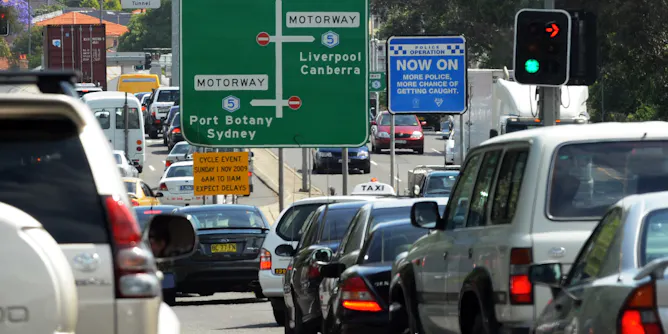
Australia needs stronger policy aimed at curbing air pollution, but the options currently on the table fall short. For now, we could all aim to drive less and turn off the engine when the car is idle.
Articles on Public transport
Displaying 241 - 260 of 329 articles
Roads versus public transport: for decades, these have been the battle lines in debates over transport in our cities. But a revolution in mobility is under way that will transform our thinking.
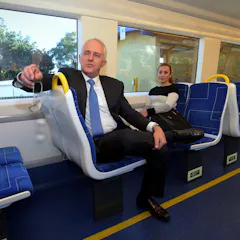
One year on, the Turnbull government is touting the economic benefits of an infrastructure agenda that neglects the other important functions of transport projects.
Travelling to work can require as much water as you use at home.
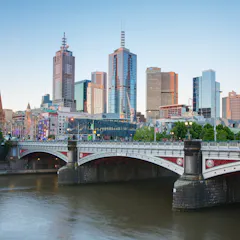
We’re still in the early days of understanding how cities work. But we do know that creative, healthy and productive cities have certain things in common – and it’s all to do with their ‘urban DMA’.
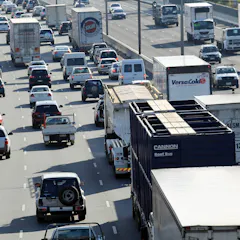
Most enlightened governments have realised the focus on private cars at the expense of active and public transport is not viable.

To maximize the benefits while minimizing the risks, we need to know how ride-share companies will affect public transportation.
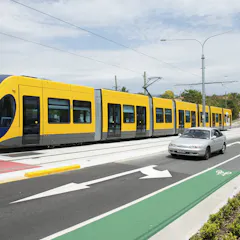
Land value gains following the opening of stage one of the Gold Coast light rail project were worth around 25% of its cost.

The system of apartheid is long gone. But its legacy of poor funding for historically black universities - and of planning that banished black universities to cities’ margins - remains.
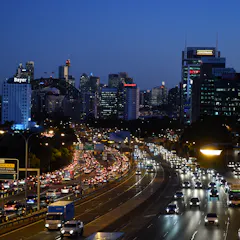
The Australian Automobile Association said that a new report showed that “the average Australian family is spending up to $22,000 every year to get around.” Is that accurate?

Falling revenues and cuts are threatening a crucial lifeline for those living in country areas.
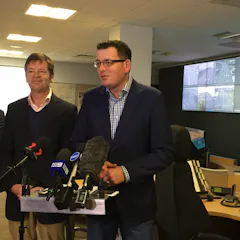
It’s a project that creates benefits for Melbourne’s western suburbs and the state as a whole. But the inner-city elite don’t like it and recent experience suggests their opinion holds sway.
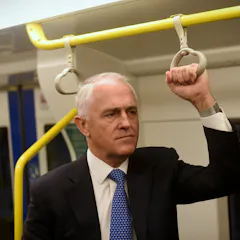
The Coalition, Labor, and the Greens are making substantial commitments to projects that not only lack proper business cases, but are not even on the Infrastructure Australia priority list at all.
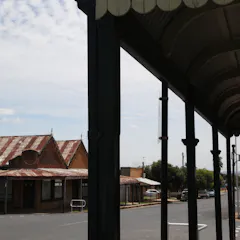
The 2016 articulation of an urban agenda assumes building more highways, railways and trams will produce better, more productive cities that somehow give everyone a job.
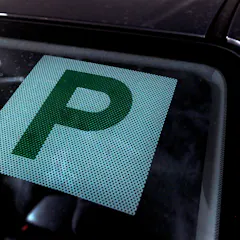
There are many important reasons why transport planners and policymakers should encourage and support this delay in car dependence.
Using elements of game play, we can create incentives for people to change how and when they make various transport choices in ways that enable the whole system to work better.

Early residents in new communities are known as ‘pioneers’ – they arrive before many services are in place. A five-year study points to the many benefits of putting in good services early on.

Much of the infrastructure Australia needs will be funded by “value capture” – raising tax revenue by boosting land values. Some have decried it as a tax hike in all but name, but it isn’t really.
The budget paints a picture of higher debt, little relief for growing cities crying out for infrastructure investment, and no detail of how City Deals might work to fix this.
On reform, the 2016-17 budget is a holding one, with tinkering on the sides.
Top contributors
-

Professor of Sustainability, Curtin University
-
Senior Lecturer in Urban Planning, University of Auckland, Waipapa Taumata Rau
-
Associate Professor in Urban Planning, The University of Queensland
-
Honorary Professor of Planning, The University of Queensland
-
Associate Professor in Urban and Regional Planning, University of Sydney
-
Transport and Cities Program Director, Grattan Institute
-
Associate Professor of Urban Planning, The University of Melbourne
-
Professor of Transport Technology and Sustainability, Swinburne University of Technology
-
Researcher in Transport Policy and Governance, UCL
-
Professor of Human Geography, The University of Queensland
-
Professor of Operations Management, Manchester Metropolitan University
-
Adjunct Professor, Institute of Transport and Logistics Studies, University of Sydney Business School, University of Sydney
-
Senior Lecturer, Nottingham Business School
-
Honorary Senior Fellow in Transport Planning, The University of Melbourne
-
Professor of Urban Policy and Director, Urban Futures Enabling Impact Platform, RMIT University