

Patient information dumped on the side of the road in Brisbane recently has raised the issue of how hospitals and clinics manage their old paper records.
Articles on Privacy
Displaying 301 - 320 of 624 articles

A recent proposal by the United Kingdom’s Government Communications Headquarters agency suggests building in law enforcement access to encrypted communications. This has implications for users’ digital rights and privacy.
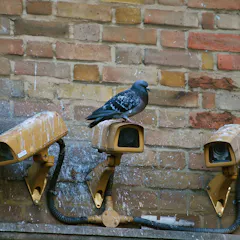
Campaigners in the UK are pushing to protect privacy and make the security services more accountable.

The UK Online Harms White Paper outlines possible internet regulation measures, and Canada would do well to study its approach.

South Africa’s law that regulates the Interception of communications is being challenged on the basis it can be abused by rogue elements in intelligence.

Checking your credit report is a good way to ensure that incorrect information is not listed against you, and can protect you against identity theft.

States like California have been at the forefront of privacy innovation in recent decades. A possible federal law could bring their experimentation to a halt, harming consumers.

Apps these days allow parents to track their children. An expert explains, why these technologies should be a reason for worry if you are a parent,

The history of how Alphabet Inc. and its subsidiaries manage children and data is a troubling one. How will Sidewalk Labs address concerns about minors and privacy in Toronto’s Quayside project?

The drumbeat of data breaches and the growing problem of identity theft disproportionately harm low-income Americans.

Even governments in democracies with strong traditions of rule of law find themselves tempted to abuse these new abilities.
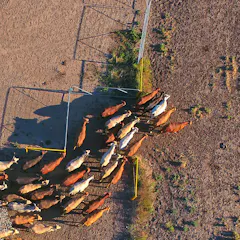
Farming data collected by governments, agribusinesses and banks is regulated in a piecemeal fashion, and ends up beyond the reach of farmers.

Consumers want better protection for their data, and businesses want clear national laws. Yet there is virtually no consensus about what a broad privacy law should entail.

Canadian researchers have mapped smart city technologies throughout the country. The interactive map is intended to inform urban residents of the locations of technologies that may affect privacy.

Tiny electronic items can identify pets, clothes and even people. Evangelical Christians aren’t the only people worried about what this technology might mean.

Teaching our children about consent is important in any aspect of life, and online privacy should be no exception.

CEO Mark Zuckerberg’s claimed intent to focus on privacy will be hard to execute, will not happen soon and does not address major concerns about the company’s role in society.

Facebook seems to be shifting its focus more towards privacy. But this might have some unexpected repercussions, as highlighted by recent research on the encrypted messaging service WhatsApp.

Facebook says it’s changing. Time will tell. In the meantime, privacy is under threat, news and journalism are suffering, and the algorithms employed by digital platforms are worryingly opaque.

Algorithmic guardians could be programmed to manage our digital interactions with social platforms and apps according to our personal preferences.
Top contributors
-

Associate Professor, School of Law, University of Canberra
-
Associate Professor, Faculty of Law & Justice; Lead, UNSW Public Interest Law & Tech Initiative, UNSW
-
Professorial Fellow, University of Canberra
-
Emeritus Professor in Law and Criminal Justice, Adelaide University
-
Professor of Cyber Security Practice, Edith Cowan University
-
Professor specialising in Internet law, Bond University
-
Dean of Global Business, The Fletcher School, Tufts University
-
Director of UWA Centre for Software Practice, The University of Western Australia
-
Associate Professor in Telecommunications Engineering, Swinburne University of Technology
-
Research Director of the Security and Surveillance Research group; Professor, The University of Queensland
-
Professor (adjunct) and Senior Fellow, Institute for Health Policy, Management and Evaluation, Dalla Lana School of Public Health, University of Toronto
-
Research engineer, Advanced Surveillance Project, CSIRO
-
Senior Lecturer, The University of Melbourne
-
Senior Researcher and Project Manager, Advanced Surveillance Project, CSIRO
-
Former data protection and surveillance stream lead, Allens Hub for Technology, Law and Innovation, UNSW Law Faculty, UNSW